Category: Microwave

  • Can a Microwave Run on an Inverter During Loadshedding in South Africa? (2026 Guide)

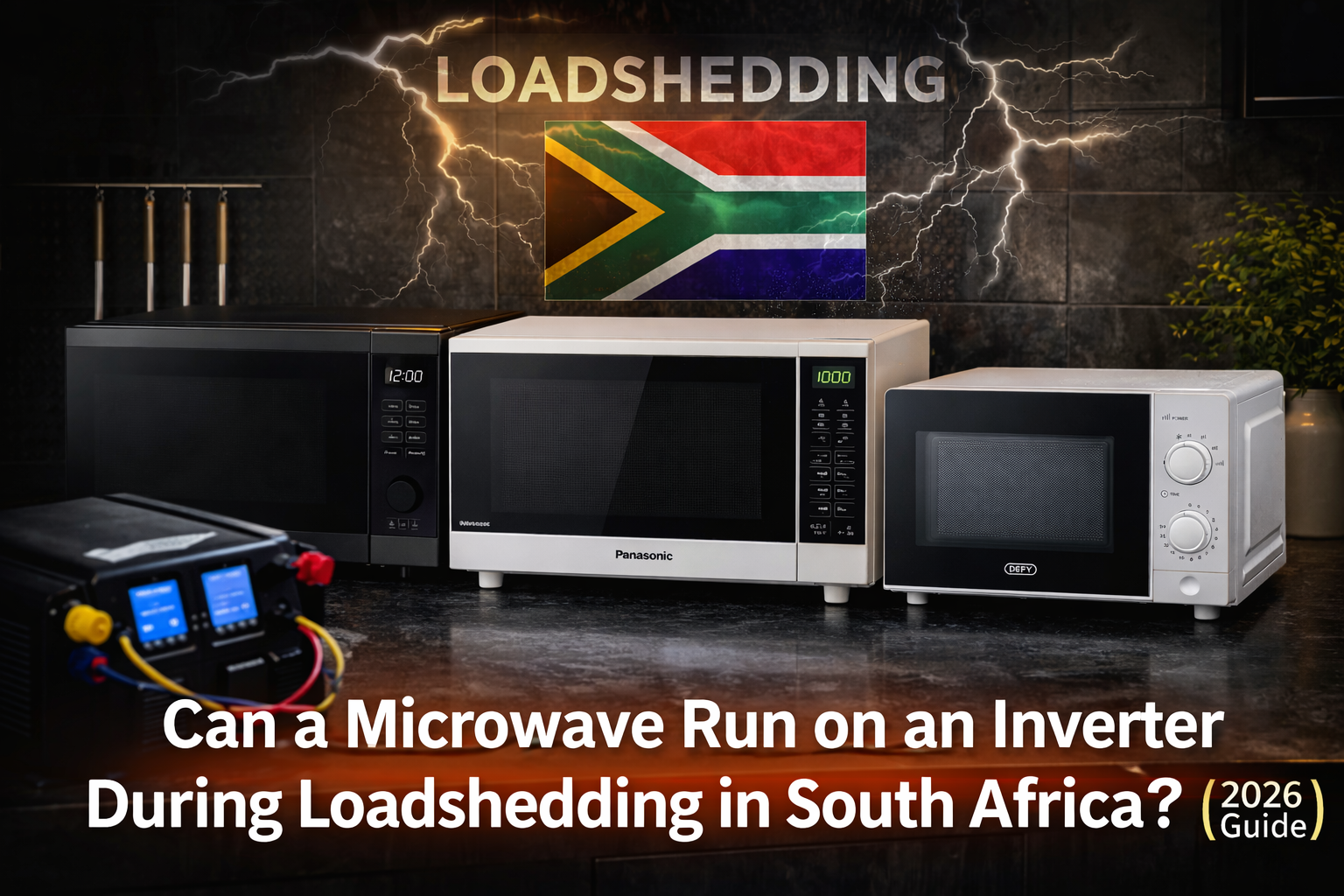
    Can a Microwave Run on an Inverter During Loadshedding in South Africa? (2026 Guide)

    Published on Tigdag.com | Updated March 2026

    Loadshedding has forced South African households to rethink how they cook. Air fryers, kettles, and microwaves are among the most used kitchen appliances — but not all of them behave the same way on backup power. While an air fryer can run on a 2kVA inverter with reasonable battery life, a microwave is a different story.

    This guide explains exactly whether a microwave can run on an inverter during loadshedding in South Africa, what size inverter you actually need, how long your battery will last, and what alternatives are worth considering when the power goes out.

    Quick Answer: Yes, a microwave can run on an inverter during loadshedding — but you need a minimum 2kVA pure sine wave inverter, and realistically a 3kVA system for reliable performance. Most small home inverters and all mini UPS devices cannot run a microwave. Battery life is also very short — typically 5–15 minutes of cooking per session depending on your battery bank size.

    How Much Power Does a Microwave Actually Use?

    Understanding why microwaves are demanding on inverters starts with their power draw. Unlike an air fryer which cycles its heating element on and off, a microwave transformer draws consistent high current from the moment it starts cooking until it stops. There is very little cycling — it runs at full load continuously.

    Microwave TypeInput Wattage (Wall Draw)Output Wattage (Cooking Power)Startup Surge
    700W output microwave~1,000–1,100W input700W cooking1,500–2,000W for 1–2 seconds
    900W output microwave~1,200–1,400W input900W cooking1,800–2,500W for 1–2 seconds
    1,000W output microwave~1,300–1,500W input1,000W cooking2,000–3,000W for 1–2 seconds
    1,200W output microwave~1,600–1,800W input1,200W cooking2,500–3,500W for 1–2 seconds

    The important distinction is between output wattage (the cooking power advertised on the box) and input wattage (what the microwave actually draws from your wall socket or inverter). A microwave rated at 700W cooking power typically draws 1,000–1,100W from the mains. This is the figure your inverter must handle — not the advertised output wattage.

    ⚠️ Important: Many South Africans size their inverter based on the advertised cooking wattage on the microwave box. This is incorrect. Always use the input wattage — found on the back label of the microwave — to size your inverter correctly.

    What Size Inverter Do You Need to Run a Microwave?

    Inverters are rated by their continuous output in VA (volt-amperes) or watts. To run a microwave reliably, your inverter must handle both the continuous input wattage AND the startup surge without tripping or shutting down.

    Inverter SizeCan It Run a Microwave?Which MicrowavesNotes
    Mini UPS (300–600VA)NoNoneFar too small — designed for routers only
    1kVA inverter (600–800W)NoNoneCannot handle startup surge of any microwave
    1.5kVA inverter (900–1,200W)Marginal700W output onlyMay trip on startup — not recommended
    2kVA inverter (1,200–1,600W)Yes — with caution700W–900W outputMust be pure sine wave, good battery needed
    3kVA inverter (1,800–2,400W)Yes — reliable700W–1,000W outputRecommended minimum for reliable microwave use
    5kVA inverter (3,000–4,000W)Yes — comfortablyAll microwave sizesHandles startup surge with ease

    ⚠️ Important: Your inverter MUST be a pure sine wave inverter to run a microwave. Modified sine wave inverters (common in cheaper trolley units) will damage microwave transformers over time and may cause the microwave to malfunction immediately. Always confirm your inverter type before connecting a microwave.

    ✅ Tip: Check the label on the back or bottom of your microwave for the input wattage — it is listed as ‘Input Power’ or ‘Rated Input’. This is the number to use when sizing your inverter, not the output wattage on the front panel.

    How Long Will Your Battery Last Running a Microwave?

    This is where most South African households get disappointed. Even with the right inverter, microwave cooking sessions on battery power are short. Here is how long common battery configurations will run a 900W input microwave (approximately 700W output):

    Battery BankUsable CapacityEstimated Microwave RuntimePractical Reality
    1 x 100Ah 12V AGM battery~50Ah usable (50%)~5–7 minutesOne reheating session only
    2 x 100Ah 12V AGM batteries~100Ah usable~10–14 minutesTwo short cooking sessions
    1 x 100Ah 12V Lithium (LiFePO4)~90Ah usable (90%)~9–12 minutesBetter than AGM — more usable capacity
    2 x 100Ah 12V Lithium~180Ah usable~18–25 minutesPractical for regular loadshedding cooking
    100Ah 24V Lithium system~180Ah usable (higher voltage)~20–28 minutesMore efficient at higher voltage

    The short battery life is the core reason why an air fryer is often a more practical loadshedding cooking appliance than a microwave for most South African households. An air fryer draws similar input wattage to a microwave but produces full cooked meals — not just reheated food — making each battery amp-hour more useful.

    ✅ Tip: If loadshedding cooking is your priority, a 1,500W air fryer on a 2kVA inverter will give you approximately 30–40 minutes of cooking time on a 100Ah lithium battery — enough for a full meal. A microwave on the same battery gives you 10–12 minutes of reheating only.

    Why Your Inverter Must Be Pure Sine Wave

    This is one of the most important technical points for South African households running appliances on backup power. There are two types of inverter output:

    Pure Sine Wave Inverters

    • Produce smooth, consistent AC power — identical to Eskom grid power
    • Safe for all appliances including microwaves, fridges, and electronics
    • More expensive than modified sine wave inverters
    • Examples: Victron, Sunsynk, Deye, Mecer hybrid inverters

    Modified Sine Wave Inverters

    • Produce a stepped, approximate AC waveform — not smooth
    • Cheaper but not suitable for microwave transformers
    • Will cause humming, overheating, and eventual transformer damage in microwaves
    • Suitable only for basic loads like lights, phone chargers, and fans
    • Common in cheap trolley inverters sold under R2,000 at hardware stores

    ⚠️ Important: If you are unsure whether your inverter is pure sine wave or modified sine wave, check the product manual or the inverter label. Do not connect a microwave to a modified sine wave inverter — even once. The damage may not be immediately visible but will shorten the microwave’s lifespan significantly.

    Practical Guide — Running a Microwave During Loadshedding

    What You Need for Reliable Microwave Use on Backup Power

    • A 3kVA or larger pure sine wave inverter
    • At least 2 x 100Ah lithium batteries (or 4 x 100Ah AGM batteries)
    • Properly installed system with correct cable sizing for the load
    • A microwave with an input wattage of 1,400W or less for best results

    Which SA Microwaves Are Most Inverter-Friendly?

    Lower input wattage microwaves are easier on your inverter and battery. Here are the best options from our microwave buying guide ranked by inverter compatibility:

    ModelOutput WattsApprox. Input WattsInverter CompatibilityPrice
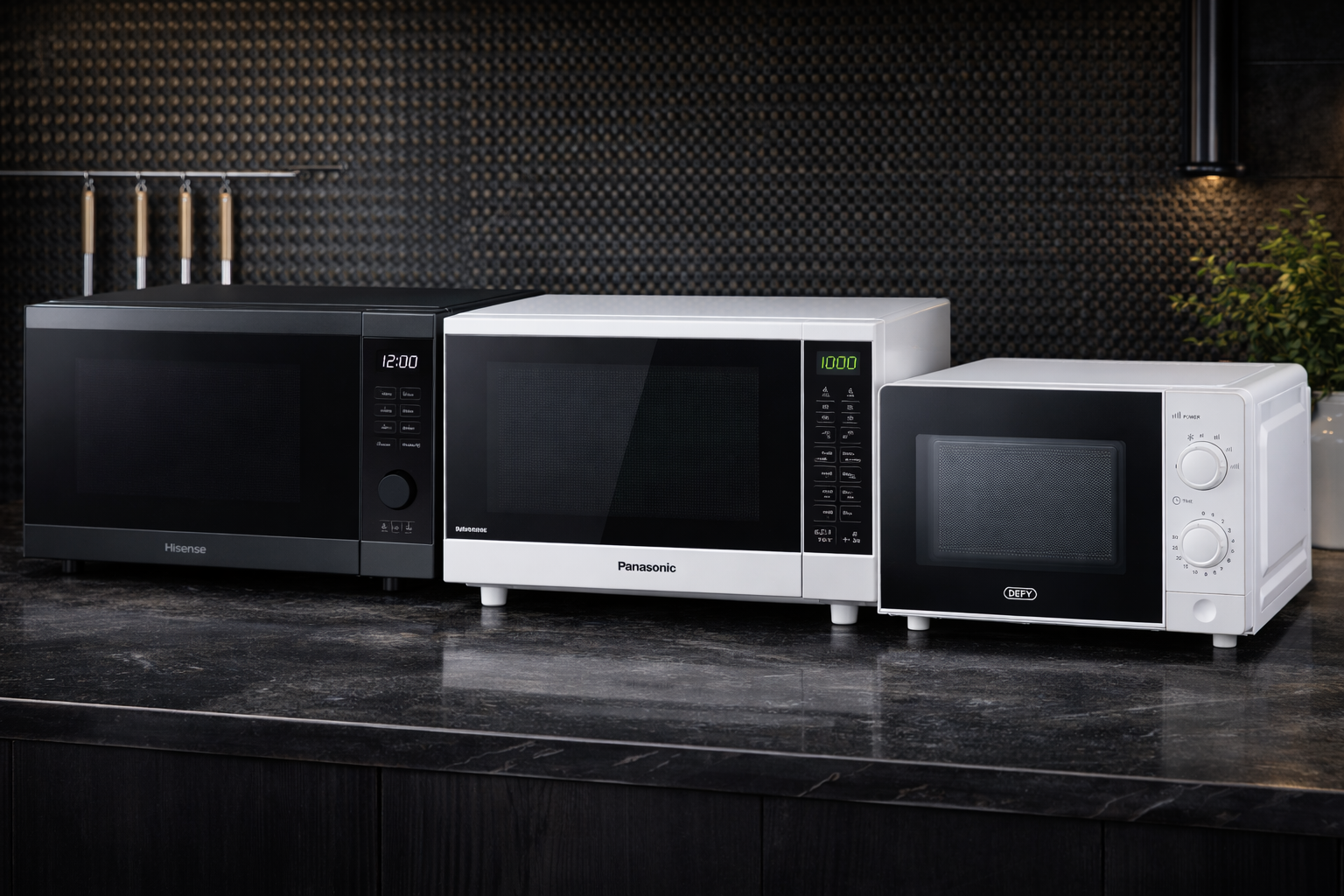
    Defy DMO384 20L Manual700W~1,000W2kVA+ (marginal)~R899
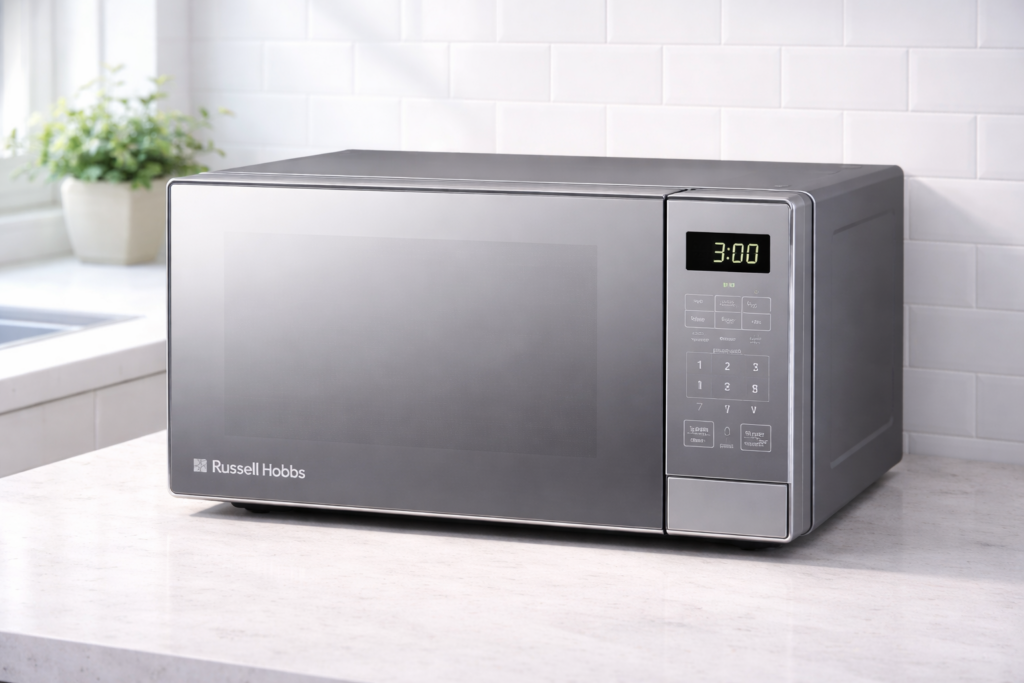
    Russell Hobbs RHEM21L 20L700W~1,050W2kVA+ (marginal)~R999–R1,399
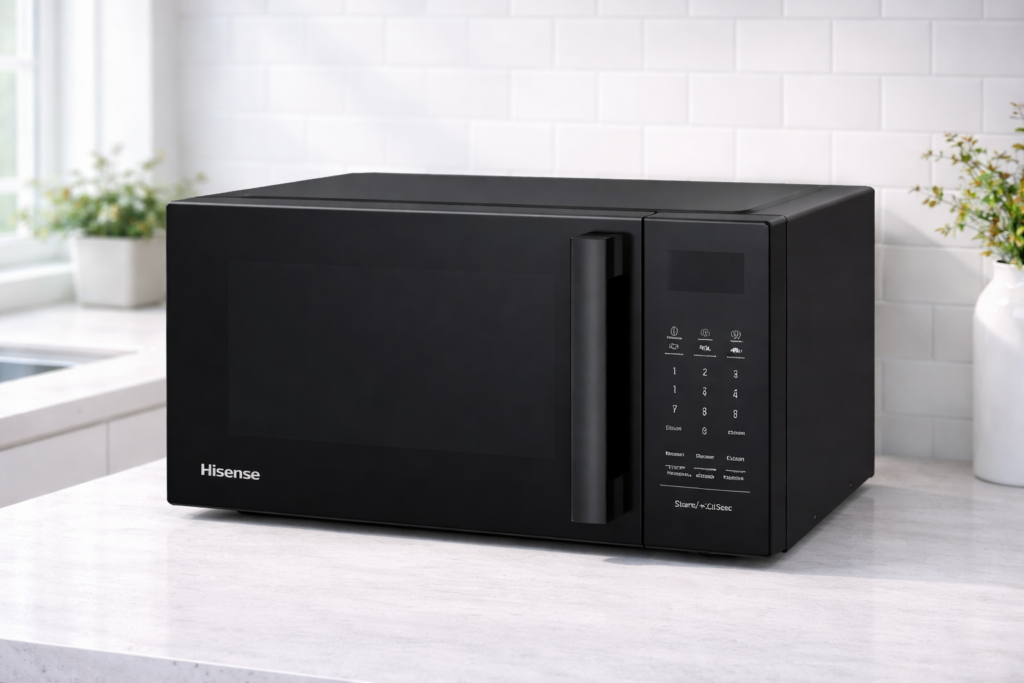
    Hisense H28MOBS17 28L900W~1,250W3kVA+ (recommended)~R1,199–R1,799
    Defy DMO390 30L900W~1,300W3kVA+ (recommended)~R1,999
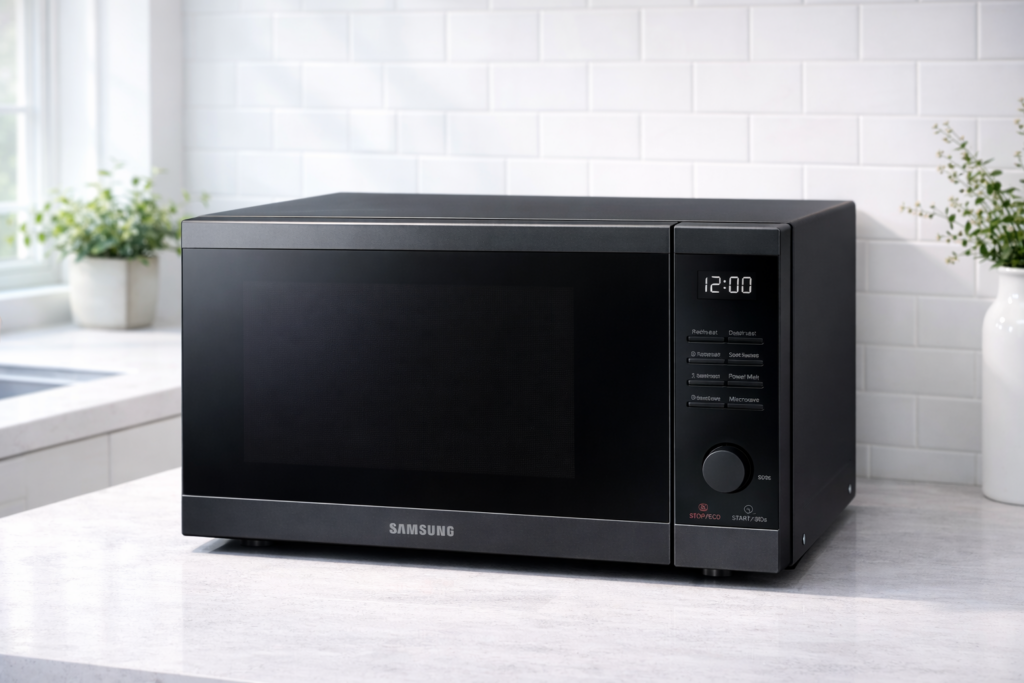
    Samsung MS32DG4504 32L1,000W~1,400W3kVA+ (recommended)~R2,399
    LG NeoChef MS4235GIS 42L1,200W~1,600W5kVA+ (required)~R2,799
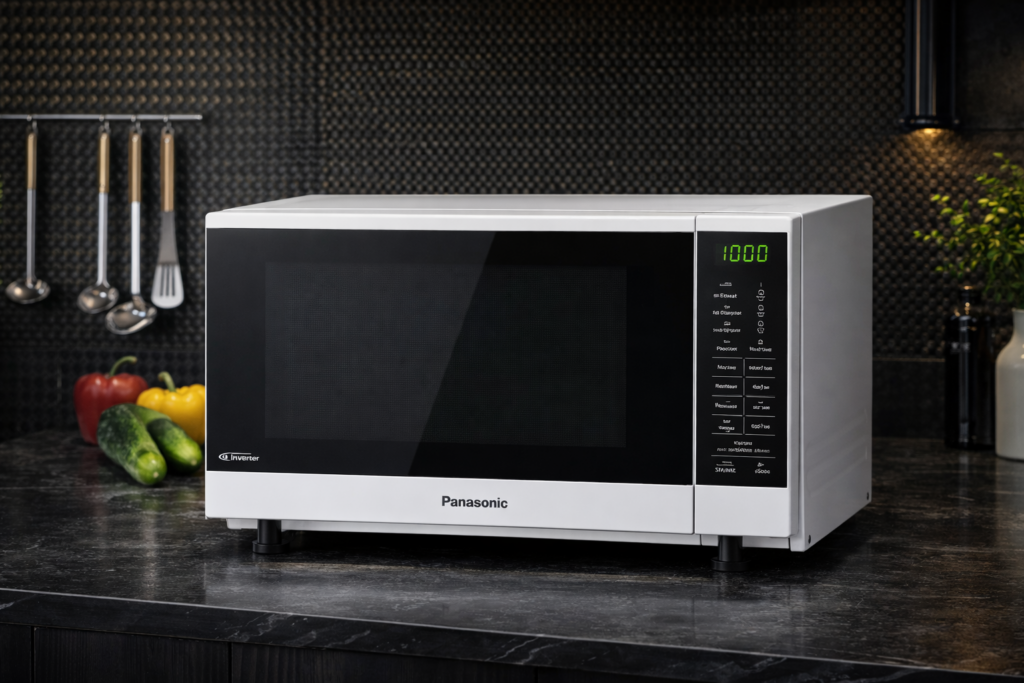
    Panasonic NN-SF564W 27L1,000W~1,400W3kVA+ (recommended)~R2,699–R3,199

    ✅ Tip: If you specifically want a microwave that can run on a 2kVA inverter during loadshedding, choose a 700W output model like the Defy DMO384 or Russell Hobbs RHEM21L. Their lower input wattage gives your inverter the best chance of handling the startup surge without tripping.

    Generator vs Inverter for Running a Microwave

    Many South African households use petrol generators as an alternative to battery inverters during loadshedding. For microwave use specifically, a generator is actually more practical than a battery inverter for most homes.

    FactorBattery InverterPetrol Generator
    StartupInstant — no waitingNeeds 30–60 seconds to stabilise
    NoiseSilentLoud — cannot use indoors
    Runtime for microwave5–25 minutes (battery limited)Unlimited while fuel lasts
    WaveformPure sine wave (if correct type)Usually clean sine wave
    Cost to runLow — uses stored solar/grid powerR8–R15 per hour in petrol
    Best forQuick reheating sessionsFull cooking during extended outages
    Min size needed3kVA inverter + large battery bank2kVA generator

    For households that experience Stage 4–6 loadshedding with 4–6 hour outages, a generator is more practical than a battery inverter specifically for microwave use. The unlimited runtime makes it more useful for preparing full meals during long outages.

    Loadshedding Cooking Alternatives to a Microwave

    Given the power demands of a microwave, many South African households find it more practical to use alternative cooking methods during loadshedding rather than sizing up their inverter specifically for microwave use. Here is how the most common alternatives compare:

    ApplianceInput WattageMin Inverter NeededWhat It Can DoInverter Practicality
    Air fryer (1,500W)~1,500–1,700W2kVAFull cooking — chips, chicken, meat, bakingExcellent
    Microwave (700W output)~1,000–1,100W2kVA (marginal)Reheating and defrosting onlyPoor battery life
    Electric kettle (1,500W)~1,500–1,700W2kVABoiling water only — very fastGood for quick use
    Slow cooker (200W)~200–300W500VAFull meals — but very slowExcellent — very efficient
    Gas stove (no electricity)0WNone neededFull cooking on gasPerfect for loadshedding
    Microwave (1,000W output)~1,400–1,500W3kVAReheating and defrosting onlyPoor battery life

    The data makes clear why air fryers have become the dominant loadshedding cooking appliance in South Africa. They require similar inverter sizing to a microwave but deliver full cooking capability — not just reheating. For the same battery cost, an air fryer produces a complete meal while a microwave only reheats one.

    Frequently Asked Questions

    Can a mini UPS run a microwave?

    No. Mini UPS devices are designed for routers, fiber ONT boxes, and small electronics. They typically output 300–600VA — far too little to handle even the smallest 700W microwave’s input draw of 1,000W+. Connecting a microwave to a mini UPS will immediately overload and damage the UPS.

    Why does my microwave trip my inverter?

    The most common reasons are: your inverter is undersized for the microwave’s input wattage, the startup surge exceeds your inverter’s peak capacity, or your inverter is modified sine wave rather than pure sine wave. Check the input wattage on the back of your microwave and compare it to your inverter’s continuous output rating. If they are close, the surge will trip the inverter.

    Is it safe to use a microwave on a generator?

    Yes, provided the generator is running stably before you switch the microwave on. Allow the generator 30–60 seconds to reach stable output before connecting high-load appliances. A 2kVA generator is the minimum recommended size for a 700W output microwave.

    Will using a microwave on an inverter damage it?

    Not if your inverter is correctly sized and is a pure sine wave type. Using an undersized inverter will cause it to trip repeatedly, which may cause long-term inverter damage. Using a modified sine wave inverter will cause microwave transformer damage over time. Always match the inverter type and capacity to the appliance requirements.

    What is the most energy-efficient way to reheat food during loadshedding?

    A gas stove uses no electricity at all and is the most practical for extended loadshedding. If you have a battery inverter, an air fryer gives you the most cooking capability per amp-hour of battery. If you specifically need to reheat liquids or soups quickly, a 700W microwave on a 2kVA+ pure sine wave inverter is manageable for short sessions.

    Final Verdict

    A microwave can run on an inverter during loadshedding in South Africa — but the practical reality is that most home backup power systems are not well suited to it. The high input wattage, startup surge, and short battery runtime make microwave use on battery power frustrating and expensive to enable.

    For most South African households, the better investment is a 2kVA pure sine wave inverter paired with a 100Ah lithium battery and an air fryer — which gives you far more cooking capability per rand spent on backup power than a microwave setup would.

    If you specifically want to run a microwave during loadshedding, a 3kVA pure sine wave inverter with at least 2 x 100Ah lithium batteries is the minimum practical setup. Choose a 700W output microwave like the Defy DMO384 or Russell Hobbs RHEM21L for the lowest input wattage draw and best inverter compatibility.

    Related guides on Tigdag.com:

    Tigdag is a South African buying guide and product review website. All content is written to give honest, practical advice for South African households — not generic international content repurposed for a local audience.
  • Best Microwave in South Africa (2026) — Complete Buyer’s Guide

    Best Microwave in South Africa (2026) — Complete Buyer’s Guide

    Published on Tigdag.com | Updated March 2026

    Microwaves are one of the most used kitchen appliances in South African homes. Whether you are reheating leftovers after loadshedding, defrosting meat quickly before dinner, or cooking a full meal in minutes, the right microwave makes daily life significantly easier.

    The problem is that microwave options in South Africa range from under R900 to over R6,000 — and the price difference does not always reflect the quality difference. This guide compares the best microwaves available in South Africa in 2026 based on real specifications, pricing from major SA retailers, and practical performance for everyday use.

    Quick Answer: Best microwaves in South Africa 2026 — Best Overall: LG NeoChef 42L MS4235GIS (R2,799) | Best Budget: Russell Hobbs RHEM21L 20L (R999–R1,399) | Best Mid-Range: Defy DMO390 30L (R1,999) | Best for Families: Samsung 32L MS32DG4504 (R2,399) | Best Premium: Panasonic NN-SF564W 27L Inverter (R2,699–R3,199)

    Quick Comparison Table — Best Microwaves in South Africa 2026

    ModelCapacityWattageTypePrice RangeBest For
    LG NeoChef MS4235GIS42L1,200WSolo InverterR2,799Best overall
    Russell Hobbs RHEM21L20L700WSoloR999–R1,399Best budget
    Defy DMO39030L900WSoloR1,999Best mid-range
    Samsung MS32DG450432L1,000WSolo/GrillR2,399Families
    Hisense H28MOBS1728L900WSoloR1,199–R1,799Value pick
    Panasonic NN-SF564W27L1,000WSolo InverterR2,699–R3,199Premium quality
    Defy DMO38420L700WSolo ManualR899Tightest budget

    Prices sourced from Takealot, HiFi Corp, Makro, and Game. Prices may vary by retailer and change over time — always check current pricing before purchasing.

    1. LG NeoChef 42L Smart Inverter Microwave — MS4235GIS

    LG NeoChef 42L Smart Inverter Microwave — MS4235GIS

    Best Overall Microwave in South Africa

    The LG NeoChef MS4235GIS is the best all-round microwave available in South Africa right now. It combines a large 42L capacity, LG’s Smart Inverter technology, and a genuinely useful antibacterial interior — all at a price point that has dropped significantly in 2026, now available for around R2,799 at Takealot and Game.

    Smart Inverter technology is what sets this model apart from standard microwaves. Instead of cycling power on and off at full wattage (which causes uneven heating), the inverter continuously adjusts power output to maintain a precise temperature. This means food heats evenly throughout, defrosting is more accurate, and delicate items like fish or cheese do not overcook on the edges while the centre is still cold.

    Key Specifications

    SpecDetail
    ModelLG MS4235GIS
    Capacity42L
    Power Output1,200W output / 1,350W microwave
    TypeSolo with Smart Inverter
    Turntable360mm diameter
    ControlsSmoothTouch Glass Touch panel
    Power Levels10
    Sensor Cooking Options7 (potato, vegetable, frozen entrée, bacon, rice, butter)
    InteriorEasyClean antibacterial enamel coating
    Dimensions (HxWxD)307mm x 544mm x 439mm
    Warranty2 years (10 years on Smart Inverter magnetron)
    Price RangeR2,799 (Takealot, Game, Kloppers)

    Pros

    • Smart Inverter technology heats food evenly — no cold spots
    • 42L is the largest capacity in this price range in SA
    • Antibacterial EasyClean interior — wipes clean in seconds
    • 10-year warranty on the inverter magnetron — exceptional long-term value
    • Energy-saving button turns off LED display to reduce standby power
    • Available on Takealot — easy to purchase and return if needed

    Cons

    • No grill function — cannot brown or crisp food
    • Larger footprint than most SA kitchen counters are used to (544mm wide)
    • Touch controls can be less intuitive than dial controls for some users

    Who should buy this: Anyone who wants the best everyday microwave in South Africa. Ideal for families, people who cook fish or delicate proteins, and anyone frustrated by uneven reheating in cheaper microwaves.

    2. Russell Hobbs 20L Electronic Microwave — RHEM21L

    Russell Hobbs 20L Electronic Microwave — RHEM21L

    Best Budget Microwave in South Africa

    The Russell Hobbs RHEM21L is the most popular budget microwave in South Africa and consistently one of the top-selling microwaves on Takealot and at HiFi Corp. For households that primarily use a microwave for reheating leftovers, defrosting meat, and making quick meals, this model does everything needed at the lowest justifiable price.

    At R999–R1,399 depending on the retailer, the RHEM21L offers a feather-touch control panel, 11 power levels, 8 auto menus (including popcorn, pizza, and frozen vegetable), and a mirror finish that looks far more expensive than it is. The 700W output is adequate for most everyday tasks, though it is noticeably slower than 900W–1,000W models for larger portions.

    Key Specifications

    SpecDetail
    ModelRussell Hobbs RHEM21L
    Capacity20L
    Power Output700W
    TypeSolo
    Turntable245mm diameter
    ControlsFeather touch digital
    Power Levels11
    Auto Menus8 (popcorn, pizza, frozen veg, beverage, dinner plate, potato, cook, defrost)
    InteriorWhite painted cavity
    Dimensions (HxWxD)258mm x 452mm x 351mm
    Warranty1 year
    Price RangeR999–R1,399 (Makro, HiFi Corp, Takealot)

    Pros

    • Most affordable decent microwave available in SA
    • Feather touch controls are easy to use
    • Mirror finish looks premium despite the budget price
    • 8 auto menus remove guesswork for common foods
    • Compact size works well in small kitchens, flats, and student accommodation
    • Widely available across SA retailers — easy to find parts and service

    Cons

    • 700W is slower than mid-range models — noticeable for large portions
    • 20L capacity limits what you can fit inside
    • No inverter — heating can be uneven at lower power levels
    • 1-year warranty is shorter than premium competitors

    Who should buy this: Students, singles, couples, or any household on a tight budget that primarily needs a microwave for reheating and basic cooking. Best value microwave in South Africa under R1,500.

    3. Defy 30L Solo Digital Microwave — DMO390

    Defy 30L Solo Digital Microwave — DMO390

    Best Mid-Range Microwave in South Africa

    Defy is one of the most trusted appliance brands in South Africa, and the DMO390 is their best-selling microwave for good reason. It sits in the sweet spot between budget and premium — large enough for a family, powerful enough to cook quickly, and reliable enough to last years of daily use.

    The 30L capacity is a significant upgrade over 20L budget models. It comfortably fits a dinner plate, a 2L casserole dish, or a full-size bowl of leftovers. The 900W output cooks noticeably faster than 700W budget microwaves, and the digital controls with preset programs make it easy to use for all family members. The mirror glass metallic finish is a signature Defy design that fits well in modern SA kitchens.

    Key Specifications

    SpecDetail
    ModelDefy DMO390
    Capacity30L
    Power Output900W
    TypeSolo
    ControlsDigital with preset programs
    InteriorMetallic mirror glass door
    Dimensions (HxWxD)300mm x 539mm x 424mm
    Warranty2 years
    Price RangeR1,999 (HiFi Corp, Makro, Game, Best Electric)

    Pros

    • 30L capacity handles full family meals comfortably
    • 900W cooks noticeably faster than 700W budget models
    • Defy is a trusted SA brand with reliable local service support
    • 2-year warranty — double that of budget competitors
    • Sleek metallic mirror design suits modern kitchens
    • Widely available at major SA retailers and online

    Cons

    • No inverter technology — heating can be uneven on lower power settings
    • No grill function
    • Slightly larger footprint than 20L models

    Who should buy this: Families of 2–4 people who need a reliable, mid-sized microwave from a trusted SA brand. The best balance of capacity, performance, and price for most South African households.

    4. Samsung 32L Solo Microwave Oven — MS32DG4504AGFA

    4. Samsung 32L Solo Microwave Oven — MS32DG4504AGFA

    Best Microwave for Families

    Samsung’s MS32DG4504 is the microwave to choose if you want a large, powerful, well-built unit from a brand with strong SA service support. The 32L capacity and 1,000W output make it one of the fastest mid-range microwaves available in South Africa, and the combination of a dial and button control panel is notably easier to use than touch-only panels.

    This model is available in both black stainless (MS32DG4504AGFA) and silver (MS32DG4504ATFA) finishes at around R2,399. It features 15 auto cook menus, a 318mm turntable that accommodates larger plates than most competitors, and Samsung’s 2-year manufacturer warranty with strong SA service infrastructure behind it.

    Key Specifications

    SpecDetail
    ModelSamsung MS32DG4504AGFA (Black) / ATFA (Silver)
    Capacity32L
    Power Output1,000W
    TypeSolo
    Turntable318mm diameter
    ControlsDial + button combination
    Power Levels7
    Auto Cook Menus15
    Dimensions (WxHxD)517mm x 297mm x 424mm
    Warranty2 years
    Price RangeR2,399 (Rama’s, Game, Takealot)

    Pros

    • 1,000W output — among the fastest in this price range
    • 32L capacity with large 318mm turntable fits bigger dishes
    • Dial and button controls are intuitive for all age groups
    • 15 auto cook menus cover a wide range of common meals
    • Strong Samsung SA service infrastructure
    • Available in black and silver to match kitchen decor

    Cons

    • Dark finish shows fingerprints easily
    • Interior light is not especially bright
    • No inverter technology
    • Buttons can be difficult to read in low light

    Who should buy this: Families who want a large, fast, reliable microwave from a well-known brand. Excellent choice if you regularly cook or reheat large portions and want a microwave that will last years.

    5. Hisense 28L Digital Microwave Oven — H28MOBS17

    Hisense 28L Digital Microwave Oven

    Best Value Pick

    The Hisense H28MOBS17 is one of the most competitively priced 28L microwaves in South Africa. Hisense has built a strong reputation in the SA appliance market for offering reliable products at prices significantly below premium brands, and this microwave follows that pattern.

    The 28L capacity sits between the 20L budget models and 30L+ mid-range options, making it a practical choice for couples or small families who want more space than a budget microwave provides without spending R2,000+. The digital controls, 10 power levels, and 6 auto cooking menus cover all everyday tasks comfortably.

    Key Specifications

    SpecDetail
    ModelHisense H28MOBS17
    Capacity28L
    Power Output900W
    TypeSolo
    ControlsDigital blue LED display
    Power Levels10
    Auto Menus6
    DefrostTime and weight defrost
    SafetyChild safety lock
    Price RangeR1,199–R1,799 (HiFi Corp, Makro, Hirsch’s)

    Pros

    • 28L offers meaningful upgrade over 20L budget models
    • 900W output cooks faster than entry-level microwaves
    • 10 power levels give more precise control than budget models
    • Child safety lock — useful for family homes
    • Hisense SA has good retailer coverage for warranty claims

    Cons

    • No inverter technology
    • Build quality is a step below Samsung and LG
    • Auto menu selection is more limited than premium competitors

    Who should buy this: Couples or small families who want a step up from the cheapest budget microwaves without crossing R2,000. Good value for everyday use.

    6. Panasonic 27L Inverter Microwave Oven — NN-SF564W

    Best Premium Microwave in South Africa

    For buyers who want the best cooking performance available without spending on a convection microwave, the Panasonic NN-SF564W is the premium choice. Panasonic is widely regarded as producing some of the most reliable and technically advanced consumer microwaves in the world, and the NN-SF564W brings Panasonic’s Inverter technology to South African households at R2,699–R3,199.

    Like the LG NeoChef, the Panasonic uses inverter technology to deliver consistent, precise power — but Panasonic’s implementation is regarded as the most refined available at this price point. The result is exceptionally even reheating, accurate defrosting, and significantly better results with delicate foods than any non-inverter microwave can achieve.

    Key Specifications

    SpecDetail
    ModelPanasonic NN-SF564W
    Capacity27L
    Power Output1,000W
    TypeSolo with Inverter
    ControlsTouch panel
    Power Levels10
    Auto Programs14
    Turbo DefrostYes
    Warranty2 years
    Price RangeR2,699–R3,199 (Takealot, Hirsch’s, Yuppiechef)

    Pros

    • Panasonic inverter technology — best-in-class even heating
    • Turbo Defrost accurately and evenly defrosts without cooking edges
    • 14 auto programs cover a wide range of cooking tasks
    • Panasonic’s global reliability reputation — built to last
    • 1,000W output cooks quickly

    Cons

    • 27L capacity is smaller than the LG NeoChef at a similar price
    • Panasonic SA service centres are less widely distributed than Samsung or LG
    • Higher price than equivalent capacity Defy or Hisense models

    Who should buy this: Anyone who wants the best cooking performance available under R3,500. Ideal for households that cook fish, defrost meat regularly, or are frustrated by uneven heating in cheaper microwaves. The cooking quality difference versus budget models is immediately noticeable.

    Also Recommended: Defy 20L Manual Microwave — DMO384

    Defy 20L Manual Microwave — DMO384

    Best Microwave Under R1,000

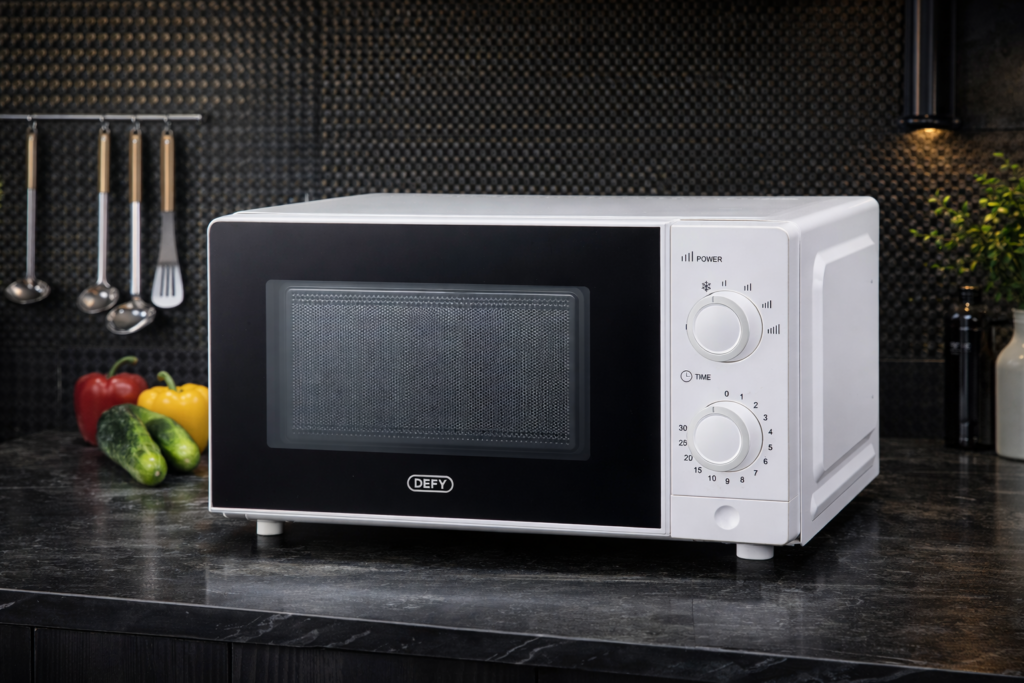
    If budget is the absolute priority, the Defy DMO384 is available for R899 at HiFi Corp and is the most affordable microwave from a trusted SA brand. It is a 20L manual dial microwave with 700W output and 6 power levels. It does not have digital controls or auto menus, but it is reliable, simple to use, and backed by Defy’s SA service network.

    For students, small flats, or households that only need a microwave for basic reheating, the DMO384 is sufficient. Do not expect it to handle large portions or deliver the cooking quality of mid-range inverter models.

    How to Choose a Microwave in South Africa

    1. Capacity — What Size Do You Need?

    Household SizeRecommended CapacityModels to Consider
    1 person / student20LRussell Hobbs RHEM21L, Defy DMO384
    Couple / small family20L–28LHisense H28MOBS17, Russell Hobbs RHEM21L
    Family of 3–428L–32LSamsung MS32DG4504, Defy DMO390
    Large family / heavy use32L–42LLG NeoChef MS4235GIS, Samsung MS32DG4504

    2. Wattage — How Fast Do You Need It?

    • 700W — Adequate for reheating and basic defrosting. Slower for large portions.
    • 900W — Good all-round performance for most SA families.
    • 1,000W–1,200W — Noticeably faster. Worth the extra cost if you cook with your microwave regularly.

    3. Solo vs Grill vs Convection

    • Solo microwave — Heats and defrosts only. Sufficient for 90% of SA households.
    • Grill microwave — Adds a heating element to brown and crisp food. Useful for toasting and grilling.
    • Convection microwave — Functions as a small oven. Higher price, but replaces an oven for baking and roasting. More relevant during loadshedding.

    4. Inverter vs Standard

    Standard microwaves cycle between full power and zero to simulate lower power levels. This causes uneven heating — hot edges, cold centre. Inverter microwaves maintain a consistent lower power output, which heats food evenly throughout. If your budget allows, always choose an inverter model for noticeably better food quality.

    5. Loadshedding Considerations

    Unlike air fryers or kettles, most microwaves cannot run on a small home inverter. A typical 700W–1,000W microwave requires a 2kVA+ inverter to run reliably. The startup surge of the microwave transformer adds to this requirement.

    • Mini UPS (for WiFi routers): Cannot run a microwave.
    • 1kVA inverter: Cannot run a microwave reliably.
    • 2kVA+ inverter with battery: Can run most 700W–900W microwaves.
    • 3kVA+ inverter or generator: Required for reliable 1,000W+ microwave operation.

    ✅ During loadshedding, an air fryer is a more practical backup cooking appliance than a microwave for most SA households, as it requires similar power but produces better cooking results. See our air fryer guides for more detail.

    Full Comparison Table — Best Microwaves South Africa 2026

    ModelCapacityWattsInverterWarrantyPrice
    LG NeoChef MS4235GIS42L1,200W✓ Yes2yr + 10yr magnetron~R2,799
    Russell Hobbs RHEM21L20L700W✗ No1 year~R999–R1,399
    Defy DMO39030L900W✗ No2 years~R1,999
    Samsung MS32DG450432L1,000W✗ No2 years~R2,399
    Hisense H28MOBS1728L900W✗ No2 years~R1,199–R1,799
    Panasonic NN-SF564W27L1,000W✓ Yes2 years~R2,699–R3,199
    Defy DMO38420L700W✗ No2 years~R899

    Frequently Asked Questions

    Which microwave brand is most reliable in South Africa?

    LG and Panasonic consistently produce the most reliable microwaves globally and in South Africa. For local brand support and service, Defy and Samsung have the strongest SA service networks. Russell Hobbs and Hisense offer solid reliability at lower price points.

    What is the best microwave under R1,500 in South Africa?

    The Russell Hobbs RHEM21L at R999–R1,399 is the best microwave under R1,500 in South Africa. It offers feather touch controls, 11 power levels, 8 auto menus, and a premium mirror finish at a budget price. The Hisense H28MOBS17 is worth considering if you need more than 20L capacity and can stretch to R1,199.

    Is it worth buying an inverter microwave in South Africa?

    Yes, if your budget allows. Inverter microwaves (LG NeoChef, Panasonic NN-SF564W) heat food significantly more evenly than standard microwaves. The quality difference is immediately noticeable when reheating rice, defrosting meat, or cooking fish. The price premium over non-inverter models has also narrowed considerably in 2026.

    Can a microwave run on an inverter during loadshedding?

    Yes, but you need at least a 2kVA home inverter with a charged battery bank. Most small UPS devices and trolley inverters cannot handle the startup load of a microwave. A 700W–900W microwave can run on a 2kVA inverter for short cooking sessions. See our full guide on running appliances on inverters during loadshedding for more detail.

    What size microwave do I need for a family of 4?

    A 28L–32L microwave is ideal for a family of 4. This capacity comfortably fits full dinner plates, casserole dishes, and large bowls. Models like the Defy DMO390 (30L) and Samsung MS32DG4504 (32L) are well-suited to family use at reasonable prices.

    Final Verdict — Which Microwave Should You Buy?

    For most South African households, the Defy DMO390 (30L, R1,999) is the safest all-round choice. It offers the right capacity for a family, reliable 900W performance, and the peace of mind of a trusted South African brand with good service coverage.

    If budget allows, the LG NeoChef MS4235GIS (42L, R2,799) is a clear upgrade — larger capacity, inverter technology for even heating, and an exceptional 10-year magnetron warranty. It is genuinely one of the best-value premium microwaves available in South Africa in 2026.

    For buyers on a tight budget, the Russell Hobbs RHEM21L (20L, R999–R1,399) does everything most households need at the lowest justifiable price.

    Related guides on Tigdag.com:

    Tigdag is a South African buying guide and product review website. No sponsored rankings. All guides are written to give honest, practical advice for South African households based on real product specifications and local pricing.

  • How Much Electricity Does a Microwave Use in South Africa?

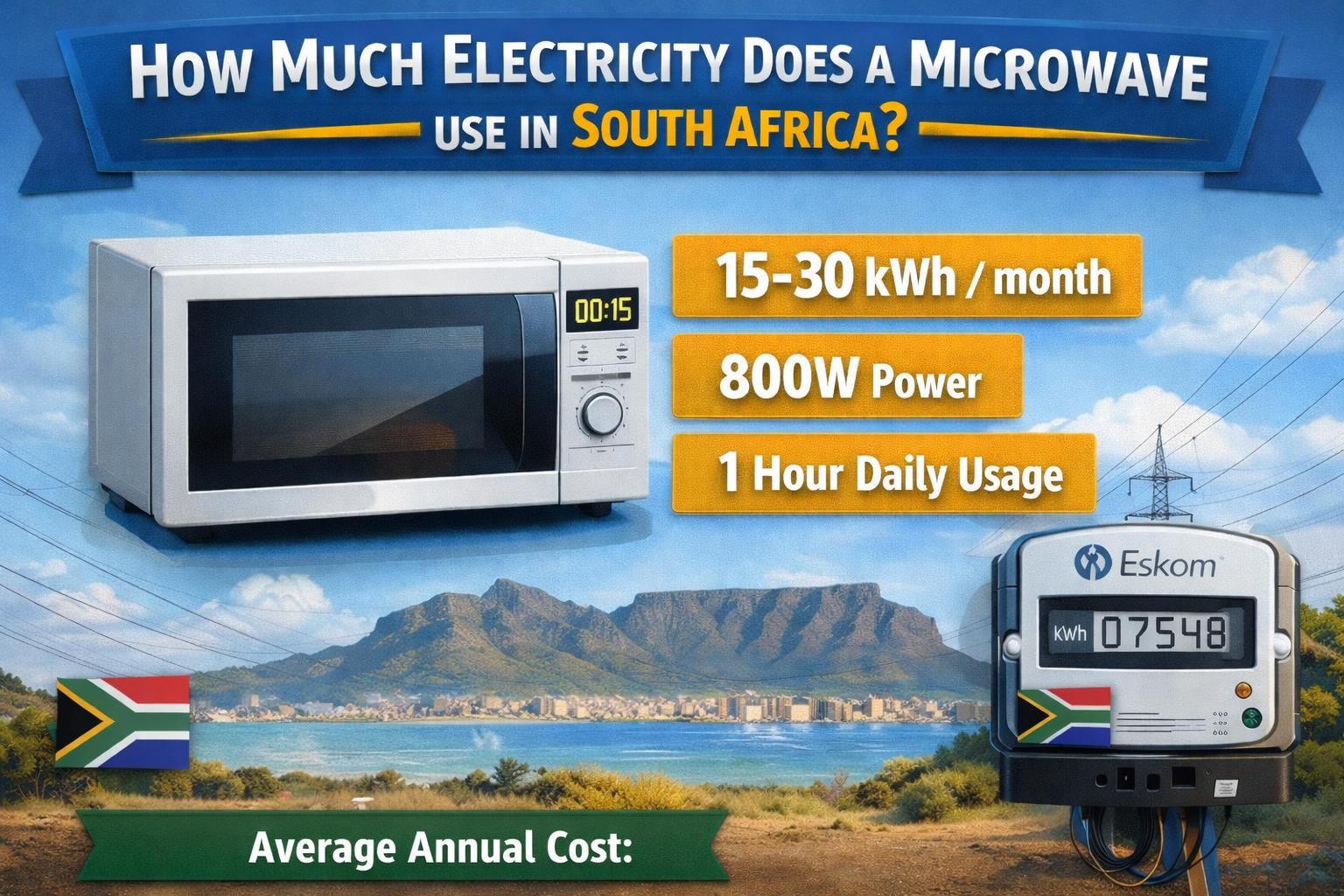
    How Much Electricity Does a Microwave Use in South Africa?

    Microwaves are one of the most common kitchen appliances in South African homes. They are widely used for reheating food, cooking quick meals, and defrosting frozen items.

    With rising electricity prices, many households want to understand how much power a microwave uses and how it affects their electricity bill.

    In this guide we explain microwave electricity usage, typical power consumption, and how much it costs to run a microwave in South Africa.

    Typical Microwave Power Usage

    Most microwaves use between 800 W and 1200 W depending on the model and cooking settings.

    Typical examples:

    Microwave TypePower Usage
    Compact microwave700W – 800W
    Standard microwave900W – 1000W
    Large microwave1100W – 1200W

    Higher wattage microwaves generally cook food faster but also consume more electricity while operating.

    Electricity Cost Per Use

    Microwaves usually run for a short period of time when heating food.

    Example:

    Microwave power:

    1000W

    Heating time:

    5 minutes

    Energy used:

    ≈ 0.08 kWh

    If electricity costs around R3.00 per kWh, the cost per use is approximately:

    ≈ R0.24

    This means heating food in a microwave typically costs around 20–30 cents per use.

    Monthly Microwave Electricity Cost

    If a microwave is used four times per day:

    Daily cost:

    R0.24 × 4 ≈ R0.96

    Monthly cost:

    R0.96 × 30 ≈ R29

    For most households, the electricity cost of using a microwave is relatively low compared to many other kitchen appliances.

    Microwave vs Other Kitchen Appliances

    ApplianceTypical Power Usage
    Microwave800W – 1200W
    Air Fryer1500W – 2000W
    Kettle1800W – 2200W
    Electric Oven2000W – 3000W

    Microwaves generally use less power than many other cooking appliances, which can make them an energy-efficient option for heating food.

    Tips to Reduce Microwave Electricity Usage

    You can reduce electricity consumption by:

    • heating only the food you need
    • avoiding unnecessarily long heating times
    • using appropriate microwave power settings

    These simple habits can help reduce electricity usage over time.

    Final Verdict

    Microwaves typically use between 800W and 1200W of power, depending on the model and cooking settings. Because they operate for relatively short periods, the electricity cost of using a microwave is usually low.

    For most households in South Africa, regular microwave use will typically cost around R20 to R40 per month depending on how frequently the appliance is used.

    Understanding appliance electricity usage can help households manage energy consumption and reduce electricity costs.

    Explore More Appliance Electricity Guides

    If you’re comparing kitchen appliance electricity usage, you may also find these guides helpful:

    These guides explain how different appliances affect electricity consumption and help you choose the most efficient option.