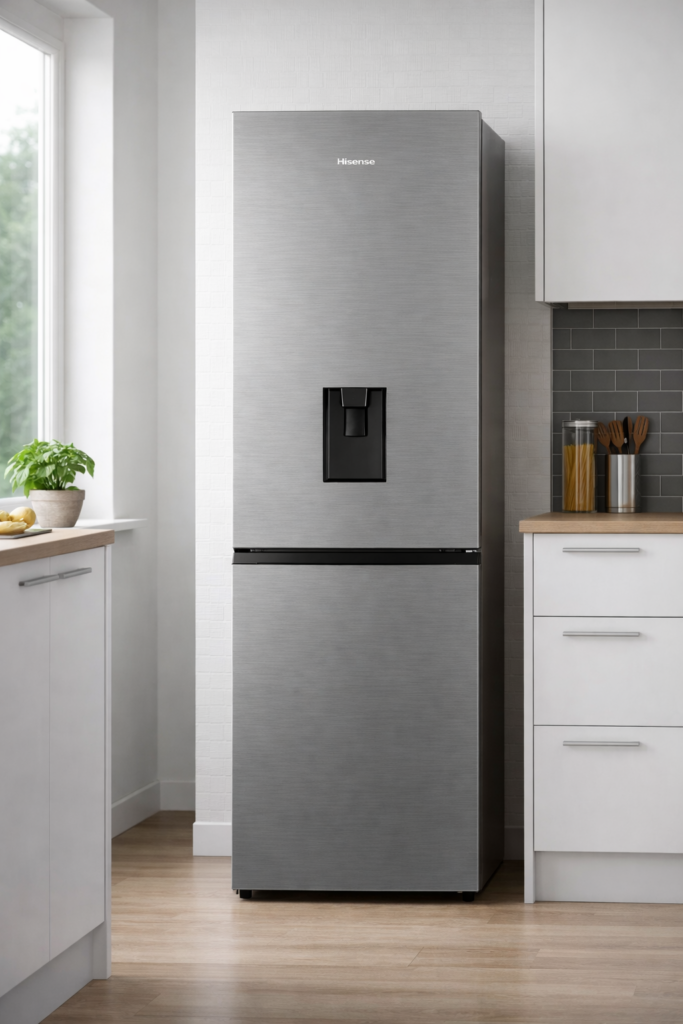
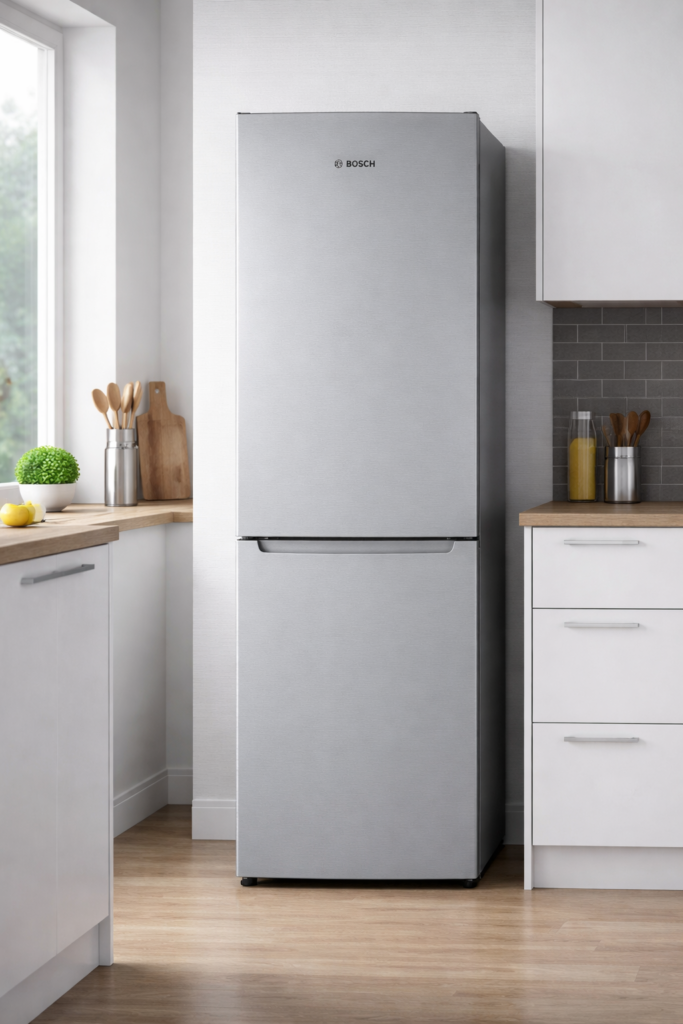
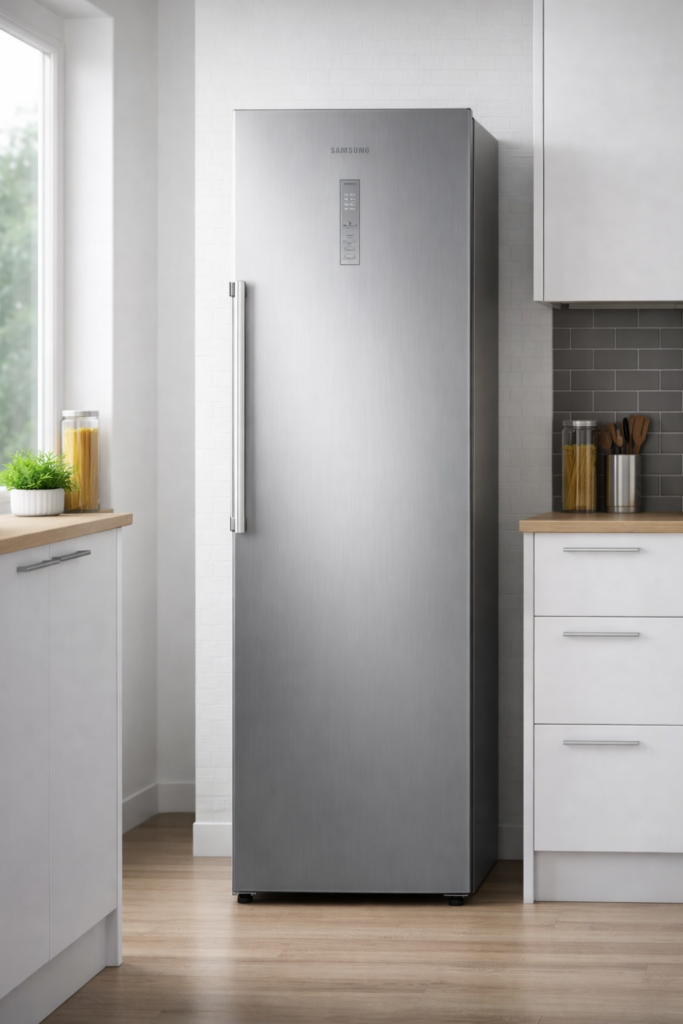
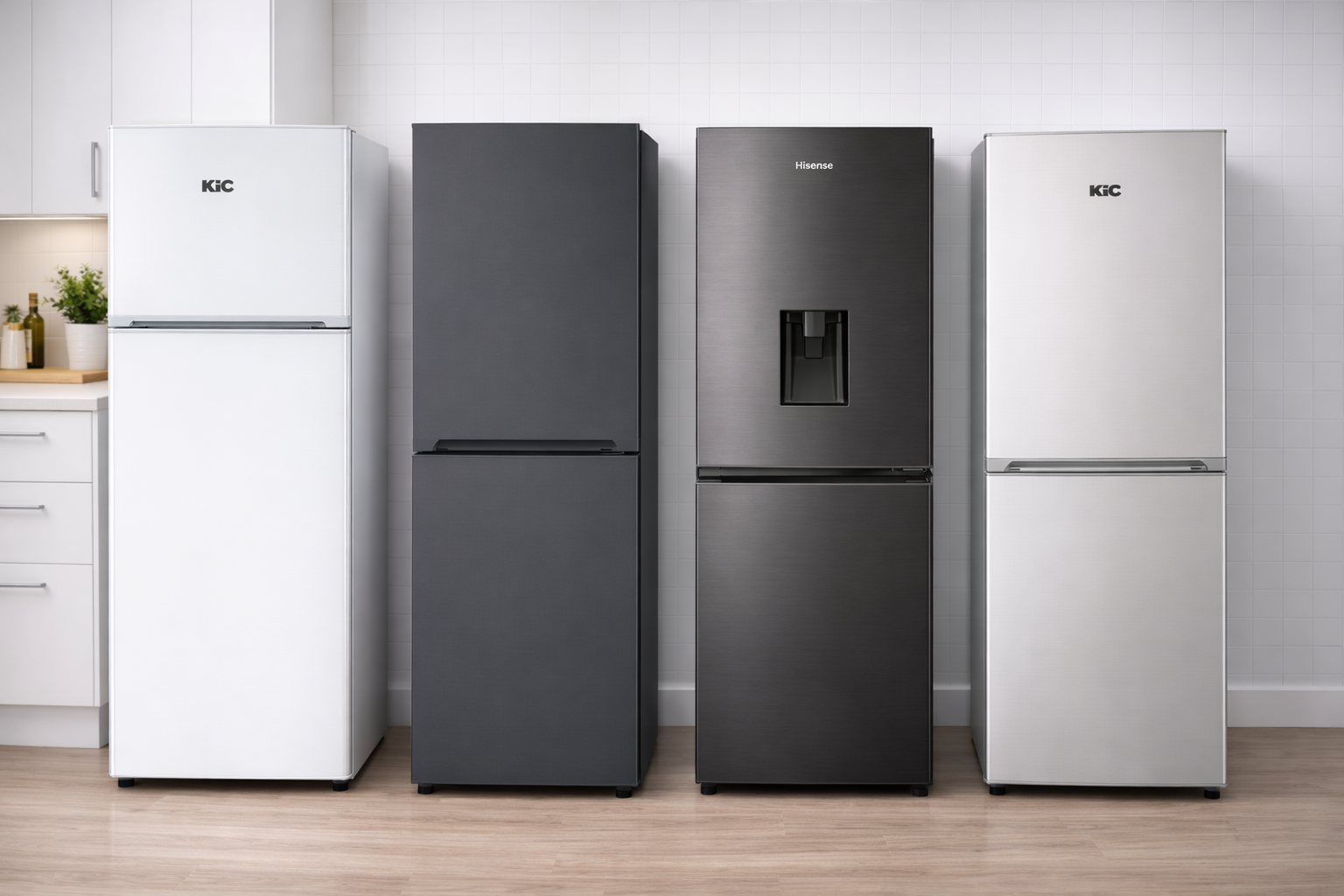
Published on Tigdag.com | Updated March 2026 | Based on USDA and FDA food safety guidelines, adapted for South African loadshedding conditions
Your fridge cannot run during loadshedding — unless you have a generator or inverter. The question most South Africans actually want answered is: the power went out, the fridge is off, how long before my food goes bad?
The answer depends on three things: how long the outage lasts, whether you keep the door closed, and what type of food you have inside. This guide gives you the exact timelines for every loadshedding stage — plus a food-by-food guide on what to keep and what to throw out.
Quick Answer A closed fridge keeps food safe for up to 4 hours. A closed freezer keeps food frozen for up to 48 hours (24 hours if half full). Stage 2 loadshedding (2-hour outage) — your food is fine. Stage 4 loadshedding (4-hour outage) — fridge food is on the limit, keep the door shut. Stage 6 loadshedding (4.5-hour outage) — fridge food past the 4-hour mark needs to be checked. The single most important thing you can do: do not open the fridge during an outage.
Loadshedding Stages vs Food Safety — At a Glance
Stage
Typical outage duration
Fridge food safe?
Freezer food safe?
What to do
Stage 1
2 hours
YES — safe
YES — fully safe
Nothing. Keep door closed.
Stage 2
2 hours
YES — safe
YES — fully safe
Nothing. Keep door closed.
Stage 3
2–4 hours
YES — safe if door stays closed
YES — fully safe
Keep door closed. Check if 4hr slot.
Stage 4
4 hours
BORDERLINE — right at the limit
YES — fully safe
Do not open fridge at all. Cook meat first if power delayed.
Stage 5
4+ hours
AT RISK — especially meat, dairy, leftovers
YES — fully safe
Move perishables to cooler with ice if outage runs long.
Stage 6
4–4.5 hours
AT RISK — past safe window
YES — fully safe
Check perishables on return. When in doubt, throw it out.
* Outage durations based on Eskom’s published stage schedules. Actual durations may vary by area and municipality. Food safety timelines based on USDA and FDA guidelines.
The 4-Hour Rule — Why It Matters in South Africa
The 4-hour rule comes from the USDA (United States Department of Agriculture) and is used by food safety authorities worldwide: a refrigerator keeps food safe for up to 4 hours during a power outage, provided the door stays closed.
Here is why this matters in South African context:
Stage 1, 2, and most Stage 3 outages are 2 hours — well within the safe window.
Stage 4 outages are scheduled at 4 hours — right at the limit. Any delay in power restoration pushes you past it.
Stage 5 and 6 outages frequently run 4–4.5 hours — past the safe window for perishables.
The 4-hour clock starts the moment the power goes out — not when you notice it went out. If you were asleep or out of the house, subtract however long the power may have been off before you realised.
The danger zone Bacteria that cause food poisoning — including Salmonella, E. coli, and Listeria — multiply rapidly when food temperatures rise above 5°C (41°F). Your fridge normally runs at 3–4°C. Once the power goes out, the temperature inside starts rising. After 4 hours without power and with the door closed, most fridges reach 7–8°C — the point where bacteria begin multiplying quickly. You cannot smell or see bacterial growth on food. Never taste food to decide if it is safe.
What Affects How Long Your Fridge Stays Cold
1. Whether you open the door
This is the single biggest factor. Opening the fridge door even once lets warm air in and cold air out — immediately shortening the safe window. During a loadshedding outage, treat your fridge like a cooler box: do not open it unless you absolutely have to. If you need something, decide what you want before opening, retrieve it in one quick movement, and close immediately.
2. How full the fridge is
A full fridge stays cold longer than an empty one. Food and beverages act as thermal mass — they absorb cold and release it slowly as the temperature rises. A well-stocked fridge can maintain safe temperatures significantly longer than a near-empty fridge. If you know loadshedding is coming, fill empty spaces with 2L bottles of water. This is free insurance.
3. The ambient temperature in your home
A fridge in a Johannesburg kitchen in January (ambient temperature 28–32°C) loses temperature faster than one in a Cape Town kitchen in July (ambient 12–16°C). In South African summer conditions, especially in Gauteng, Limpopo, and the Northern Cape, assume the conservative end of the 4-hour window. In winter, you may get slightly longer.
4. The age and seal of your fridge
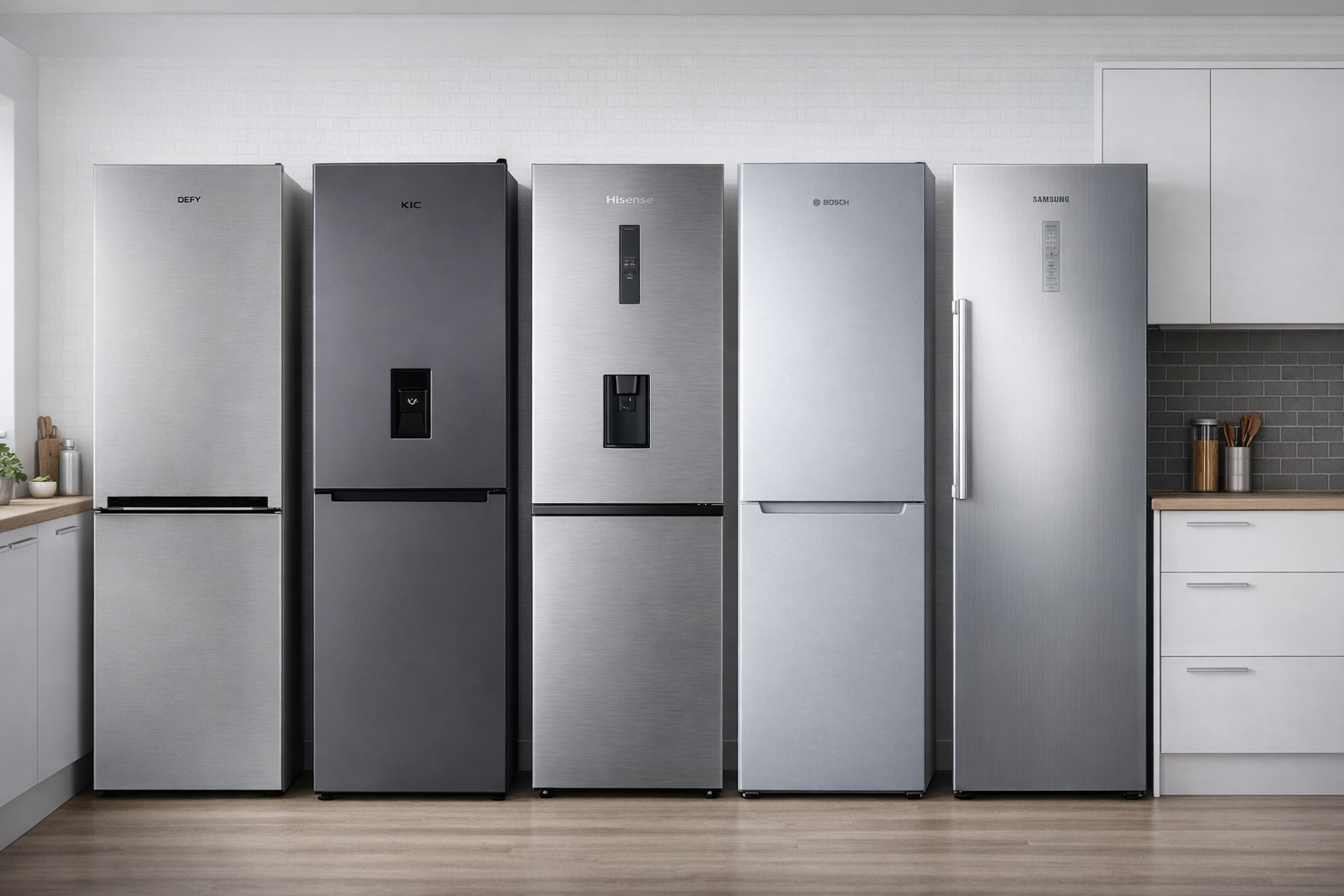
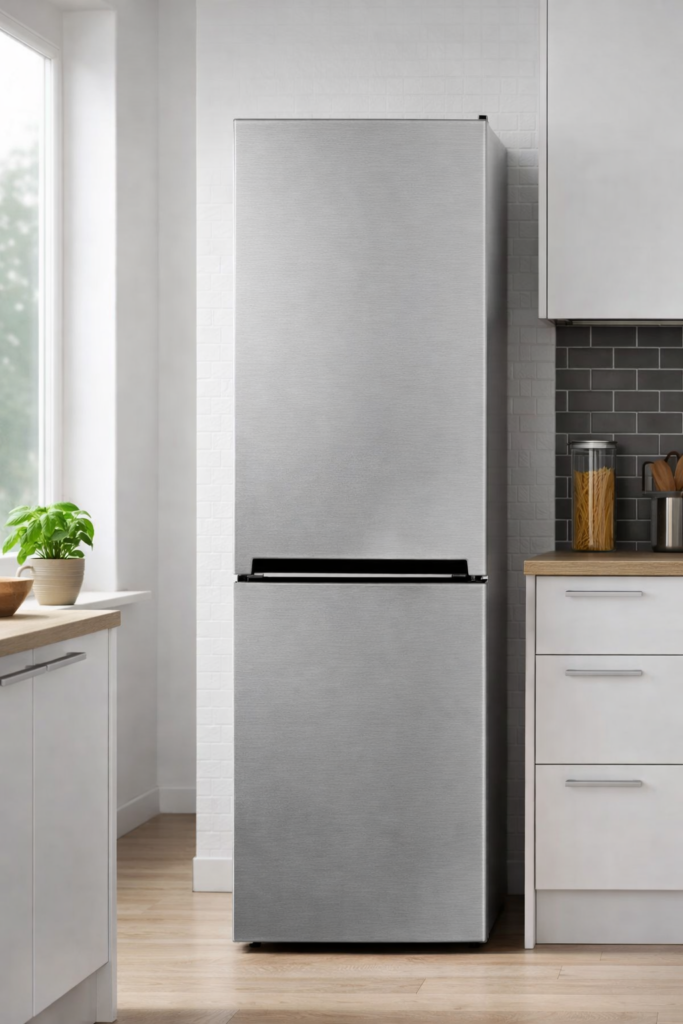
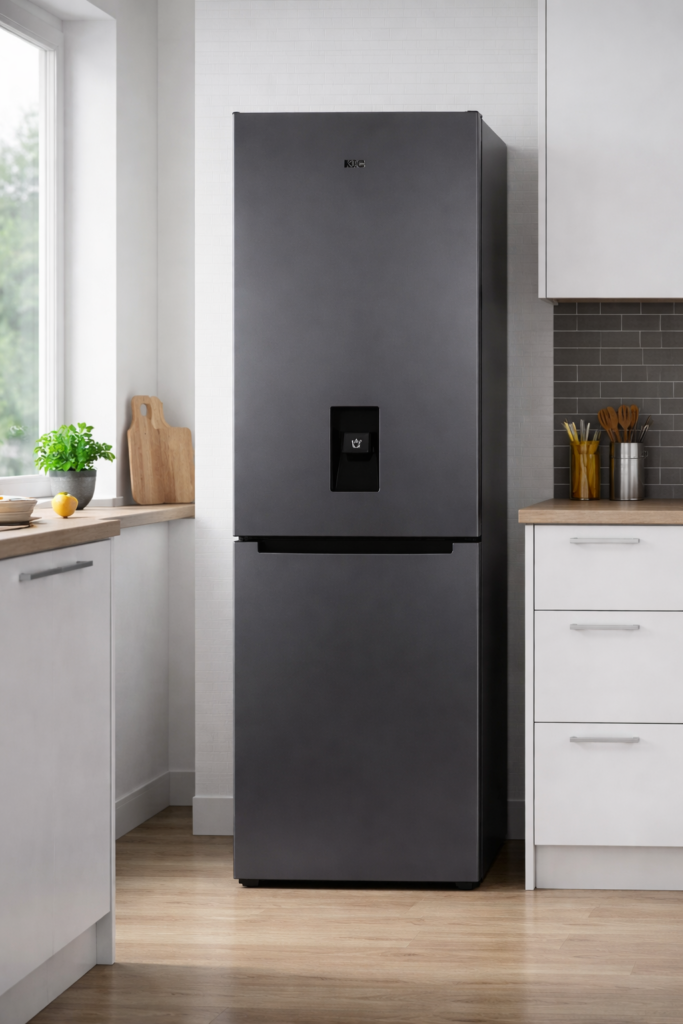
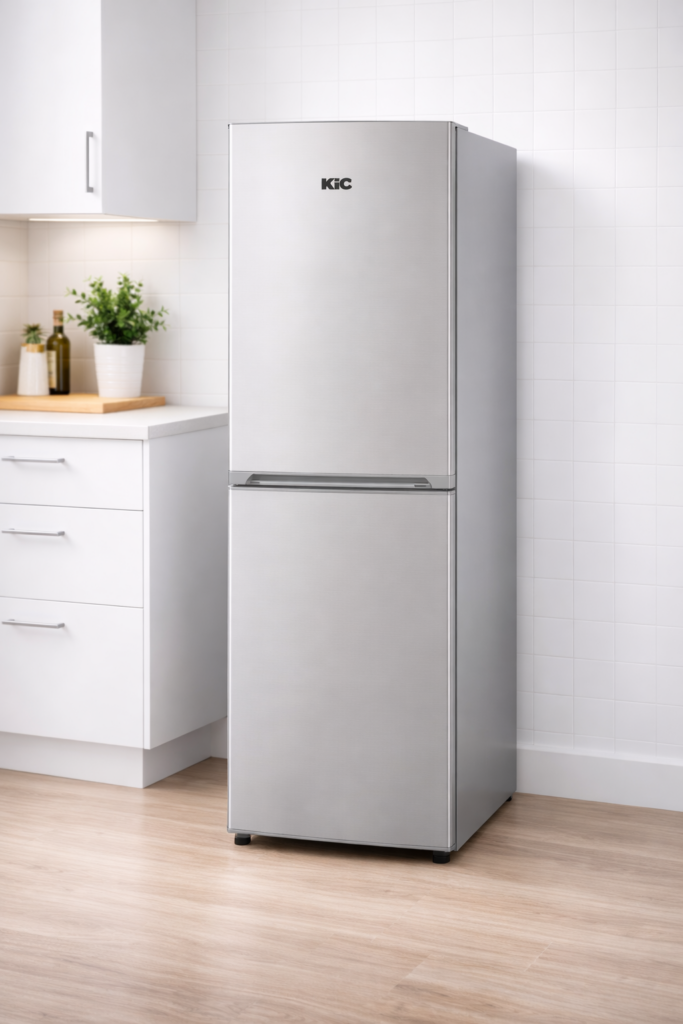
An older fridge with a worn door seal loses cold air significantly faster than a new fridge with a tight seal. If you can feel cold air escaping around your fridge door with the power off, your safe window is shorter. The Defy DAC622 and KIC KBF6392X both feature antibacterial door seals specifically designed for a tighter close — a practical advantage during regular South African outages.
5. Where the fridge sits in your home
A fridge in a hot garage or in direct sunlight will lose temperature faster than one in a cool, shaded kitchen. If you have the option, avoid placing your fridge where it is exposed to high ambient heat.
What About the Freezer During Loadshedding?
The freezer is much more resilient than the fridge compartment during a loadshedding outage:
A fully packed freezer maintains safe temperatures for up to 48 hours with the door closed.
A half-full freezer maintains safe temperatures for up to 24 hours with the door closed.
This means your freezer food is safe through any realistic loadshedding scenario — even extended Stage 6 outages — as long as you keep the door closed. The rules:
Do not open the freezer during an outage unless absolutely necessary.
If there is still ice visible on food when power returns, it is safe to refreeze.
If food has thawed but is still cold (below 5°C), cook it immediately rather than refreezing.
If food is room temperature and has no ice crystals, throw it out.
Pro tip: freeze water bottles Keep 2–3 frozen 2L water bottles in your freezer at all times. When a long outage is expected, move them into the fridge compartment — they act as ice packs and extend the safe window significantly. When they thaw, they become drinking water. This is a zero-cost loadshedding strategy that every South African household should use.
Food Safety Guide — What to Keep and What to Throw Out
After power returns, do not taste food to test whether it is safe. Use this guide:
Throw out if the fridge was off for more than 4 hours
Food
Throw out after 4 hours without power
Raw meat, chicken, fish
Yes — high risk. Throw out.
Cooked meat and leftovers
Yes — throw out.
Milk and fresh dairy
Yes — throw out.
Soft cheeses (cream cheese, cottage cheese)
Yes — throw out.
Eggs (out of shell, or cracked)
Yes — throw out.
Cut fruit and vegetables
Yes — throw out.
Opened mayonnaise, salad dressing
Yes — throw out.
Opened baby formula
Yes — throw out.
Cooked pasta, rice, potatoes
Yes — throw out.
Custard, pudding, mousse
Yes — throw out.
Generally safe to keep (even after a longer outage)
Never taste food to test if it is safe Food that has been in the temperature danger zone (above 5°C) for more than 4 hours can contain dangerous levels of bacteria without looking, smelling, or tasting different. Salmonella, E. coli, and Listeria are all odourless and tasteless. If you are unsure how long the fridge was off, apply the 4-hour rule conservatively. Food poisoning is not worth the risk — especially for children, elderly people, or anyone with a compromised immune system.
What to Do Before, During, and After a Loadshedding Outage
Before the outage (when you see loadshedding coming on EskomSePush)
Check the stage and duration so you know whether you are in a safe window (Stage 1–3) or borderline window (Stage 4–6).
Cook any raw meat or chicken if you are heading into a 4+ hour Stage 4–6 slot. Cooked food lasts longer and can be eaten immediately.
Move frozen water bottles or ice packs into the fridge compartment to extend its cold window.
Decide what you need from the fridge before the power goes out — so you do not need to open it during the outage.
Keep a cooler box and ice or gel packs ready if you regularly experience Stage 5 or Stage 6.
During the outage
Do not open the fridge. Every opening shortens the safe window.
Do not open the freezer. It is safe for 24–48 hours untouched.
If the outage is running longer than expected (past 3.5 hours), transfer high-risk perishables to a cooler box with ice.
Note the time the power went out — so you know exactly how long the fridge was off when power returns.
After power returns
Check how long the fridge was off. If under 4 hours and the door stayed closed, everything is fine.
If over 4 hours, go through the food guide above and throw out high-risk items (meat, dairy, leftovers, cut fruit).
Check the freezer — if there are still ice crystals visible on food, it is safe. If food is fully thawed and at room temperature, throw it out.
Never taste food to test safety. When in doubt, throw it out.
Buy an appliance thermometer — it costs R50 and removes all guesswork A small fridge thermometer (available at Checkers, Game, and Pick n Pay for R50–R150) tells you the exact temperature when power returns. If the fridge is still at 5°C or below, everything inside is safe regardless of how long the power was out. If it reads above 8°C, discard perishables. This is the most practical upgrade any South African household can make for food safety during loadshedding.
Frequently Asked Questions
Is my food safe after a 2-hour Stage 2 loadshedding outage?
Yes — if the door stayed closed. A 2-hour outage is well within the 4-hour safe window. Your fridge will still be cold when power returns, and all food inside is safe. No action needed.
What about a 4-hour Stage 4 outage?
Stage 4 is the critical stage. At exactly 4 hours with the door completely closed, fridge food is at the borderline of safe. If the power came back on time and the door was not opened, you are likely fine. If the power was late returning, or if you opened the fridge during the outage, discard raw meat, chicken, fish, leftovers, and dairy as a precaution. Hard cheeses, butter, whole uncut fruit and vegetables, and condiments are safe.
Can I put my fridge food outside in winter to keep it cold?
It depends. If you are in a part of South Africa where winter temperatures genuinely drop to 4–5°C at night (parts of the Western Cape, Highveld in July), this can work for keeping food cold. However, outdoor temperatures vary hour by hour, food can be exposed to contamination and animals, and direct sun can warm food faster than you expect. If you do use this method, keep food covered and shaded. It is safer to use a cooler box with ice.
My freezer food has thawed. Can I refreeze it?
Only if ice crystals are still visible on the food, or if the food is still cold (below 5°C). If it is fully thawed but cold, cook it immediately rather than refreezing — the quality and safety is better that way. If it is fully thawed and at room temperature, throw it out. Never refreeze meat or chicken that has reached room temperature.
How do I know how long the power was off if I was sleeping?
This is the most common problem. If you have a fridge thermometer, check the temperature — if it is above 8°C, assume the full window has passed and discard perishables. If you do not have a thermometer, check: does milk smell off? Is meat still cold to the touch and firm? Are there still ice crystals in the freezer? If you genuinely cannot determine safety, throw out raw meat, chicken, fish, leftovers, and opened dairy. Hard cheeses, butter, and condiments are safe to keep.
Does loadshedding affect fridge compressors when power returns?
Standard compressors draw a large startup current when power returns after an outage — this is normal. Over time, very frequent power cycling can add wear to compressors on older fridges. The KIC KBF6392X has a volt stability feature that protects the compressor from surge damage on power return. Inverter compressor fridges like the Samsung RR39M71407F handle power cycling more gently than standard compressors.
Quick Reference Summary
Situation
What to do
Outage under 4 hours, door stayed closed
Everything is fine. No action needed.
Outage under 4 hours, door opened once or twice
Should be fine. Check meat and dairy are still cold.
Outage 4 hours, door stayed closed
Borderline — discard raw meat and leftovers as precaution.
Outage over 4 hours
Discard: raw meat, chicken, fish, cooked leftovers, milk, soft cheese, cut fruit. Keep: hard cheese, butter, whole uncut fruit and veg, condiments.
Do not know how long power was off
Use fridge thermometer. Above 8°C = discard perishables. Use the guidelines above.
Freezer — any realistic loadshedding outage
Safe if door stayed closed and ice crystals are still visible when power returns.
Food safety guidelines are based on USDA Food Safety and Inspection Service and FDA recommendations. Loadshedding stage durations are based on Eskom’s published schedules — actual durations may vary by area and municipality. When in doubt about food safety, throw it out.
Published on Tigdag.com | Updated March 2026 | Prices verified from Hirsch’s, HiFi Corp, Kloppers, Masons, Incredible Connection and Bargains Online
A mid-range fridge in South Africa sits in the R6,000–R11,000 bracket — above the basic compact models but below the premium side-by-side and French door refrigerators. This is the most contested price range in the SA fridge market, where genuine quality differences start to matter: frost-free cooling, inverter compressors, better capacity for families, and features like water dispensers become accessible without paying flagship prices.
This guide covers the five best mid-range fridges currently available in South Africa, with verified specs and confirmed SA pricing. All five are 300–385L — the right size range for couples and small families — and all are currently stocked at major SA retailers.
Quick Answer Best overall: Defy DAC622 350L (R6,399–R7,899) — A+ energy, antibacterial seal, bottom freezer, 5-year warranty with registration, 600mm wide. Best no-frost value: Bosch KGN36NL30Z 302L (R9,999–R10,499) — A++ energy, Total NoFrost, MultiAirflow, 186cm tall, 60cm wide. Best SA brand with water dispenser: KIC KBF6392X 344L (R7,299) — A energy, 3L water dispenser, 5-year warranty on registration, 18 service centres.
Measure Before You Buy Mid-range fridges are typically 595–600mm wide — 40–110mm wider than the compact models covered in our small flat guide. Standard kitchen cavities in South African homes are 600mm wide. You need at least 50mm above for ventilation and 70mm in front for door swing clearance. Most models on this list are 600mm wide — confirm your exact cavity before buying.
Quick Comparison
Fridge
Capacity
Width
Energy
Cooling
Price
Best For
Defy DAC622
350L
600mm
A+
Static / Auto Defrost
R6,399–R7,899
Best overall value
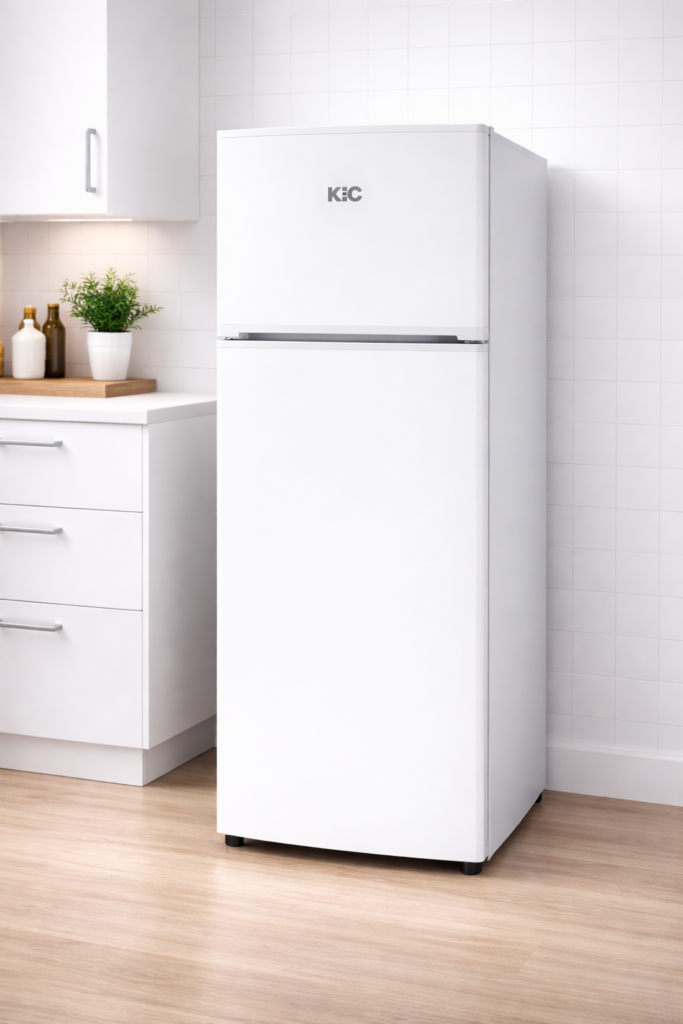
KIC KBF6392X
344L
604mm
A
Direct / Semi-Auto
R7,299
Water dispenser + SA brand
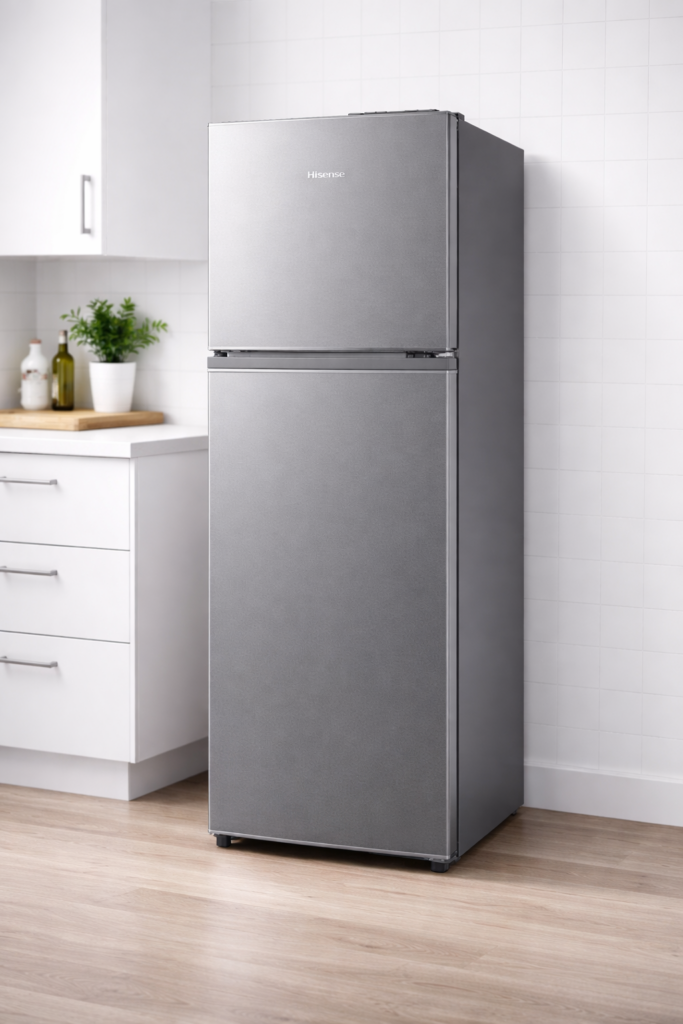
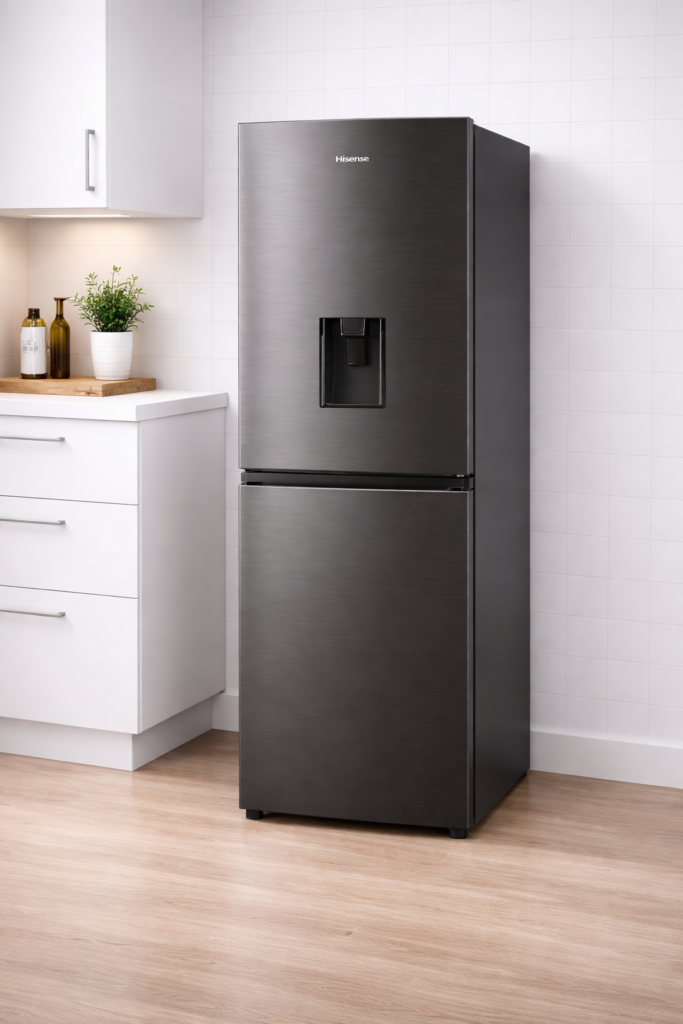
Hisense H359BI-WD
359L
595mm
A
Static / Manual Defrost
R5,299
Budget mid-range + water
Bosch KGN36NL30Z
302L
600mm
A++
Total NoFrost
R9,999–R10,499
Best energy + no defrost
Samsung RR39M71407F
385L
595mm
A+
No Frost
R13,999–R14,999
Most capacity + inverter
* Prices verified from Hirsch’s, HiFi Corp, Kloppers, Masons and Incredible Connection, March 2026. Verify before purchasing.
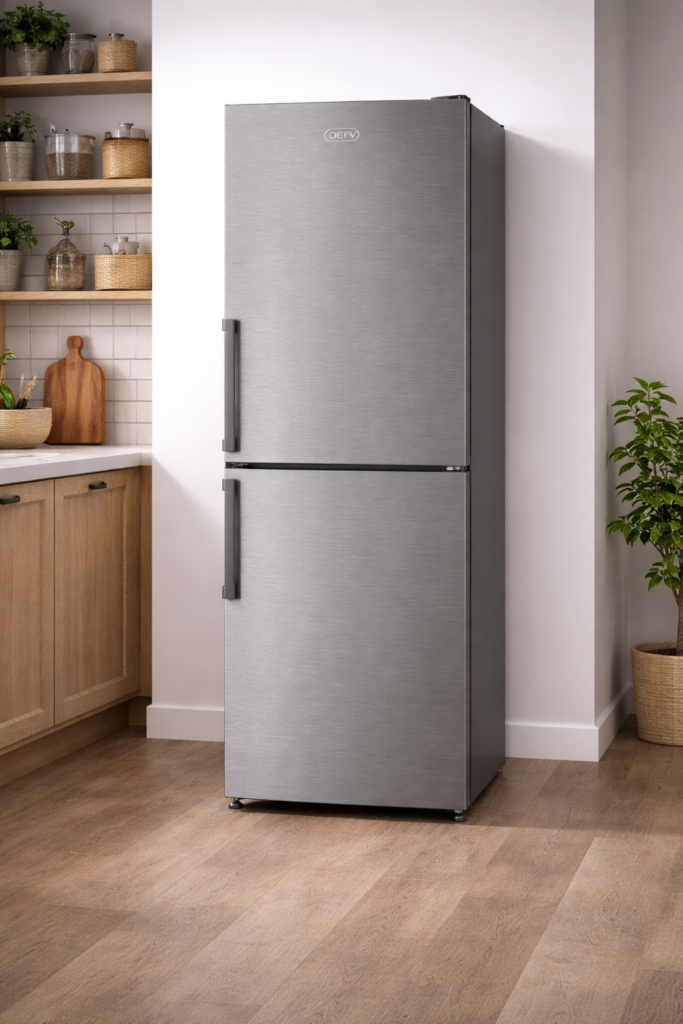
The Defy DAC622 is the best-value mid-range fridge available in South Africa right now. At R6,399 on promotion (R7,449–R7,899 at regular pricing), it delivers a compelling combination of 350L net capacity, A+ energy rating, antibacterial door seal, 4-star freezer, bottom-freezer layout, and LED ceiling lighting — backed by Defy’s strong local service network.
Defy is locally manufactured with 18 service centres across South Africa — the strongest after-sales coverage of any brand on this list. The DAC622 comes with a 2-year standard warranty, extendable to 5 years with online registration. For a fridge you expect to use for 8–12 years, the Defy’s repairability and parts availability in South Africa is a meaningful long-term advantage over imported brands.
The bottom-freezer layout puts the fridge compartment at eye level — where you access it multiple times daily — while the freezer section sits below. The fridge section offers 235L net capacity with four adjustable shelves, four door racks, one crisper drawer, and an egg tray. The 115L freezer features two drawers and an ice tray. The antibacterial door seal is a practical food-safety feature, not marketing filler.
One important note: the DAC622 uses static cooling with auto-defrost rather than full no-frost technology. The freezer does require periodic manual defrosting — though less frequently than older direct-cooling models. If frost-free convenience is a priority, the Bosch KGN36NL30Z is the right choice.
No inverter compressor — less efficient during loadshedding recovery
650mm deep — check depth clearance including 50mm ventilation space
Price varies significantly between retailers — check before buying
Loadshedding Note
The DAC622’s antibacterial seal and 4-star freezer help maintain internal temperatures during outages. With the door kept closed, the fridge section will maintain safe food temperatures (below 5°C) for 5–6 hours. The 115L freezer will keep food frozen for up to 24 hours during a standard Stage 4 outage. Keep the fridge at least two-thirds full — more thermal mass means slower temperature loss.
Verdict
The Defy DAC622 is the first recommendation for most South African households upgrading from a compact fridge to a mid-range model. Buy it on promotion — the R6,399 sale price is exceptional value for a 350L, A+ rated, bottom-freezer fridge from a locally supported brand. At regular pricing of R7,449–R7,899 it remains the best overall value on this list.
2. KIC KBF6392X — Best SA Brand With Water Dispenser
The KIC KBF6392X is a 344L bottom-freezer fridge with a built-in 3L water dispenser — making it the most practical everyday fridge on this list for households who want cold water without a separate appliance. KIC is a proudly South African brand with 18 service centres nationwide, matching Defy for local service coverage.
At R7,299 it is competitively priced for a 344L bottom-freezer with a water dispenser. Confirmed specs from KIC SA, HiFi Corp and Incredible Connection: 344L net capacity (231L fridge, 113L freezer), A energy rating, direct cooling with semi-auto defrost, 3L water tank with funnel for easy refilling, adjustable balconies (fits 4 x 2.5L bottles), wine rack, glass shelves, volt stability protection, bacteria stop feature, 41dB noise level. Dimensions: H1857 x W604 x D618mm. 2-year warranty, extendable to 5 years with online registration.
The volt stability feature is a meaningful practical advantage in South Africa, where voltage fluctuations during loadshedding recovery can damage appliance compressors. The bacteria stop feature — similar to Defy’s antibacterial seal — prevents bacterial growth at the door seal.
The semi-auto defrost system requires periodic manual defrosting of the freezer but is less intensive than full manual defrost. The 3L water tank is refillable via a funnel from the top — it does not require a plumbed water line, making it suitable for any kitchen.
Key Specifications
Model: KBF6392X (Inox) / KBF639ME (Metallic)
Net capacity: 344L (231L fridge, 113L freezer)
Dimensions: H1857 x W604 x D618mm
Energy rating: A
Cooling: Direct cooling, semi-auto defrost
Water dispenser: 3L tank, funnel-fill
Balcony: Adjustable, fits 4 x 2.5L bottles
Wine rack: Yes
Shelves: Glass
Noise: 41dB
Voltage protection: Yes
Warranty: 2 years standard, 5 years with online registration
Pros
Built-in 3L water dispenser — cold water without a separate appliance
KIC SA brand — 18 service centres nationwide
5-year warranty with registration
Volt stability protection — guards compressor during loadshedding recovery
Adjustable balconies — 4 x 2.5L bottle storage
Wine rack — useful additional storage
41dB noise — quiet operation
Cons
A energy rating (not A+) — slightly less efficient than the Defy DAC622
604mm wide — marginally wider than standard 600mm cavity, measure carefully
No inverter compressor
Loadshedding Note
The volt stability feature protects the compressor from surge damage when power returns after an outage — a practical advantage that standard fridges lack. Keep the door closed during outages. The 344L capacity provides good thermal mass; a well-stocked fridge will maintain safe temperatures for 5–6 hours during a Stage 4 outage.
Verdict
The KIC KBF6392X is the best choice if you want a water dispenser without a plumbed connection, backed by strong SA local service support. At R7,299 it is good value for a 344L bottom-freezer with a dispenser. The A energy rating and semi-auto defrost are modest trade-offs versus the Defy DAC622 — if you do not need the water dispenser, the Defy offers slightly better energy efficiency and auto defrost at a comparable price.
3. Hisense H359BI-WD — Best Budget Mid-Range With Water Dispenser
The Hisense H359BI-WD is technically priced just below the mid-range bracket at R5,299, but its 359L capacity, water dispenser, and A energy rating make it worth including as the best entry-level option for buyers who want a larger, water-dispenser fridge without breaking R6,000. Confirmed specs from HiFi Corp: 359L net capacity, A energy rating, water dispenser with child lock, removable tempered glass shelves, reversible door, recessed handles, Inox finish. 12-month guarantee with 60-month (5-year) warranty.
The 5-year warranty is the standout feature at this price point. Hisense SA has a strong local service network in all major metros and the 5-year warranty on this model significantly de-risks the purchase compared to many mid-range competitors offering only 2 years.
The child-lock feature on the water dispenser is a practical detail for households with young children. The tempered glass shelves are shatterproof and easier to clean than wire shelving. The reversible door means you can set the hinge to match your kitchen layout.
5-year warranty — best warranty commitment at this price point
359L — largest single-door capacity on this list below R10,000
Water dispenser with child lock — practical family feature
595mm wide — slightly narrower than 600mm, easier for tight cavities
A energy rating — efficient daily running costs
Tempered glass shelves — shatterproof, easy to clean
Cons
R5,299 is the lower end of mid-range — spec level reflects the price
Static cooling — manual freezer defrost required
No inverter compressor
Hisense service network is metro-centric — less convenient in smaller towns
Loadshedding Note
Static cooling fridges maintain temperature adequately during standard loadshedding outages. With the door closed, expect 4–6 hours of safe food storage. The 359L capacity means good thermal mass when the fridge is well stocked. Avoid opening the water dispenser during an outage — it briefly breaks the door seal each time.
Verdict
The Hisense H359BI-WD is the right choice for budget-conscious buyers who want a large-capacity water dispenser fridge under R6,000. The 5-year warranty is a genuine differentiator at this price. If your budget stretches to R6,400+, the Defy DAC622 offers better energy efficiency and a bottom-freezer layout for similar money.
4. Bosch KGN36NL30Z — Best Energy Efficiency and No-Frost
The Bosch KGN36NL30Z is the most energy-efficient fridge on this list at A++ — two ratings above the A-rated models and significantly more efficient than a B-rated fridge. It is also the only fridge on this list with Total NoFrost technology, which means the freezer section never needs manual defrosting. For a fridge you intend to use for 10+ years, these two features translate into meaningful real-world savings.
Confirmed specs from Kloppers, Masons and MHC World: 302L net capacity (215L fridge, 87L freezer), A++ energy rating, 235 kWh/year annual consumption, Total NoFrost, MultiAirflow system (constant air circulation on all levels), FreshSense sensors (monitor and control ambient, fridge and freezer temperature), LED with Soft Start, 4 safety glass shelves (3 height-adjustable), MultiBox transparent drawer with wave bottom for fruit and vegetables, 4 door bins, SuperFreezing function. Dimensions: H1860 x W600 x D660mm. Bosch 2-year warranty.
The FreshSense system is a practical differentiator: sensors constantly monitor conditions inside the fridge and adjust cooling accordingly. This is more precise temperature management than mechanical thermostats and results in less temperature variation — meaning food stays fresh longer and the compressor works more efficiently.
The 302L capacity is the smallest on this list — 48L less than the Defy DAC622. This is the price of Total NoFrost and A++ efficiency in this size class. If capacity is your priority, the Samsung RR39M71407F offers 385L with No Frost at a higher price.
Key Specifications
Model: KGN36NL30Z
Net capacity: 302L (215L fridge, 87L freezer)
Dimensions: H1860 x W600 x D660mm
Energy rating: A++
Annual energy consumption: ~235 kWh/year
Cooling: Total NoFrost — no manual defrosting ever
System: MultiAirflow + FreshSense sensors
Shelves: 4 safety glass (3 height-adjustable)
Drawer: MultiBox (fruit and veg)
Lighting: LED with Soft Start
Noise: 42dB
Warranty: 2 years (Bosch SA)
Pros
A++ energy rating — most efficient fridge on this list
Total NoFrost — never defrost the freezer again
FreshSense sensors — precise, consistent temperature control
MultiAirflow — even cooling on every shelf
SuperFreezing function — rapidly cools new items added to freezer
Strong build quality — Bosch is renowned for appliance longevity
Cons
302L is the smallest capacity on this list — check if it suits your household
R9,999–R10,499 — most expensive A/A+ fridge on this list
87L freezer is relatively small — not ideal if you freeze large quantities
660mm deep — deeper than most on this list, check depth clearance
2-year warranty only — shorter than KIC/Hisense’s 5-year options
Loadshedding Note
The Total NoFrost system uses a fan to circulate air, which stops when power goes out. However, the lack of a running fan during an outage actually helps — the sealed compartment retains cold better without the fan pulling heat in. FreshSense sensors restart precisely when power returns, quickly returning to optimal temperature. Expect 5–6 hours of safe food storage during an outage with the door closed.
Verdict
The Bosch KGN36NL30Z is the right fridge if energy efficiency and zero-maintenance cooling are your priorities over capacity and price. At R9,999–R10,499 it is the most expensive model on this list, but the A++ efficiency, Total NoFrost, and Bosch build quality justify the premium for a 10+ year appliance investment. If R10,000 is over budget, the Defy DAC622 offers the best value in the R6,000–R8,000 bracket.
5. Samsung RR39M71407F — Best Capacity and Inverter Compressor
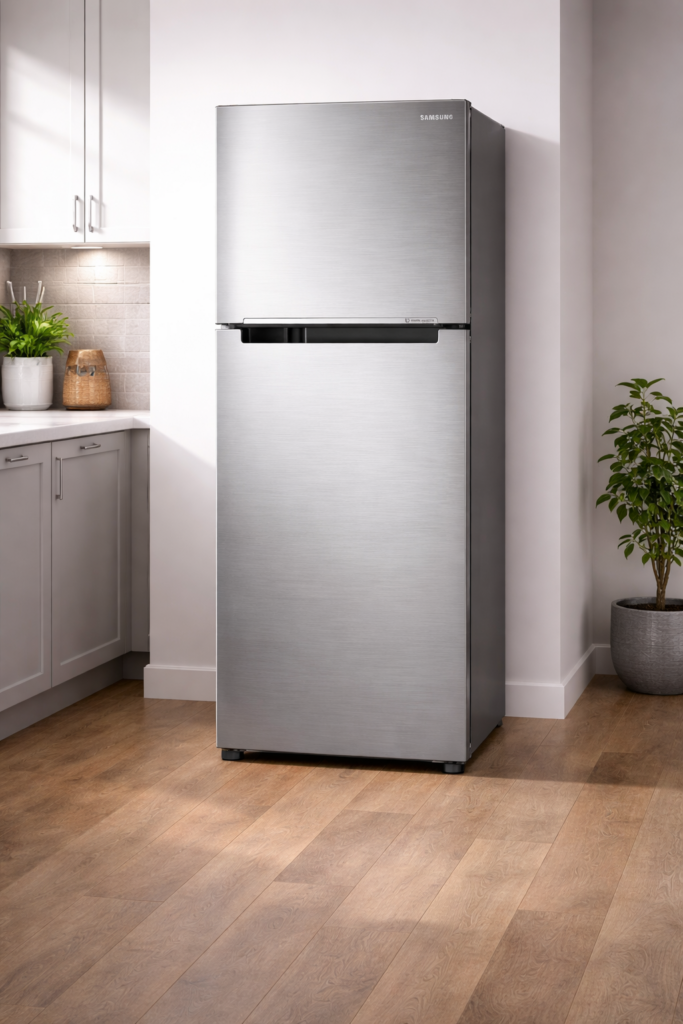
The Samsung RR39M71407F is a single-door 385L upright fridge with No Frost technology and a Digital Inverter Compressor — the only inverter compressor fridge on this list. An inverter compressor varies its speed continuously rather than running at full power then switching off, making it more energy efficient and significantly gentler on the electrical system — a meaningful advantage for South African households dealing with frequent loadshedding.
Confirmed specs from Kloppers and HiFi Corp: 385L net capacity, A+ energy rating, Digital Inverter Compressor with 10-year warranty, No Frost, All-Around Cooling (multiple vents for even cooling), Power Cool (rapid temperature recovery when door is opened frequently), SpaceMax (large capacity in a cabinet-fit design of 595mm width), 6 shelves, 2 large humidity-controlled vegetable boxes, 4 door bins. Dimensions: H1860 x W595 x D668mm.
The 10-year compressor warranty is the standout feature. Samsung backs the Digital Inverter Compressor with a full decade of coverage — the longest compressor warranty available on any fridge in this guide. For a premium priced fridge, this significantly reduces the long-term cost risk.
At R13,999–R14,999 the Samsung is at the upper end of what most buyers consider mid-range. It is worth the price if you need the 385L capacity, want an inverter compressor for loadshedding resilience, or need the No Frost convenience. If budget is the primary concern, the Defy DAC622 or KIC KBF6392X deliver strong value at R6,399–R7,299.
Key Specifications
Model: RR39M71407F
Net capacity: 385L
Dimensions: H1860 x W595 x D668mm
Energy rating: A+
Compressor: Digital Inverter — variable speed
Cooling: No Frost, All-Around Cooling
Features: Power Cool, SpaceMax, humidity-controlled vegetable boxes
Shelves: 6 total, including 2 large humidity drawers
Compressor warranty: 10 years (Samsung SA)
Total warranty: 2 years full, 10 years compressor
Pros
385L — largest capacity on this list
Digital Inverter Compressor — more efficient, quieter, loadshedding-friendly
Power Cool — quickly recovers temperature when door is opened frequently
595mm wide — slightly narrower than 600mm, fits more kitchens
Cons
R13,999–R14,999 — significantly more expensive than the rest of this list
Single door design — freezer section is at the top (no bottom-freezer layout)
668mm deep — deepest fridge on this list, check clearance carefully
Samsung’s SA service network is metro-focused — repairs in smaller towns can be slow
Loadshedding Note
The Digital Inverter Compressor is the most loadshedding-resilient technology on this list. It uses less power during startup after an outage (standard compressors draw a large current spike on startup), which means it works more reliably on inverter backup power and puts less strain on the electrical system when grid power returns. Expect 5–7 hours of safe food storage during an outage, aided by the 385L thermal mass when well-stocked.
Verdict
The Samsung RR39M71407F is the premium choice on this list — justified by the 385L capacity, inverter compressor, No Frost convenience, and 10-year compressor warranty. It is the right fridge for households who cook for 3–4 people regularly, want the maximum capacity in the mid-range bracket, and value the long-term reliability of an inverter compressor. For buyers with a tighter budget, the Defy DAC622 delivers strong value at less than half the price.
How to Choose a Mid-Range Fridge in South Africa
1. Define Your Budget Range Clearly
Mid-range covers R6,000–R14,999 in the SA market. The most significant step-change in features happens around R10,000 — below that you get good capacity, A/A+ energy ratings, and basic frost management. Above R10,000 you get A++, Total NoFrost, inverter compressors, and premium features like FreshSense. Set your budget before browsing and resist upselling above it unless a specific feature genuinely matters to your household.
2. Capacity: Match Your Household Size
A general rule for South African homes: 250–300L suits 2 people with a full weekly shop. 300–350L suits a couple who meal preps, 2–3 people, or someone who stocks up regularly. 350–400L suits 3–4 people or anyone who does a large weekly shop and uses significant frozen storage. The fridges on this list range from 302L (Bosch) to 385L (Samsung) — all appropriate for 2–4 people.
3. Frost-Free vs Manual Defrost
Frost-free (No Frost / Total NoFrost) fridges automatically prevent ice build-up in the freezer — you never need to defrost manually. Manual defrost fridges require you to empty the freezer and defrost it every 3–6 months. In the mid-range bracket, frost-free technology is available in the Bosch KGN36NL30Z and Samsung RR39M71407F. The Defy DAC622 and KIC KBF6392X use static cooling with auto/semi-auto defrost — better than fully manual defrost but still require occasional attention.
4. Inverter vs Standard Compressor
An inverter compressor (available in the Samsung RR39M71407F on this list) varies its running speed continuously, using less electricity and producing less heat. In South Africa, inverter compressors offer the additional advantage of being gentler on backup power systems and experiencing fewer restart surges during loadshedding recovery. Standard compressors run at full speed then switch off — effective, but less efficient. At current SA electricity tariffs of R3.50/kWh, the monthly saving from an inverter compressor is R30–R60 on a mid-range fridge.
5. Bottom Freezer vs Top Freezer vs Single Door
Bottom freezer (Defy DAC622, KIC KBF6392X): fridge section at eye level, freezer accessed less frequently below. Most practical for daily use — recommended for most households. Top freezer: freezer above, fridge below — traditional layout, fewer models in the mid-range. Single door / larder fridge (Samsung RR39M71407F): fridge-only or fridge with small ice compartment, maximum fridge capacity for the width. Good if you primarily use fresh food and have a separate freezer.
6. Energy Rating and Running Costs
At South African electricity tariffs of approximately R3.50/kWh, the annual running cost difference between an A++ fridge and a B-rated fridge of similar capacity is R300–R500 per year. Over a 10-year lifespan, choosing A++ over B saves R3,000–R5,000 in electricity. In the mid-range bracket, prioritise A+ or A++ — the premium for better efficiency pays back within 3–4 years.
7. Warranty and SA Service Support
KIC and Defy both have 18 service centres across South Africa — the strongest local coverage. Samsung and Bosch have good metro coverage but are less accessible in smaller towns. Hisense covers all major metros. For a 10+ year appliance, the ability to get repairs done locally matters. Check whether your area has a service centre for your chosen brand before committing.
8. Loadshedding Considerations
For the best loadshedding resilience: an inverter compressor (Samsung) handles power interruptions most gracefully. An antibacterial seal (Defy DAC622) maintains a tighter seal for better temperature retention. A voltage stability feature (KIC KBF6392X) protects the compressor from surge damage. All mid-range fridges will maintain safe food temperatures for 5–7 hours during an outage with the door kept closed.
How Much Does a Mid-Range Fridge Cost to Run in South Africa?
Fridge
Energy rating
Est. kWh/year
Est. monthly cost (R3.50/kWh)
Hisense H359BI-WD 359L
A
~290 kWh
~R85/month
KIC KBF6392X 344L
A
~280 kWh
~R82/month
Defy DAC622 350L
A+
~316 kWh
~R92/month
Bosch KGN36NL30Z 302L
A++
~235 kWh
~R69/month
Samsung RR39M71407F 385L
A+
~310 kWh
~R90/month
* Estimated based on manufacturer-specified annual consumption where available, or typical kWh consumption for capacity and energy class. Actual costs vary by ambient temperature, how often the door is opened, and fridge fill level. Based on R3.50/kWh average 2026 SA tariff.
Energy Saving Tip A fridge kept two-thirds full runs more efficiently than an empty one — food and beverages absorb cold temperatures, reducing how often the compressor needs to run. If you do not regularly fill your fridge, keep 2L bottles of water inside to maintain thermal mass. This is especially useful during loadshedding — a fuller fridge stays cold for longer during an outage.
Final Verdict
If you need…
Best pick
Price
Best overall value for 3–4 people
Defy DAC622
R6,399–R7,899
Water dispenser + SA brand support
KIC KBF6392X
R7,299
Large capacity under R6,000
Hisense H359BI-WD
R5,299
Best energy efficiency + no defrost
Bosch KGN36NL30Z
R9,999–R10,499
Most capacity + inverter compressor
Samsung RR39M71407F
R13,999–R14,999
For most South African households upgrading from a compact fridge or replacing an aging family fridge, the Defy DAC622 at R6,399–R7,899 is the right choice. It has the best combination of capacity, energy efficiency, local service support, and price on this list. The A+ rating, bottom-freezer layout, antibacterial seal, and 5-year warranty (with registration) represent genuine long-term value.
If frost-free convenience and maximum energy efficiency matter more than price, the Bosch KGN36NL30Z at R9,999 is the premium pick. If you need the most capacity for a busy family and want an inverter compressor for loadshedding resilience, the Samsung RR39M71407F justifies its R13,999+ price tag.
Frequently Asked Questions
What size fridge is best for a family of 3–4 in South Africa?
300–385L is the right range for a family of 3–4 people. 302L (Bosch) suits a smaller household that prioritises efficiency over capacity. 344–359L (KIC, Hisense) suits a couple or small family who does a full weekly shop. 385L (Samsung) is comfortable for a family of 4 who cooks regularly and stocks frozen goods. Anything above 400L moves into the premium bracket.
Is frost-free worth the extra cost in South Africa?
Frost-free eliminates the inconvenience of manual defrosting and keeps freezer temperatures more consistent. In the mid-range bracket, frost-free adds approximately R2,000–R4,000 to the price (comparing the Defy DAC622 to the Bosch KGN36NL30Z). If you are organised about manual defrosting every 3–6 months, the Defy offers better value. If you want zero maintenance, the Bosch is worth the premium.
Which mid-range fridge is best for loadshedding in South Africa?
The Samsung RR39M71407F with its Digital Inverter Compressor is the most loadshedding-resilient fridge on this list — it draws less startup current when power returns and works more reliably on inverter backup. The KIC KBF6392X has a volt stability feature that protects the compressor from surge damage. The Defy DAC622’s antibacterial seal helps maintain temperature during outages. All five fridges will keep food safe for 5–7 hours during a Stage 4 outage with the door kept closed.
Is Defy a reliable brand in South Africa?
Defy is South Africa’s most established appliance brand, with local manufacturing and 18 service centres across the country. It regularly appears in local consumer surveys as the most trusted appliance brand for reliability and after-sales support. Defy fridges are designed for South African climate conditions — the DAC622 has a SN-T climate class rating, meaning it operates correctly in ambient temperatures from 10°C to 43°C. For long-term value and repairability, Defy is the safest choice for most SA households.
Does a mid-range fridge need a plumbed water line?
No — none of the water dispenser fridges on this list require a plumbed water line. The Hisense H359BI-WD and KIC KBF6392X both use a refillable tank (3L on the KIC). You fill the tank from the top using a funnel, and the fridge chills the water. This makes them suitable for any kitchen without plumbing modifications.
What is the difference between A, A+ and A++ energy ratings?
In practical terms for a 300–385L mid-range fridge at current SA tariffs: A-rated fridges (Hisense, KIC) cost approximately R80–R85/month to run. A+ fridges (Defy, Samsung) cost approximately R88–R92/month despite larger capacity, because they are more efficient. A++ fridges (Bosch) cost approximately R69/month — the most efficient on this list despite only being 2 ratings above A. Over a 10-year lifespan, the A++ Bosch saves approximately R2,000–R3,000 in electricity versus an A-rated equivalent.
Prices listed are approximate and sourced from Hirsch’s, HiFi Corp, Kloppers, Masons, Incredible Connection and Bargains Online in March 2026. Prices change regularly — always verify before purchasing. This article contains affiliate links. Tigdag may earn a commission if you purchase through our links, at no extra cost to you. This does not influence our recommendations.
Published on Tigdag.com | Updated March 2026 | Prices verified from Hirsch’s, HiFi Corp, Masons, MFA Online, Rochester and Bargains Online
Choosing a fridge for a small flat in South Africa involves three constraints that most generic buying guides ignore: limited kitchen floor space, loadshedding, and a budget that does not stretch to a large family fridge. A fridge that works well in a 4-bedroom house is often the wrong choice for a one-bedroom flat — it is too wide, too heavy, and costs more to run than you need.
This guide covers the five best fridges for small flats currently available in South Africa, with verified specs, confirmed SA pricing, and honest advice on what actually matters for a compact living space. All five are 170–239L — the right size range for 1–2 people — and all are currently stocked at SA retailers.
Quick Answer Best overall: Hisense H310BIT 223L (R3,799–R4,299) — A energy, 5-year warranty, reversible door, fits in 550mm width. Best for the smallest kitchens: Hisense H225TTS 154L (R3,299–R3,799) — ultra-slim 502mm width, A energy, LED. Best bottom freezer: Defy DAC363 210L (R3,999–R5,499) — A+ energy, 495mm wide, 4-star freezer. Best budget: KIC KTF518/2WH 170L (R3,899–R4,199) — compact, A+ energy, 500mm wide.
Measure Before You Buy The most common fridge-buying mistake in small flats is not measuring the available space. You need to measure: (1) width of the cavity or allocated space, (2) depth including door swing clearance of at least 70mm, (3) height including the space above for ventilation of at least 50mm. All five fridges on this list are 490–560mm wide — significantly narrower than family fridges which start at 595mm.
Quick Comparison
Fridge
Net cap.
Width
Energy
Price
Best For
Hisense H225TTS
154L
502mm
A
R3,299–R3,799
Smallest flats — ultra-slim
KIC KTF518/2WH
170L
500mm
A+
R3,899–R4,199
Budget + compact
Defy DAC363
210L
495mm
A+
R3,999–R5,499
Best bottom freezer
Hisense H310BIT
223L
550mm
A
R3,799–R4,299
Best all-rounder
KIC KBF525/2ME
239L
560mm
B
R5,299
Most storage under R6,000
* Prices verified from Hirsch’s, HiFi Corp, Masons, Rochester and MFA Online, March 2026. Verify before purchasing.
1. Hisense H225TTS — Best for the Smallest Kitchens
Approx. price: R3,299–R3,799 | Available at: HiFi Corp, Masons, Hirsch’s, Russells, Full House
The Hisense H225TTS is the narrowest fridge on this list at 502mm wide — which is the critical spec for very small kitchens or studio flats where every millimetre counts. It fits comfortably in a 550mm space with enough clearance on both sides for ventilation, making it the right choice when nothing wider will physically fit.
Despite the slim design, it offers a net capacity of 154L (113L fridge, 41L freezer) — enough for one person’s weekly shop with a modest freezer section. Confirmed specs from Hisense SA: A energy efficiency class, long-life LED lighting, removable tempered glass shelves, big bottle rack, reversible door design, low noise 41dB operation, and an integrated recessed handle for a clean finish.
The A energy rating is a genuine advantage for small flat dwellers who are conscious of electricity costs — particularly relevant in South Africa where the cost of running an appliance daily adds up across a year. The reversible door is also practically useful in tight spaces where the hinge direction needs to match your kitchen layout.
Key Specifications
Model: H225TTS
Net capacity: 154L (113L fridge, 41L freezer)
Dimensions: W502 x D540 x H1547mm
Energy rating: A
Cooling: Static (manual defrost)
Shelves: Removable tempered glass
Lighting: Long-life LED
Door: Reversible
Noise: 41dB
Handle: Integrated recessed
Warranty: 2 years (Hisense SA)
Pros
Narrowest fridge on this list at 502mm — fits the tightest spaces
A energy rating — lower monthly running costs
Reversible door — practical for any kitchen layout
Tempered glass shelves — shatterproof and easy to clean
Low 41dB noise — quiet enough for open-plan living
Integrated recessed handle — sleek, modern look
Cons
154L is the smallest net capacity on this list — tight for 2 people
No inverter compressor — draws full power on startup (relevant for inverter users)
Freezer section (41L) is modest — not suitable if you need significant frozen storage
Loadshedding Note
The H225TTS uses a standard compressor rather than an inverter compressor. It will maintain food safely for 4–6 hours during a power outage if not opened. Keep the door closed during loadshedding. A standard 2-hour Stage 4 outage will not significantly affect food safety if the fridge was at operating temperature beforehand.
Verdict
The H225TTS is the right fridge for studio flats, bedsits, or any kitchen where 500mm is the maximum available width. At R3,299–R3,799 it is the most affordable on this list and the A energy rating keeps running costs down. The trade-off is 154L capacity and manual defrost — if you need more space or frost-free convenience, step up to the H310BIT.
The KIC KTF518/2WH is a 170L top-freezer fridge that has been a staple of the South African compact fridge market for years. KIC is a South African brand with strong local service support — 18 service centres across the country — which makes warranty claims and repairs significantly easier than with some imported brands.
At 500mm wide it fits in the same narrow spaces as the Hisense H225TTS but offers 16L more net capacity. The A+ energy rating is actually better than the Hisense H225TTS’s A rating — A+ units are estimated to use up to 44% less electricity than a B-rated equivalent. For a fridge running 24/7, this translates to a meaningful difference in monthly electricity costs.
Confirmed specs from KIC and Hirsch’s: 170L net (116L fridge, 54L freezer), 500mm wide, A+ energy rating, direct cooling system, balcony that fits 3 x 2.5L bottles, adjustable Z-shelf, manual defrost, B energy rating on some variants (confirm at point of purchase — the KTF518-2WH is A+, older KTF518/1 is B). Dimensions: H1420 x W500 x D538mm. 2-year warranty.
Key Specifications
Model: KTF518/2WH (White) / KTF518/2ME (Metallic)
Net capacity: 170L (116L fridge, 54L freezer)
Dimensions: H1420 x W500 x D538mm
Energy rating: A+ (KTF518/2 variants)
Cooling: Direct cooling (manual defrost)
Balcony: Fits 3 x 2.5L bottles
Shelves: Adjustable Z-shelf
Door: Reversible
Warranty: 2 years (KIC SA — 18 service centres nationwide)
Pros
A+ energy rating — best energy efficiency on this list alongside the Defy
500mm width — fits compact kitchen spaces
KIC is SA brand — 18 service centres nationwide, easy warranty support
Balcony fits 3 x 2.5L bottles — useful practical detail
Strong availability at furniture stores (Russells, Bradlows) — easy on credit if needed
Cons
170L is modest — suitable for 1 person, tight for 2 people cooking regularly
Manual defrost — needs regular attention in the freezer section
No LED lighting — older-style interior bulb on some variants
Basic design — no premium finish options
Loadshedding Note
Direct cooling fridges maintain temperature slightly less effectively than frost-free models during extended outages. The KIC will keep food safe for 4–5 hours with the door closed during a standard loadshedding outage. For longer outages, avoid opening the fridge unnecessarily and consider keeping a frozen gel pack in the freezer section to help maintain temperature.
Verdict
The KIC KTF518/2WH is the best budget compact fridge for a small SA flat. It is widely available, backed by strong local service support, has a genuine A+ energy rating, and at R3,899–R4,199 is the most affordable on this list. The 170L capacity is the main limitation — if you cook regularly for 2 people, consider the Defy DAC363 or Hisense H310BIT instead.
3. Defy DAC363 — Best Bottom Freezer for a Small Flat
The Defy DAC363 is the only bottom-freezer fridge on this list and the narrowest at 495mm wide — 5mm narrower than the KIC and Hisense H225TTS. The bottom freezer design puts the fridge section at eye level, which makes daily use significantly more convenient. You access fresh food — the compartment you use multiple times a day — without bending, while the freezer section at the bottom is accessed less frequently.
At 210L net (134L fridge, 76L freezer) it offers a better fridge-to-freezer ratio than the top-freezer models on this list. The 134L fridge section is genuinely comfortable for 2 people’s weekly shopping. Confirmed specs from MHC World and Defy SA: A+ energy rating, antibacterial door seal, 4-star freezer, LED ceiling illumination, 3 glass shelves, 3 door racks, 1 crisper drawer, 3 freezer drawers, static cooling, reversible door, integrated handle. Climate class N-ST (operates at 10–38°C — important for SA conditions). 2-year warranty, extendable to 5 years with online registration.
The price range is wide — R3,999 on promotion at Bargains Online versus R5,499 regular price at MFA Online. Check multiple retailers before buying. Defy has 18 service centres in South Africa and is locally manufactured, giving it the strongest local service network of any brand on this list.
Key Specifications
Model: DAC363
Net capacity: 210L (134L fridge, 76L freezer)
Dimensions: H1630 x W495 x D585mm
Energy rating: A+
Cooling: Static (manual defrost)
Freezer: 4-star, 3 drawers
Fridge: 3 glass shelves, 3 door racks, 1 crisper drawer
Lighting: LED ceiling
Seal: Antibacterial door seal
Door: Reversible with integrated handle
Climate class: N-ST (10–38°C)
Warranty: 2 years standard, 5 years with online registration
Pros
Bottom freezer — fridge section at eye level, most practical daily layout
Narrowest on this list at 495mm
A+ energy rating — excellent efficiency
Antibacterial door seal — genuine food safety advantage
4-star freezer — best freezer performance on this list
Defy SA brand — 18 service centres, locally manufactured
5-year warranty with online registration
Cons
Static cooling — manual defrost required every 3–6 months
Price varies widely — check multiple retailers before buying
No inverter compressor — not ideal for extended backup power scenarios
585mm deep — slightly deeper than other models, check depth clearance
Loadshedding Note
The DAC363’s antibacterial seal is a practical advantage during loadshedding — it creates a tighter seal that helps maintain internal temperature for longer. The 4-star freezer also loses temperature more slowly than a 2-star equivalent. With the door kept closed, expect 5–6 hours of safe food storage during an outage.
Verdict
The Defy DAC363 is the best-designed fridge for small flat living on this list. The bottom freezer layout is genuinely more practical for daily use, the 210L capacity suits 2 people comfortably, and the combination of A+ energy rating, antibacterial seal, and Defy’s local service network makes it the most well-rounded choice. Buy it when on promotion — the R3,999 sale price is exceptional value.
4. Hisense H310BIT — Best All-Round Fridge for a Small Flat
Approx. price: R3,799–R4,299 | Available at: Rochester, Masons, New World, Hirsch’s, Russells
The Hisense H310BIT is the best all-round fridge for a small South African flat. At 223L net capacity it is the largest on this list while still fitting in a 550mm width space. The combination of A energy rating, 5-year warranty, reversible door, tempered glass shelves, and LED lighting at R3,799–R4,299 is strong value for money.
The confirmed specs from Hisense SA, Rochester and New World: 223L net capacity, defrost cooling, A energy efficiency class, recessed integrated handle, big guard for 2L bottles and bulk can storage, long-life LED lighting, removable tempered glass shelves, adjustable level feet, reversible door. Dimensions: W550 x D566 x H1605mm. 5-year warranty — the longest warranty on this list.
Hisense is a global brand with a strong SA presence — their local support network covers all major metros. The 5-year warranty on the H310BIT is a genuine long-term value advantage over the 2-year standard warranties offered by KIC and the base Defy warranty. For a fridge you expect to use for 7–10 years in a rental flat, the extended warranty coverage matters.
Key Specifications
Model: H310BIT (Titanium Inox)
Net capacity: 223L
Dimensions: W550 x D566 x H1605mm
Energy rating: A
Cooling: Defrost cooling
Shelves: Removable tempered glass
Lighting: Long-life LED
Bottle storage: Big guard for 2L bottles
Door: Reversible
Handle: Integrated recessed
Warranty: 5 years (Hisense SA)
Pros
223L — largest capacity on this list while still fitting 550mm width
5-year warranty — best warranty on this list
A energy rating — efficient daily running costs
Reversible door — practical for any kitchen layout
Tempered glass shelves — shatterproof, easy to clean
LED lighting — energy saving and long-lasting
Cons
550mm wide — needs to be confirmed against your available space
No inverter compressor — not ideal for extended loadshedding backup
Like all standard compressor fridges on this list, the H310BIT will maintain safe food temperatures for 4–6 hours during an outage with the door kept closed. The larger 223L capacity means more thermal mass — a fuller fridge loses temperature more slowly than an empty one. Keep it at least two-thirds full for the best loadshedding performance.
Verdict
The H310BIT is the first fridge to recommend for most small flat buyers in South Africa. It has the best combination of capacity, warranty, energy efficiency and price on this list. At R3,799–R4,299 it is within the budget of most first-time flat buyers and the 5-year warranty provides real peace of mind. If your kitchen is narrower than 550mm, choose the Defy DAC363 or KIC KTF518 instead.
5. KIC KBF525/2ME — Best for Maximum Storage Under R6,000
Approx. price: R5,299 | Available at: Hirsch’s, HiFi Corp, Game
The KIC KBF525/2ME is the largest fridge on this list at 239L net capacity — 16L more than the H310BIT and 69L more than the KIC KTF518. If you share a flat with a partner or flatmate and do a full weekly shop, this is the capacity that removes the need to compromise on what you buy. At R5,299 it is the most expensive on this list but still well under the R6,000 threshold.
Confirmed specs from Hirsch’s: 239L net capacity, B energy rating, direct cooling, combination fridge-freezer with separate compartments, movable balconies, freezer baskets, 560mm wide. The B energy rating is the main trade-off versus the A and A+ rated models on this list — it will cost slightly more to run per month than the Hisense H310BIT. KIC’s 18 SA service centres remain a practical advantage for warranty and repair.
An important note: the KBF525/2ME-WATER variant includes a 3L flush-design water dispenser at a similar price. If you want cold filtered water without a separate dispenser, the water dispenser variant is worth the small premium. Confirm availability at point of purchase.
Key Specifications
Model: KBF525/2ME
Net capacity: 239L
Width: 560mm
Energy rating: B
Cooling: Direct cooling
Storage: Movable balconies + freezer baskets
Optional: Water dispenser variant (KBF525/2ME-WD)
Warranty: 2 years (KIC SA — 18 service centres)
Pros
239L — most storage on this list, suits 2 people sharing a flat
Under R6,000 — accessible price for the capacity offered
Water dispenser variant available — practical for a small flat
KIC SA brand — strong local service support
Movable balconies — flexible internal layout
Cons
B energy rating — less efficient than the A/A+ models on this list
560mm wide — measure your space carefully
More expensive than the H310BIT for 16L extra capacity
No LED lighting on base model
Verdict
The KIC KBF525/2ME is the right choice if you are sharing a flat and need more than 220L of storage without spending over R6,000. The B energy rating is the trade-off — at current SA tariffs the difference versus an A-rated fridge is around R20–R40 per month. If energy efficiency matters more than capacity, choose the H310BIT instead.
How to Choose a Fridge for a Small Flat in South Africa
1. Measure Your Space First — Width, Depth and Height
This is the most important step and the one most people skip. Measure the width of your available space — not just the gap but including door swing clearance of at least 70mm in front of the fridge. All five fridges on this list are 490–560mm wide, which is the compact range. Standard family fridges start at 595mm and will not fit in many small flat kitchens.
Also measure the depth (including ventilation space behind — at least 50mm) and the height (leave at least 50mm above for heat dissipation). Write down your three measurements before looking at any fridge.
2. Capacity: How Much Do You Actually Need?
A general rule for South African flat living: 150–170L suits one person living alone who shops twice a week. 200–225L suits one person who does a full weekly shop or two people sharing. 235–250L suits two people who cook regularly and stock up on frozen goods. Buying too large wastes electricity — an empty fridge costs the same to run as a full one.
3. Energy Rating — More Important Than You Think
At South African electricity tariffs of approximately R3.50/kWh, the difference between an A+ and a B-rated fridge adds up to R300–R600 per year. Over a 5-year fridge lifespan, that is R1,500–R3,000 in electricity savings. Always prioritise A or A+ rated models for a fridge that runs 24 hours a day.
4. Top Freezer vs Bottom Freezer
Top freezer (KIC KTF518, Hisense H225TTS and H310BIT) is the most common layout — the freezer sits above the fridge. Bottom freezer (Defy DAC363) puts the fridge at eye level and the freezer below. For a small flat where you access the fridge far more often than the freezer, a bottom freezer is genuinely more practical for daily use. The trade-off is slightly higher price.
5. Manual Defrost vs Frost-Free
All five fridges on this list use static or direct cooling — which means manual defrost is required periodically. Frost-free fridges are more convenient but significantly more expensive and typically larger. For a compact flat fridge, manual defrost is the norm in this price and size range. Plan to defrost the freezer section every 3–6 months depending on use.
6. Loadshedding Considerations
None of the fridges on this list have inverter compressors — the technology that makes starting and stopping on backup power more efficient. For a flat fridge in South Africa, the key loadshedding practices are: keep the fridge at least two-thirds full (more thermal mass = slower temperature loss), avoid opening it during outages, and consider a small 12V car fridge if you experience Stage 6 loadshedding regularly.
7. Warranty and Local Service Support
For a fridge you expect to use for 7–10 years, warranty and service support matter. KIC and Defy are South African brands with 18 service centres each — the best local coverage. Hisense has strong SA support in all major metros. Check whether your area has a local service centre for your chosen brand before buying.
How Much Does a Small Flat Fridge Cost to Run in South Africa?
Fridge
Energy rating
Est. kWh/year
Est. monthly cost (R3.50/kWh)
Hisense H225TTS 154L
A
~200 kWh
~R58/month
KIC KTF518/2WH 170L
A+
~180 kWh
~R52/month
Defy DAC363 210L
A+
~190 kWh
~R55/month
Hisense H310BIT 223L
A
~220 kWh
~R64/month
KIC KBF525/2ME 239L
B
~260 kWh
~R76/month
* Estimated based on typical kWh consumption for capacity and energy class. Actual costs vary by ambient temperature, how often the door is opened, and fridge fill level. Based on R3.50/kWh average 2026 SA tariff.
Electricity Saving Tip A fridge kept two-thirds full runs more efficiently than an empty one — the food absorbs and holds cold temperatures, reducing how often the compressor needs to run. If you live alone and do not fill your fridge regularly, consider keeping a few 2L bottles of water inside to maintain thermal mass.
Final Verdict
If you need…
Best pick
Price
Narrowest fridge for the tightest kitchens
Hisense H225TTS
R3,299–R3,799
Budget + compact + A+ energy
KIC KTF518/2WH
R3,899–R4,199
Best bottom freezer layout
Defy DAC363
R3,999–R5,499
Best all-round value + 5yr warranty
Hisense H310BIT
R3,799–R4,299
Most storage for 2 people sharing
KIC KBF525/2ME
R5,299
For most small flat buyers in South Africa, the Hisense H310BIT is the right fridge. It has the largest capacity on this list that still fits a compact kitchen, a genuine A energy rating, a 5-year warranty, and sits at a practical price point of R3,799–R4,299. If your kitchen is very narrow (under 540mm), the Defy DAC363 at 495mm wide with its practical bottom freezer layout is the better choice.
Frequently Asked Questions
What size fridge is best for a one-bedroom flat in South Africa?
150–225L is the right range for most one-bedroom flats. 154L (Hisense H225TTS) suits a single person who shops frequently. 223L (Hisense H310BIT) is comfortable for one person with a full weekly shop or two people sharing. Anything above 250L is a family fridge and is often too wide for a compact kitchen.
What width fridge fits a small kitchen?
Most small flat kitchens have a fridge cavity of 550–600mm. The fridges on this list range from 495mm (Defy DAC363) to 560mm (KIC KBF525). Always measure your specific space — the cavity width, depth and height — before buying. A fridge that is 5mm too wide will not fit regardless of its other features.
Are inverter fridges worth it for a small flat?
Inverter fridges (which have variable-speed compressors) are more energy efficient and gentler on backup power systems during loadshedding. However, they typically cost R2,000–R5,000 more at the compact fridge size range. At current SA electricity tariffs, the payback period for the inverter premium is 4–7 years for a small fridge. For most flat dwellers on a budget, a A+ rated standard compressor fridge is the better value choice.
How do I keep food safe during loadshedding?
Keep the fridge door closed during outages. A fully closed fridge maintains safe food temperatures (below 5°C) for 4–6 hours. A freezer maintains frozen food for 24–48 hours if not opened. Do not open and close the fridge unnecessarily during an outage. Cook or consume food that will not survive extended power cuts rather than gambling on the fridge maintaining temperature through a long Stage 6 outage.
Should I buy a bar fridge instead?
Only if your capacity requirement is genuinely under 100L. Bar fridges (50–100L) are significantly more expensive per litre of storage, have minimal or no freezer sections, and often have poorer energy ratings than compact combi fridges. For a flat where you cook and shop for yourself, a 154–223L combi fridge is always the better choice over a bar fridge.
Which fridge brand has the best service support in South Africa?
Defy and KIC both have 18 service centres across South Africa and are locally manufactured — the strongest local service coverage. Hisense has a strong SA presence in all major metros. Samsung and LG have good coverage in cities but can be more difficult for repairs in smaller towns. For a flat in a major metro, all five brands on this list are well-supported.
Prices listed are approximate and sourced from Hirsch’s, HiFi Corp, Masons, MFA Online, Rochester and Bargains Online in March 2026. Prices change regularly — always verify before purchasing. This article contains affiliate links. Tigdag may earn a commission if you purchase through our links, at no extra cost to you. This does not influence our recommendations.
Your fridge is the one appliance in your home that never switches off. While your kettle, air fryer, and microwave only draw power when you use them, your fridge runs 24 hours a day, 7 days a week — which makes it one of the biggest contributors to your monthly electricity bill.
With Eskom tariffs continuing to rise in 2026, understanding exactly how much electricity your fridge uses — and how to reduce it — can make a meaningful difference to your household budget. This guide gives you real wattage figures, monthly cost calculations in rands, a comparison of fridge types, and practical tips specific to South African conditions including loadshedding.
Quick Answer: A typical South African household fridge uses between 100 and 400 kWh per year depending on its size, age, and efficiency rating. At R2.80/kWh, that works out to R280–R1,120 per year — or R23–R93 per month — just to keep your food cold.
How Much Power Does a Fridge Actually Use?
Unlike most appliances, fridges do not run at full power continuously. The compressor switches on and off throughout the day to maintain the set temperature. This is called the duty cycle. A typical fridge compressor runs for about 30–50% of the time, which is why the actual electricity consumption is much lower than the peak wattage on the label.
Fridge Type
Peak Wattage
Avg Running Watts
Est. Annual kWh
Est. Monthly Cost (R2.80/kWh)
Small bar fridge (50–100L)
80–120W
30–50W
100–150 kWh
R23–R35
Medium fridge (200–300L)
150–200W
60–90W
150–250 kWh
R35–R58
Large fridge-freezer (350–500L)
200–300W
90–140W
250–400 kWh
R58–R93
Side-by-side (500L+)
300–400W
130–180W
350–500 kWh
R82–R117
Chest freezer (200–300L)
100–200W
40–80W
150–250 kWh
R35–R58
✅ Tip: The wattage label on your fridge shows peak power draw, not average consumption. Your actual monthly cost is significantly lower because the compressor cycles on and off throughout the day.
How to Calculate Your Fridge’s Exact Electricity Cost
The most accurate way to calculate your fridge’s running cost is to use the annual energy consumption figure shown on the energy label — usually displayed in kWh/year on newer models sold in South Africa.
Step 1: Find the Annual kWh Rating
Check the energy label on the front or inside door of your fridge. It will show a number like ‘250 kWh/year’. If your fridge does not have this label, use the average figures in the table above based on your fridge size.
Example: A fridge rated at 300 kWh/year at R2.80/kWh:
300 ÷ 12 = 25 kWh per month × R2.80 = R70 per month
✅ Tip: Your municipality tariff may differ from R2.80/kWh. Check your latest Eskom or municipality bill for your exact rate. City Power (Johannesburg), City of Cape Town, and eThekwini (Durban) all charge slightly different rates.
Fridge Electricity Use by Brand — Common SA Models
Here is how some of the most popular fridge models available in South Africa compare on electricity usage, based on manufacturer-published energy ratings:
Brand & Model
Capacity
Energy Rating
Est. Annual kWh
Est. Monthly Cost
Samsung RT38 Twin Cooling
384L
A+
~280 kWh
~R65
LG GBV3100DEP
341L
A++
~220 kWh
~R51
Hisense H520BI-WD
519L
A+
~350 kWh
~R82
Defy DFC416
408L
A
~320 kWh
~R75
KIC KTF519
519L
B
~420 kWh
~R98
Bosch KGN39VLEAG
366L
A++
~195 kWh
~R45
Russell Hobbs RH6WDF2
46L bar fridge
A+
~100 kWh
~R23
Note: Energy consumption figures are based on manufacturer specifications under standardised test conditions. Real-world usage may vary based on ambient temperature, how often the door is opened, and how full the fridge is.
How Fridge Energy Ratings Work in South Africa
Fridges sold in South Africa are rated on a scale from A+++ (most efficient) down to G (least efficient). This system follows the European energy labelling standard which most SA retailers use.
Energy Rating
Efficiency Level
What It Means for Your Bill
A+++
Highest efficiency
Uses up to 60% less electricity than older models
A++
Very high efficiency
Excellent long-term saving, worth the higher purchase price
A+
High efficiency
Good choice for most households
A
Efficient
Acceptable — common in mid-range SA models
B
Below average
Noticeably higher running costs over time
C–G
Poor efficiency
Avoid for new purchases — significantly higher bills
✅ Tip: An A+++ fridge may cost R500–R1,500 more to buy than a B-rated model, but can save you R300–R600 per year on electricity. Over 10 years, the energy saving pays for the price difference many times over.
How Loadshedding Affects Your Fridge
Loadshedding creates a unique challenge for South African households that most international guides do not address. Here is what actually happens to your fridge during a power outage and what you should do about it.
How Long Does a Fridge Stay Cold During Loadshedding?
Appliance
Stays Cold For
Condition
Full fridge
4–6 hours
Door kept closed
Half-full fridge
2–4 hours
Door kept closed
Full chest freezer
24–48 hours
Door kept closed
Upright freezer (full)
12–24 hours
Door kept closed
Bar fridge
2–3 hours
Door kept closed
⚡ Loadshedding Note: The single most important rule during loadshedding is to keep your fridge and freezer doors closed as much as possible. Every time you open the door, cold air escapes and warm air enters, reducing how long food stays safe.
Food Safety During Loadshedding
Fridge food (above 4°C for more than 4 hours): discard dairy, meat, fish, cooked foods, and eggs if unsure
Frozen food that still has ice crystals: safe to refreeze or cook immediately
Frozen food that has fully thawed: cook immediately, do not refreeze
Keep a thermometer in your fridge — food is safe below 4°C
Group fridge items together when loadshedding starts to retain cold mass
Running a Fridge on Backup Power
Many South African households ask whether they can run their fridge on an inverter or generator during loadshedding. The answer is yes, but with important considerations:
Backup Power Type
Can It Run a Fridge?
What You Need
Home inverter (2kVA+)
Yes, for most medium fridges
Inverter must handle startup surge (2–3x running watts)
Home inverter (1kVA)
Bar fridge only
Not suitable for full-size fridges
Mini UPS
No
Mini UPS units are too small for fridge compressors
Petrol generator (2kVA+)
Yes
Allow generator to stabilise first
Solar with battery bank
Yes, if properly sized
Battery must handle overnight running
✅ Tip: The startup surge of a fridge compressor is typically 3–5 times its running wattage. A fridge that runs at 90W may draw 400–500W for the 1–2 seconds when the compressor starts. Your inverter must be rated to handle this surge.
Tips to Reduce Your Fridge’s Electricity Usage
Because your fridge runs continuously, even small efficiency improvements compound into significant savings over a year. These tips are practical for South African conditions:
Temperature Settings
Set your fridge to 3–5°C — colder than this wastes electricity without improving food safety
Set your freezer to -18°C — colder than this significantly increases running costs with no benefit
Every 1°C colder than necessary increases electricity use by approximately 5%
Placement and Ventilation
Keep your fridge away from direct sunlight and heat sources like ovens and stoves
Leave at least 5cm of space behind and on the sides of your fridge for ventilation
In hot SA summers, a poorly placed fridge in a warm kitchen can use up to 30% more electricity
Door and Seal Maintenance
Check door seals regularly — place a R5 coin between the door and seal, close the door, and try to pull it out. If it slides out easily, your seal needs replacing
Clean door seals with warm water every few months to prevent hardening and cracking
Do not leave the fridge door open longer than necessary — especially important in summer
Loading and Usage
A full fridge is more efficient than an empty one — the cold mass of food helps maintain temperature
Allow hot food to cool to room temperature before placing it in the fridge
Defrost your freezer regularly if it is not frost-free — ice buildup thicker than 5mm increases electricity use significantly
Clean the coils at the back of older fridges annually — dust buildup forces the compressor to work harder
When to Replace Your Old Fridge
One of the biggest electricity savings available to South African households is replacing an old, inefficient fridge with a modern energy-efficient model. Here is how to know when the time is right:
Fridge Age
Typical Efficiency vs New
Recommendation
0–5 years
Comparable to new models
Keep — maintain it well
5–10 years
10–20% less efficient
Monitor running costs, plan replacement
10–15 years
20–40% less efficient
Consider replacing if electricity bill is a concern
15+ years
40–60% less efficient
Replace — you are likely spending R400–R600 extra per year
✅ Tip: If your fridge is more than 15 years old, replacing it with an A++ or A+++ rated model will likely save you more money in electricity over 5 years than the cost of the new fridge. This is especially true with South Africa’s rapidly rising tariffs.
Fridge vs Other Kitchen Appliances — Monthly Cost Comparison
To put your fridge’s electricity use in context, here is how it compares to other common kitchen appliances in a typical South African home:
Appliance
Usage Pattern
Est. Monthly Cost (R2.80/kWh)
Fridge-freezer (350L, A+)
24/7
R58–R82
Electric geyser (150L)
2–3 hours/day
R180–R280
Electric oven
1 hour/day
R84–R100
Air fryer (1,600W)
30 min/day
R25–R42
Kettle (2,000W)
10 min/day x 4 cups
R19–R28
Microwave (1,000W)
15 min/day
R12–R18
LED TV (100W)
5 hours/day
R42
The data shows that your fridge is a significant but not the largest electricity user in most homes. The electric geyser (water heater) is typically the single biggest electricity cost for South African households, often accounting for 30–40% of a monthly bill.
Frequently Asked Questions
How much does it cost to run a fridge per day in South Africa?
A medium fridge-freezer (300L, A+ rated) uses approximately 0.6–0.8 kWh per day. At R2.80/kWh, that is R1.68–R2.24 per day. A larger or older fridge may cost R3–R4 per day to run.
Does opening the fridge frequently increase electricity usage?
Yes. Every time you open the fridge door, warm air enters and the compressor must work to cool the air back down. In a busy household, frequent door opening can increase fridge electricity use by 10–15%. In summer, this effect is more pronounced because the incoming air is warmer.
Is it cheaper to keep the fridge full or empty?
Full is more efficient. Food and drinks act as thermal mass — they store cold and help maintain temperature when the door is opened. An empty fridge loses its cold air quickly every time the door opens. If your fridge is frequently empty, keep a few bottles of water in it to maintain thermal mass.
Should I switch off my fridge during loadshedding?
No. Do not switch off your fridge manually during loadshedding. The power will cut automatically and return automatically. Switching it off and on manually creates unnecessary compressor stress. Simply leave it alone and keep the door closed.
How do I know if my old fridge is costing me too much to run?
Compare your electricity bill from a month with heavy fridge use (summer) versus a cooler month. If you notice a large difference, your fridge may be working harder than it should. You can also use a plug-in energy monitor (available from Builders Warehouse and Makro) to measure exactly how many kWh your fridge uses per day.
Can a fridge run on solar power in South Africa?
Yes. A properly sized solar system with battery storage can run a fridge continuously, including overnight. A medium fridge drawing 60–90W continuously needs a battery bank of at least 100Ah at 12V (or equivalent) to run through an 8-hour loadshedding window. Consult a solar installer for a properly sized system.
Final Verdict
Your fridge is one of the most consistent electricity users in your home, but it is also one of the easiest to optimise. Simple habits — setting the right temperature, keeping the seals in good condition, not leaving the door open, and keeping it well-stocked — can reduce your fridge’s electricity use by 15–25% without spending a cent.
If your fridge is more than 10 years old, replacing it with a modern A++ or A+++ rated model is one of the best investments you can make against rising South African electricity tariffs. The savings compound year after year as Eskom prices continue to increase.
For South African households dealing with loadshedding, keeping the freezer well-stocked and the fridge door firmly closed during outages is the most practical way to protect your food and reduce waste.
Tigdag is a South African buying guide and product review website. All content is written to give practical, real-world advice for South African households — not generic international content repurposed for a local audience.
Buying a fridge in South Africa is one of the most important appliance decisions a household makes. A fridge runs 24 hours a day, every day, for 10–15 years. Get it wrong and you are stuck with an inefficient, noisy appliance that costs you thousands in electricity over its lifetime. Get it right and you barely think about it again.
South African households also face unique challenges that most international buying guides ignore — loadshedding, voltage fluctuations, hot summers that push compressors harder, and the need for brands with strong local service networks. This guide addresses all of it.
We compare the best fridges available in South Africa in 2026 across every budget, from under R4,000 to premium options above R10,000, using real specifications, SA retail pricing, and honest assessments of which brands actually deliver on their promises in local conditions.
Quick Answer — Best Fridges in South Africa 2026: Best Overall: Samsung 384L Twin Cooling RT38CG6421B1 (~R7,999) | Best Budget: Hisense 225L H310BI (~R3,499) | Best Mid-Range: Defy 350L DAC700 (~R6,299) | Best for Families: Defy 464L Bottom Freezer DAC704 (~R8,999) | Best Premium: LG 384L Door-in-Door GC-X247CSAV (~R12,999) | Best SA Brand: Defy 245L DAC449 (~R4,999)
Quick Comparison — Best Fridges South Africa 2026
Model
Capacity
Energy Rating
Price Range
Samsung RT38CG6421B1
384L
A+
~R7,999
Hisense H310BI
225L
A+
~R3,499
Defy DAC700
350L
A+
~R6,299
Defy DAC704
464L
A+
~R8,999
LG GC-X247CSAV
384L
A++
~R12,999
Defy DAC449
245L
A+
~R4,999
KIC KTF519
519L
B
~R9,999
Prices sourced from HiFi Corp, Takealot, Game, Makro, and Hirsch’s. Fridge prices fluctuate — always verify current pricing before purchasing.
1. Samsung 384L Twin Cooling Plus Top Freezer — RT38K5502S8/FA
Best Overall Fridge in South Africa
The Samsung RT38CG6421B1 is the best all-round fridge available in South Africa in 2026. Its combination of Twin Cooling Plus technology, Digital Inverter compressor, 384L capacity, and strong Samsung SA service support makes it the safest choice for most households looking to spend between R7,000 and R9,000.
Twin Cooling Plus uses two separate evaporators — one for the fridge compartment and one for the freezer. This means fridge and freezer odours never mix, humidity in the fridge stays higher (keeping vegetables and fruit fresh for longer), and the freezer maintains a more consistent temperature during loadshedding power-on cycles. It is a meaningful real-world advantage over single evaporator fridges, which is most budget models.
The Digital Inverter compressor adjusts its speed based on cooling demand rather than cycling fully on and off like a conventional compressor. This reduces electricity consumption by 15–20%, extends compressor lifespan, and makes the fridge noticeably quieter in operation.
2 years full / 10 years on Digital Inverter compressor
Price Range
~R7,999 (HiFi Corp, Game, Hirsch’s, Takealot)
Pros
Twin Cooling Plus — genuinely better food preservation than single evaporator fridges
Digital Inverter compressor — quieter, more efficient, 10-year warranty
Frost free — never needs manual defrosting
Power Cool and Power Freeze buttons for rapid cooling after loadshedding
Strong Samsung SA service network — 20+ service centres nationally
Available in black and silver to match kitchen design
Cons
Black finish shows fingerprints and water marks easily
Higher price than equivalent capacity Defy and Hisense models
Top freezer design means bending down to access fresh food section
⚡ Loadshedding Note: The Power Cool function is extremely useful for South African households — after loadshedding power returns, press Power Cool to rapidly bring the fridge back to temperature before food warms beyond safe levels.
Who should buy this: Any SA household wanting a reliable, efficient, frost-free fridge with proven technology and strong local service support. The best choice in the R7,000–R9,000 range.
2. Hisense 225L Top Freezer Fridge — H310BI
Best Budget Fridge in South Africa
The Hisense H310BI is one of the most popular budget fridges in South Africa and consistently among the top-selling units at HiFi Corp and Game. For households that need a reliable, straightforward fridge under R4,000, this model delivers solid performance at the lowest justifiable price point.
The 225L capacity is well-suited to couples, students, small flats, and households of 1–2 people. The A+ energy rating keeps monthly running costs reasonable, and Hisense’s SA service network has improved significantly in recent years, making warranty claims manageable.
Key Specifications
Spec
Detail
Model
Hisense H310BI
Capacity
225L gross
Type
Top freezer
Energy Rating
A+
Frost Free
No — manual defrost freezer
Finish
White / Inox
Dimensions (HxWxD)
±1,560mm x 550mm x 590mm
Warranty
2 years
Price Range
~R3,299–R3,799 (HiFi Corp, Makro, Game)
Pros
Most affordable decent fridge available in SA — strong value for money
A+ energy rating keeps electricity costs reasonable
Compact dimensions suit small kitchens and flats
2-year warranty — good for the price point
Hisense SA coverage has improved — parts generally available
No inverter compressor — cycles on/off, slightly noisier
No frost-free technology
225L limits storage for families of 3+
Who should buy this: Students, couples, single occupants, and small flat dwellers who need a functional, energy-efficient fridge under R4,000. Not suitable for families of 3 or more.
3. Defy 350L Bottom Freezer Fridge — DAC700
Best Mid-Range Fridge in South Africa
Defy is the most trusted fridge brand in South Africa for good reason. As a locally-manufactured brand with over 18 service centres nationally and nearly a century of SA market experience, Defy understands what South African conditions demand from a fridge. The DAC700 is their best mid-range offering in 2026 — a 350L bottom freezer fridge with inverter compressor technology at a competitive price.
The bottom freezer design places the fridge section at eye level, which is more ergonomic for everyday use. You access fresh food — which you use multiple times a day — without bending, while the freezer below requires bending only when accessing frozen items, which most households do less frequently.
Key Specifications
Spec
Detail
Model
Defy DAC700
Net Capacity
350L
Type
Bottom freezer (fridge top, freezer bottom)
Compressor
Inverter compressor
Energy Rating
A+
Frost Free
Yes
Features
LED interior lighting, door open alarm, humidity-controlled crisper
Finish
Metallic / Silver
Warranty
2 years full / 5 years on inverter compressor
Price Range
~R6,299 (HiFi Corp, Makro, Best Electric, Hirsch’s)
Pros
Defy — most trusted SA brand with strongest local service network
Inverter compressor — more efficient and quieter than conventional compressors
Bottom freezer layout — fresh food at eye level for daily convenience
Frost free — no manual defrosting ever needed
A+ energy rating — reasonable monthly electricity cost
18 Defy service centres nationally — easiest brand for SA warranty claims
Cons
Higher price than equivalent capacity Samsung and Hisense models
Bottom drawer freezers can be less organised than upright freezers for some users
Who should buy this: The ideal mid-range fridge for South African families of 2–4. Trusted brand, inverter technology, frost-free convenience, and the best service support in the country. If you want to buy South African, this is the recommendation.
4. Defy 464L Bottom Freezer Fridge — DAC704
Best Fridge for Large SA Families
For larger households or families that shop weekly in bulk, the Defy DAC704 offers 464L of total capacity in the same trusted Defy package as the DAC700 but scaled up significantly. The 340L fridge section and 124L four-star freezer provide generous storage for a family of 4–6 people.
This model includes Defy’s antibacterial odour filter, door-open alarm, LED illumination throughout, and a 4-star freezer rating — meaning it can safely freeze food and maintain -18°C or below for long-term storage. The included ice tray and egg storage are practical SA-specific features often missed in premium international brands.
Key Specifications
Spec
Detail
Model
Defy DAC704
Net Capacity
464L total (340L fridge + 124L freezer)
Type
Bottom freezer
Compressor
Inverter compressor
Energy Rating
A+
Frost Free
Yes — full no-frost
Freezer Rating
4-star (achieves -18°C for long-term storage)
Features
Antibacterial odour filter, door alarm, LED, egg tray, 3 fridge shelves, 3 door racks
Antibacterial odour filter — practical for SA kitchens
Defy’s national service infrastructure — easiest warranty support in SA
Cons
Larger footprint requires careful kitchen measurement before purchasing
Higher price than Samsung equivalent at this capacity
Who should buy this: Families of 4–6 who shop weekly, store bulk meat, or need serious freezer capacity. The Defy service network makes this the safest large fridge purchase for most South African households.
5. LG 384L Door-in-Door Top Freezer — GC-X247CSAV
Best Premium Fridge in South Africa
LG’s GC-X247CSAV brings the premium Door-in-Door feature to South African households at around R12,999. The Door-in-Door design adds an outer panel on the fridge door that opens independently, giving you access to frequently used items — drinks, condiments, dairy — without opening the full fridge door. This reduces cold air loss by up to 41% according to LG’s own testing, which is particularly valuable in South Africa’s hot summers.
LG’s Linear Inverter Compressor is one of the most efficient compressor technologies available in consumer fridges, and LG backs it with a 10-year warranty. The Total No Frost system keeps both compartments frost-free, and the Hygiene Fresh+ filter removes bacteria and odours from circulating air inside the fridge.
Key Specifications
Spec
Detail
Model
LG GC-X247CSAV
Capacity
384L
Type
Top freezer with Door-in-Door
Compressor
Linear Inverter — 10-year warranty
Energy Rating
A++
Frost Free
Total No Frost (both compartments)
Door-in-Door
Yes — outer panel for frequent-access items
Filter
Hygiene Fresh+ antibacterial air filter
Smart Diagnosis
Yes — app-based fault diagnosis
Finish
Platinum Silver
Warranty
2 years full / 10 years Linear Inverter compressor
Price Range
~R12,999 (Hirsch’s, Kloppers, HiFi Corp)
Pros
Door-in-Door reduces cold air loss — genuinely practical in SA heat and for large families
A++ energy rating — most efficient fridge in this guide
10-year Linear Inverter compressor warranty — outstanding long-term protection
Total No Frost on both compartments — no manual defrosting ever
Hygiene Fresh+ filter — removes bacteria and odours from fridge air
Smart Diagnosis — fault codes readable via LG ThinQ app
Cons
Most expensive fridge in this guide
Door-in-Door panel reduces capacity of that door section slightly
LG SA service centres less widespread than Defy nationally
Premium price means a longer break-even on electricity savings vs mid-range models
Who should buy this: Households that want the best technology available in a SA fridge and can justify the R12,999 price point. The Door-in-Door is genuinely useful for busy families, and the A++ rating and 10-year compressor warranty make this an excellent long-term investment.
6. Defy 245L Bottom Freezer with Water Dispenser — DAC449
Best Compact Fridge with Water Dispenser in South Africa
The Defy DAC449 is a compact 245L bottom-freezer fridge with a built-in water dispenser — an increasingly sought-after feature in South African homes where keeping a jug of cold water in the fridge takes up valuable shelf space. At around R4,999, it delivers inverter compressor technology, LED lighting, and the full Defy service backing in a space-efficient package.
The reversible door is a practical feature for South African homes where kitchen layouts vary considerably. The water dispenser is chilled directly from the fridge, not from a separate tank, which means dispensed water is always at fridge temperature without taking up internal storage space.
Key Specifications
Spec
Detail
Model
Defy DAC449
Capacity
245L
Type
Bottom freezer
Compressor
Inverter
Energy Rating
A+
Water Dispenser
Yes — chilled, no external tank
Door
Reversible — left or right hinge
LED Lighting
Yes
Warranty
2 years full / 5 years inverter compressor
Price Range
~R4,999 (Takealot, HiFi Corp, Game)
Pros
Water dispenser built-in — no wasted shelf space on water jugs
Inverter compressor at this price point — better efficiency than budget models
Reversible door — works in almost any kitchen layout
Defy service support — 18 centres nationally
Bottom freezer for ergonomic daily fresh food access
Cons
245L capacity limits suitability to households of 1–3 people
Water dispenser requires regular cleaning to prevent bacteria buildup
Who should buy this: Couples and small families of 2–3 who want a water dispenser, inverter technology, and South African brand confidence without spending R6,000+.
7.LG GCFB507PQAM 519L Side-by-Side — Best Side-by-Side Fridge
Best Value Side-by-Side Fridge in South Africa A+ model.
The LG GCFB507PQAM is the most practical side-by-side fridge available at this price point in South Africa. Side-by-side fridges give you full-height access to both the fridge and freezer simultaneously — no bending to reach the bottom freezer drawer, and much easier organisation for households that use both compartments frequently throughout the day.
At 519L net capacity, it is the largest fridge on this list and the right choice for families of four or more, or households that do a large weekly shop. The side-by-side layout also makes it significantly easier to see and access everything in both compartments at eye level — a practical advantage over top-mount and bottom-mount designs when the fridge is fully stocked.
LG’s Smart Inverter Compressor is the standout technical feature. It adjusts its speed continuously based on the cooling demand inside the fridge, rather than switching on and off at full power like a conventional compressor. This reduces electricity consumption, runs more quietly, and puts significantly less mechanical stress on the motor — which is why LG backs it with a 10-year warranty. The R600a refrigerant used is also environmentally friendlier than the older R134a gas found in some budget models.
Key Specifications
Capacity (Net)
519L (566L gross)
Compressor
Smart Inverter (10-year warranty)
Energy rating
A (455 kWh/year)
Defrost
Total No Frost — fridge and freezer
Cooling system
Multi Air Flow — 4 vents per compartment
Display
Touch LED (external, front)
Lighting
LED interior lighting
Shelving
Tempered glass (4 shelves)
Finish
Silver / Stainless look (PCM door)
Dimensions
H1786 x W910 x D643mm
Warranty
2 years full, 10 years compressor
Refrigerant
R600a (eco-friendly)
Pros
519L net capacity — the largest on this list, suits families of 4+
Smart Inverter Compressor with 10-year warranty
Total No Frost in both compartments
Multi Air Flow
A energy rating at 455 kWh/year — reasonable for the size
Side-by-side layout gives full-height access to both fridge and freezer
R600a refrigerant — more eco-friendly than older refrigerants
LG SA service network with branches in all major metros
Cons
Wide footprint at 910mm — measure your kitchen space carefully before buying
No water or ice dispenser on this model — step up to the GC-B257SLYL for that feature
No Door-in-Door or InstaView — those are on higher LG models (R18,000+)
PCM door (not genuine stainless steel) — looks similar but shows scratches more easily over time
Who should buy this
Families of 4 or more who do a large weekly shop and need full-height access to both fridge and freezer without bending down.
Open-plan kitchen households where the side-by-side layout and stainless finish matters aesthetically
Long-term buyers who want the 10-year inverter compressor warranty
Households with a backup power system.
How to Choose a Fridge in South Africa — Complete Buying Guide
1. What Size Fridge Do You Need?
Household Size
Recommended Capacity
Models to Consider
1 person / student
150–200L
Hisense H225TTS, bar fridge options
Couple / 2 people
200–280L
Hisense H310BI, Defy DAC449
Small family (3–4)
280–380L
Defy DAC700, Samsung RT38CG6421B1
Large family (4–6)
380–520L
Defy DAC704, LG GC-X247CSAV
Very large family / bulk buyers
520L+
KIC KSS519, Samsung side-by-side models
2. Fridge Types Explained
Top freezer (fridge on top, freezer below) — most common in SA, affordable, practical. Access fresh food by opening the main large door.
Bottom freezer (fridge on top, freezer drawer below) — more ergonomic for daily use. Fresh food at eye level. Slightly more expensive.
Side-by-side — fridge and freezer in two vertical columns. Good for large families, easier simultaneous access. Higher price and narrower compartments.
French door (two fridge doors on top, freezer drawer below) — premium design, maximum fridge space. R12,000+.
Bar fridge — compact units for bedrooms, offices, garages. Not suitable as a primary household fridge.
3. Inverter Compressor vs Conventional Compressor
This is one of the most important decisions and the one most SA buyers overlook. A conventional compressor runs at full speed until the fridge is cold enough, then switches off completely and repeats. An inverter compressor continuously adjusts its speed — running slowly when the fridge is cold enough, faster when cooling demand increases.
Inverter compressor: 15–25% more energy efficient, significantly quieter, lasts longer, usually carries a longer warranty (5–10 years vs 2 years for conventional)
Conventional compressor: cheaper to buy initially, louder, less efficient, shorter lifespan
✅ Tip: In South Africa, where electricity costs continue to rise annually, choosing an inverter compressor fridge pays back the price premium within 2–3 years through electricity savings alone. It is almost always worth the extra cost.
4. Energy Rating — What It Means for Your Bill
Rating
Efficiency
Estimated Monthly Cost (350L fridge)
vs A+ baseline
A+++
Best available
~R35–R45/month
Save R20–R30/month vs A
A++
Excellent
~R40–R52/month
Save R15–R20/month vs A
A+
Good — most SA models
~R55–R70/month
Baseline
A
Acceptable
~R65–R80/month
Cost R10–R15 more/month
B
Below average
~R80–R100/month
Cost R25–R35 more/month
C or below
Poor — avoid
R100+/month
Cost R45+ more/month
5. Loadshedding Considerations for SA Fridge Buyers
Inverter compressor fridges recover temperature faster after power returns — they do not need to work as hard to cool back down
Power Cool / Rapid Cool functions (Samsung, LG) rapidly restore fridge temperature after loadshedding — prioritise models with this feature
Keep your fridge door closed during loadshedding — a full, well-sealed fridge stays cold for 4–6 hours with the door closed
Surge protection is essential — SA voltage fluctuations on power return can damage fridge compressors. Install a voltage protector on your fridge plug
Stabiliser-ready fridges (Defy, Samsung Digital Inverter models) have built-in protection against voltage fluctuations
⚡ Loadshedding Note: Always install a voltage surge protector on your fridge — especially on the power return after loadshedding. The surge when power returns is one of the most common causes of compressor failure in SA households.
6. Which SA Fridge Brands Have the Best Service Support?
Brand
SA Service Centres
Local Manufacturing
Parts Availability
Overall SA Rating
Defy
18 nationally
Yes — Durban & Ezakheni
Excellent
⭐⭐⭐⭐⭐
Samsung
20+ nationally
No
Good
⭐⭐⭐⭐
LG
15+ nationally
No
Good
⭐⭐⭐⭐
Hisense
10+ nationally
No
Improving
⭐⭐⭐
KIC
SA-focused support
No
Reasonable
⭐⭐⭐
Bosch
Limited in SA
No
Limited
⭐⭐
Full Comparison — Best Fridges South Africa 2026
Model
Capacity
Inverter
Energy
Frost Free
Warranty
Price
Samsung RT38CG6421B1
384L
✓ Digital
A+
✓ Yes
2yr + 10yr comp
~R7,999
Hisense H310BI
225L
✗ No
A+
✗ No
2 years
~R3,499
Defy DAC700
350L
✓ Yes
A+
✓ Yes
2yr + 5yr comp
~R6,299
Defy DAC704
464L
✓ Yes
A+
✓ Yes
2yr + 5yr comp
~R8,999
LG GC-X247CSAV
384L
✓ Linear
A++
✓ Yes
2yr + 10yr comp
~R12,999
Defy DAC449
245L
✓ Yes
A+
✗ Partial
2yr + 5yr comp
~R4,999
KIC KSS519
519L
✗ No
B
✓ Yes
2 years
~R9,999
Frequently Asked Questions
Which fridge brand is most reliable in South Africa?
Defy consistently ranks as the most reliable fridge brand in South Africa for local conditions. As a locally manufactured brand with 18 service centres nationally, spare parts availability and warranty service are significantly easier than international brands. Samsung and LG are strong global performers with good SA support. Hisense offers good value but its SA service infrastructure is still developing.
What is the best fridge under R5,000 in South Africa?
The Hisense H310BI at R3,299–R3,799 is the best overall fridge under R4,000. If you can stretch to R4,999, the Defy DAC449 offers inverter compressor technology, a water dispenser, and the full Defy service backing — significantly more value for the extra spend.
Is it worth buying an inverter fridge in South Africa?
Yes — almost always. An inverter compressor fridge uses 15–25% less electricity than a conventional compressor equivalent. With SA electricity tariffs rising annually, the payback period on the inverter price premium is typically 2–3 years. Over a fridge’s 10–15 year lifespan, the electricity saving is substantial. The quieter operation and extended compressor warranty are added benefits.
How does loadshedding affect my fridge?
A full fridge with a good door seal stays cold for 4–6 hours during loadshedding with the door kept closed. The bigger risk is the voltage surge when power returns — this can damage compressors. Install a voltage surge protector on your fridge plug. Models with inverter compressors and built-in stabiliser protection (Defy and Samsung Digital Inverter models) handle this better than conventional compressor fridges.
What size fridge do I need for a family of 4 in South Africa?
A family of 4 in South Africa typically needs 300–400L of total fridge-freezer capacity. The Defy DAC700 (350L) and Samsung RT38CG6421B1 (384L) are both well-suited to this household size. If you shop in bulk weekly or keep significant freezer stock, consider the Defy DAC704 (464L).
Should I buy a frost-free fridge?
Yes, for most SA households. Frost-free fridges automatically prevent ice buildup in both compartments, eliminating the need for manual defrosting which is messy, time-consuming, and temporarily reduces the fridge’s cooling efficiency. The price premium for frost-free technology is modest at mid-range and above, and the convenience is worth it for daily use.
Final Verdict — Which Fridge Should You Buy?
For most South African households, the Defy DAC700 (350L, ~R6,299) is the safest all-round choice. It offers inverter compressor technology, full frost-free convenience, the right capacity for families of 2–4, and the strongest service support network in the country. If something goes wrong, Defy is the easiest brand to get repaired anywhere in South Africa.
If your budget extends to R8,000, the Samsung RT38CG6421B1 (384L, ~R7,999) is the best overall choice — Twin Cooling Plus technology delivers genuinely better food preservation, the Digital Inverter compressor carries a 10-year warranty, and the Power Cool function is exceptionally useful for South African loadshedding conditions.
For the tightest budget, the Hisense H310BI (225L, ~R3,499) is adequate for 1–2 person households. For the best premium option, the LG GC-X247CSAV (384L, ~R12,999) offers A++ efficiency, Door-in-Door convenience, and a 10-year Linear Inverter compressor warranty.
Related guides on Tigdag.com:
How Much Electricity Does a Fridge Use in South Africa?
Best Energy Efficient Fridge in South Africa (2026)
How Much Electricity Do Appliances Use in South Africa?
Best Mini UPS for WiFi Routers — Keep Internet On During Loadshedding
Best Air Fryer in South Africa — Cook During Loadshedding
Tigdag is a South African buying guide and product review website. No sponsored rankings. All guides are written to give practical, honest advice for South African households based on real product specifications and verified local pricing.