Published on Tigdag.com | Updated March 2026
Air fryers have become one of the most popular kitchen appliances in South Africa — and for good reason. They cook faster than an oven, require little oil, and work on many inverter systems during loadshedding. But one of the most common questions South Africans ask before buying is: how much electricity does an air fryer actually use, and what will it cost me every month?
This guide gives you real wattage figures, cost calculations based on South African Eskom tariffs, and a direct comparison against other common kitchen appliances so you can make an informed decision.
Quick Answer: A typical air fryer uses between 1,200W and 2,000W. At South Africa’s average electricity rate of around R2.80 per kWh (2026), a 30-minute cooking session costs approximately R0.70 to R1.40. Over a full month of daily use, that works out to R21–R42 — significantly less than a traditional oven.
How Many Watts Does an Air Fryer Use?
Air fryers vary in wattage depending on their size and brand. Here is a breakdown of the most common air fryer types available in South Africa and how much power they draw:
| Air Fryer Size | Typical Wattage | Best For |
| Small (2–3L) | 1,200W – 1,500W | 1–2 people, inverter use, small kitchens |
| Medium (4–6L) | 1,500W – 1,800W | 2–4 people, most households |
| Large (6L+) | 1,800W – 2,200W | Families, large meals |
| Dual basket models | 2,000W – 2,400W | Families cooking multiple dishes |
💡 Lower wattage does not always mean slower cooking. A well-designed 1,500W air fryer with good airflow can outperform a poorly designed 2,000W model.
What Does It Cost to Run an Air Fryer in South Africa?
South African electricity tariffs vary by municipality. As a general reference, the average residential rate in Johannesburg, Cape Town, and Durban sits between R2.60 and R3.10 per kWh in 2026. For this guide we use R2.80/kWh as the baseline.
The formula for calculating your electricity cost is straightforward:
Cost = (Wattage ÷ 1,000) × Hours Used × Tariff Rate
| Air Fryer | Wattage | 30-min session | 1 hour | Monthly (daily use, 30 min) |
| Small (1,200W) | 1,200W | R0.84 | R1.68 | R25.20 |
| Medium (1,600W) | 1,600W | R1.12 | R2.24 | R33.60 |
| Large (2,000W) | 2,000W | R1.40 | R2.80 | R42.00 |
💡 These figures assume daily use. Most households cook with an air fryer 4–5 times per week, so your real monthly cost is likely 20–30% lower than the figures above.
Air Fryer vs Oven vs Microwave — Electricity Comparison
To understand whether an air fryer is worth it, it helps to compare it against the appliances most South Africans already own:
| Appliance | Wattage | Avg Cook Time | Cost per Meal (R2.80/kWh) |
| Electric oven | 2,500W – 3,000W | 45–60 min | R5.25 – R8.40 |
| Air fryer (medium) | 1,600W | 18–25 min | R1.20 – R1.87 |
| Microwave | 800W – 1,200W | 5–10 min | R0.19 – R0.56 |
| Stove plate (electric) | 1,500W – 2,000W | 20–30 min | R1.40 – R2.80 |
The data shows that an air fryer is not the cheapest appliance per minute of use — a microwave is — but when you factor in that an air fryer replaces an oven for most cooking tasks, the savings are significant. Switching from an oven to an air fryer for daily meals can save South African households R80–R150 per month on electricity.
Can You Run an Air Fryer During Loadshedding?
This is one of the most searched questions on the topic in South Africa, and the answer depends entirely on your backup power setup.
Inverter + Battery System
Most medium to large home inverters (2kVA and above) can run a small to medium air fryer. The key consideration is the air fryer’s startup surge — most models draw slightly more current at startup than during steady operation.
- 1,200W air fryer → needs at least a 1.5kVA inverter (2kVA recommended)
- 1,600W air fryer → needs at least a 2kVA inverter
- 2,000W+ air fryer → needs a 3kVA or larger inverter
💡 Always check your inverter’s continuous watt rating, not just its peak rating. The air fryer must run within the continuous watt capacity.
Solar Systems
If your solar system includes a battery bank, an air fryer is viable during loadshedding as long as the battery is sufficiently charged. A 30-minute air fryer session at 1,600W uses 0.8kWh — roughly the equivalent of running an LED TV for 8 hours.
Generator
Most petrol generators of 2kW or higher will run an air fryer without difficulty. Always allow the generator to stabilise before switching on the air fryer.
Which Air Fryers Use the Least Electricity in South Africa?
If electricity saving is your primary concern, here are the most efficient options available in South Africa:
| Model | Wattage | Capacity | Estimated Monthly Cost* |
| Xiaomi Mi Smart Air Fryer 3.5L | 1,500W | 3.5L | R31.50 |
| Philips Essential Air Fryer 4.1L | 1,400W | 4.1L | R29.40 |
| Russell Hobbs Satisfry 4L | 1,350W | 4L | R28.35 |
| Bennett Read 4L Digital | 1,600W | 4L | R33.60 |
*Based on 30-minute daily use at R2.80/kWh
Tips to Reduce Air Fryer Electricity Usage
Even small changes in how you use your air fryer can reduce your electricity costs:
- Preheat for 2–3 minutes only — air fryers heat faster than ovens and do not need long preheating
- Avoid overcrowding the basket — food cooks faster and more evenly when air can circulate freely
- Use the right temperature — higher is not always better; cooking at the correct temperature reduces wasted energy
- Cook in batches — if you are preparing multiple items, cook them back to back while the air fryer is already hot
- Keep the basket clean — residue buildup reduces efficiency over time
- Use a smaller air fryer if cooking for 1–2 people — larger models use more energy even when not full
Frequently Asked Questions
Does an air fryer use more electricity than a microwave?
Yes. A microwave typically uses 800W–1,200W and cooks food in 5–10 minutes, making it the most energy-efficient cooking appliance. However, an air fryer produces different cooking results — crispier textures — that a microwave cannot replicate. For reheating, a microwave is cheaper. For roasting, grilling, or making crispy chips, an air fryer is more efficient than an oven.
How much does it cost to run an air fryer for 1 hour in South Africa?
At R2.80/kWh, a 1,600W air fryer costs approximately R4.48 per hour. In practice, very few recipes require a full hour, so most cooking sessions cost between R1.00 and R2.50.
Is an air fryer cheaper to run than an oven in South Africa?
Yes, significantly. A standard electric oven uses 2,500W–3,000W and typically requires 45–60 minutes for a full meal including preheat time. An air fryer doing the same job uses 1,200W–2,000W and typically completes cooking in 18–25 minutes. The total energy used is 60–70% less per meal in most cases.
Will an air fryer increase my electricity bill noticeably?
Not significantly, especially if it replaces your oven. If you are adding air frying on top of existing cooking habits, expect to add R25–R45 to your monthly electricity bill. If you use it instead of your oven, you are likely to see your bill decrease.
Final Verdict
An air fryer is one of the most electrically efficient cooking appliances you can own in South Africa, particularly when compared to a traditional oven. For households dealing with loadshedding and rising electricity tariffs, a small- to medium-sized air fryer offers a practical way to cook full meals quickly and cost-effectively.
The key is choosing the right size for your household. A family of four does not need a 2,200W dual-basket model if a 1,600W medium air fryer will handle daily cooking. Matching size to actual need is the single most effective way to manage air fryer electricity costs.
Related guides on Tigdag.com:
- Best Air Fryer in South Africa (2026) — Full Buyer’s Guide
- Air Fryer vs Oven Electricity Cost in South Africa
- Best Mini UPS for WiFi Routers in South Africa
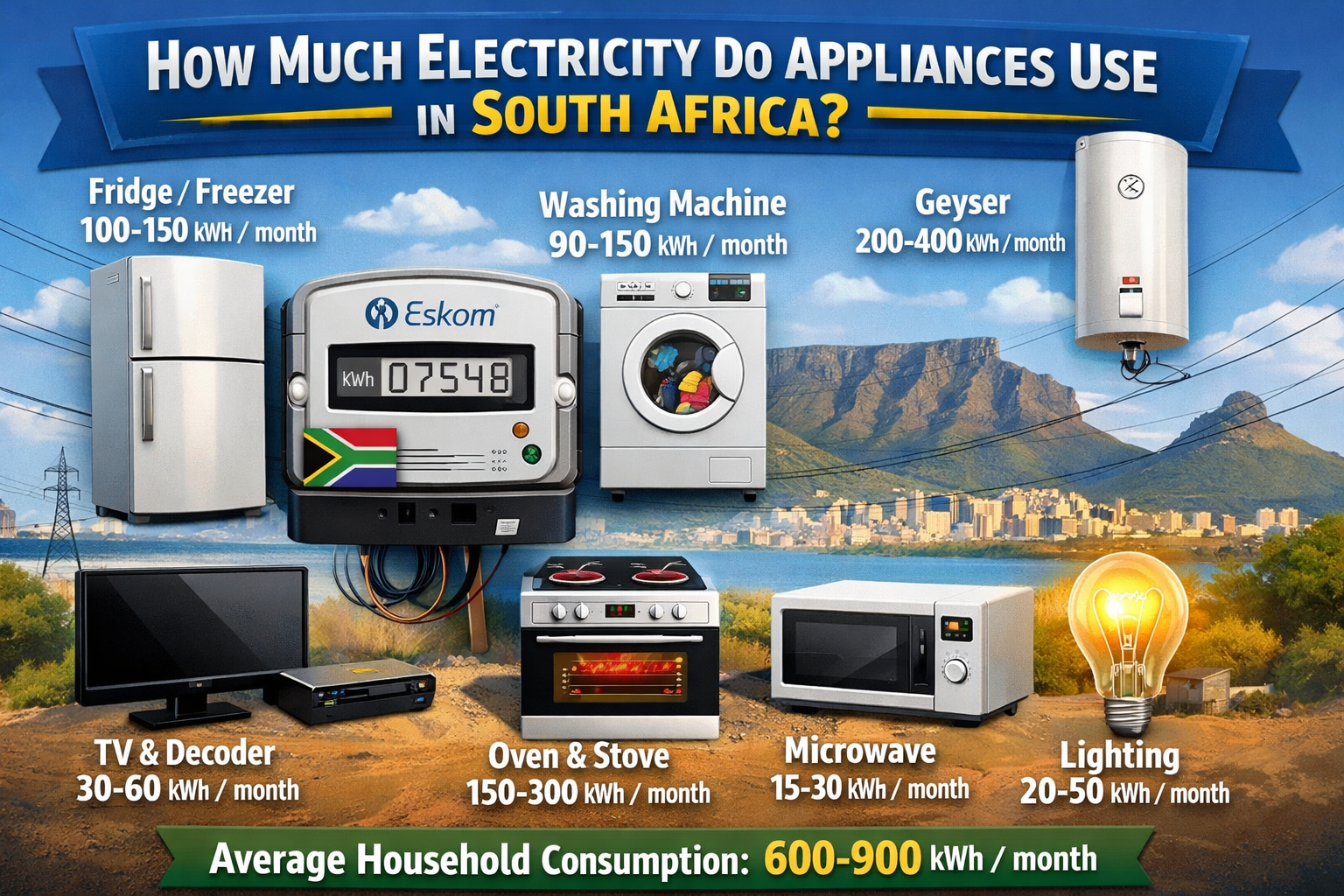
- How Much Electricity Do Appliances Use in South Africa?
Tigdag is a South African product review website focused on helping households choose practical appliances. All guides are written to simplify buying decisions and explain real-world usage rather than marketing claims. No sponsored rankings.