Tag: mini UPS South Africa

  • Mini UPS vs Power Bank for WiFi Router (Which Is Better)

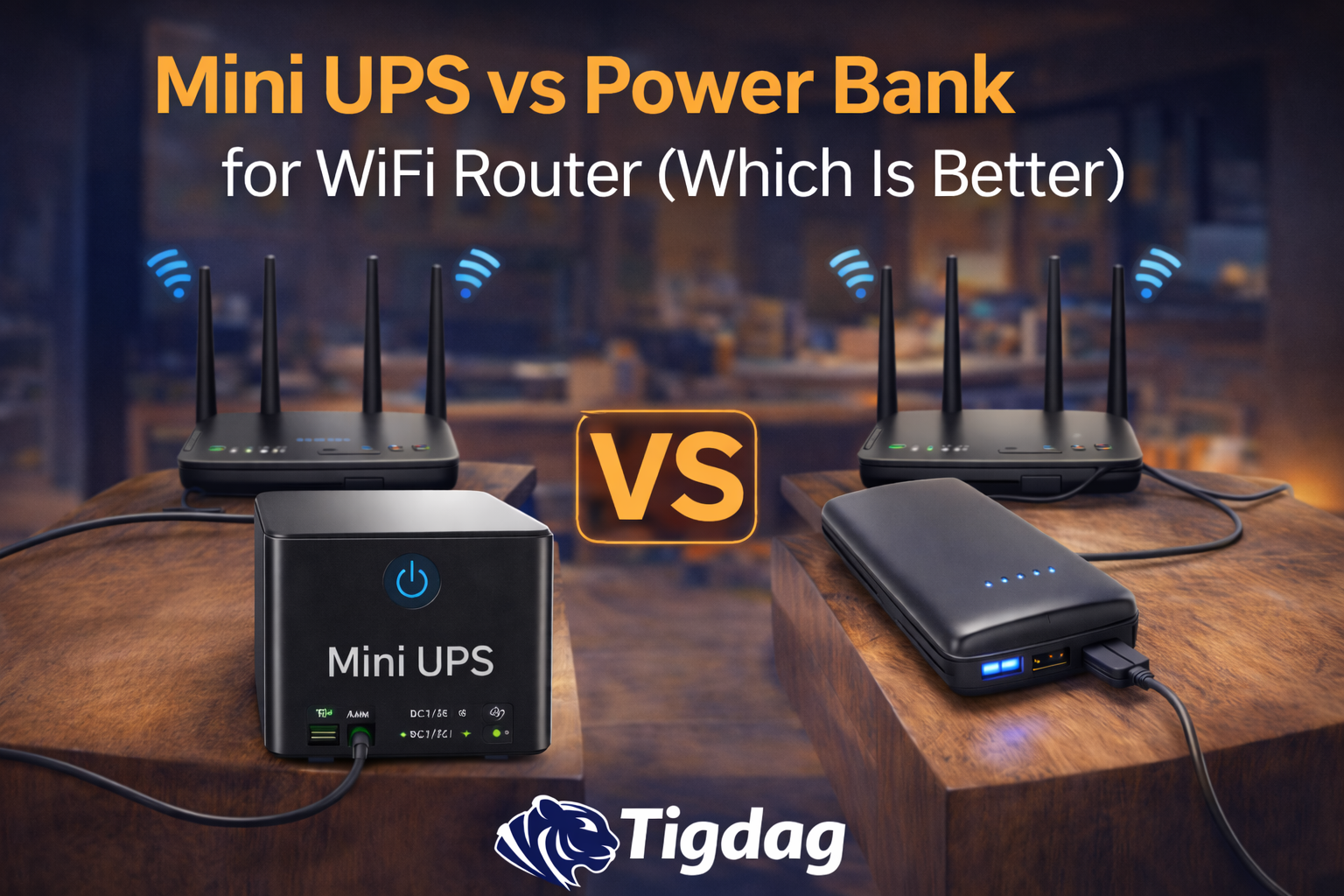
    Mini UPS vs Power Bank for WiFi Router (Which Is Better)

    Loadshedding can interrupt your internet connection if your router and fiber ONT lose power. Many South African households are now using backup power solutions such as mini UPS devices or power banks to keep their WiFi running during outages.

    However, these two options work very differently.

    In this guide we compare mini UPS devices and power banks to help you understand:

    • Which option works best for a WiFi router
    • How long each solution can power your internet
    • Which one is more reliable during loadshedding

    What Is a Mini UPS?

    A mini UPS (Uninterruptible Power Supply) is a small battery backup device designed specifically for networking equipment such as

    • WiFi routers
    • fibre ONT boxes
    • small security cameras

    Mini UPS devices stay connected to your router all the time. When the electricity goes off, the battery automatically starts powering your equipment without interruption.

    Most mini UPS units can power a router and fiber ONT for 4–6 hours depending on the battery capacity.

    You can see some examples in our guide to the Best Mini UPS for WiFi Routers in South Africa.

    What Is a Power Bank?

    A power bank is a portable battery usually designed for charging phones and small electronics through USB.

    Some people try to use power banks to power WiFi routers using the following:

    • USB to DC cables
    • voltage converters

    While this can sometimes work, power banks are not designed specifically for routers, which can make them less reliable.

    Key Differences Between Mini UPS and Power Bank

    FeatureMini UPSPower Bank
    Designed for routersYesNo
    Automatic power switchingYesNo
    Continuous connectionYesNo
    Typical runtime4–6 hours1–3 hours
    Ease of useVery easyRequires cables

    Mini UPS devices are usually the simplest and most reliable solution for keeping WiFi online during loadshedding.

    Which One Keeps WiFi Running Longer?

    Mini UPS units generally provide longer runtime because they are built specifically to power networking equipment.

    Power banks can sometimes run routers, but they often provide shorter runtime and may require additional cables or adapters.

    If you’re wondering how long a UPS can power your router, see our guide on How Long a Mini UPS Lasts During Loadshedding.

    Which Option Is Easier to Use?

    Mini UPS devices are typically easier to set up.

    Installation usually involves the following:

    1. Connecting the UPS to a power outlet
    2. Plugging your router and fibre ONT into the UPS

    Once connected, the system works automatically.

    Power banks usually require extra cables or manual connection, which makes them less convenient during sudden power outages.

    When a Power Bank Might Work

    A power bank may still be useful if:

    • you already own a large power bank
    • your router supports USB power input
    • you have the correct adapter cables

    However, most households find that a mini UPS is the more reliable solution.

    Final Verdict

    Both mini-UPS devices and power banks can provide backup power for networking equipment during loadshedding.

    However, mini UPS units are specifically designed for routers and fiber ONT devices, making them the simplest and most reliable solution for keeping WiFi online.

    Power banks can sometimes work as an alternative, but they usually require extra cables and may not provide the same runtime or convenience.

    For most South African households, a mini UPS is the better choice for uninterrupted internet during loadshedding.

    Explore More Mini UPS Guides

    If you’re planning to buy a backup power solution for your router, you may also find these guides helpful:

    These guides explain how to choose the right mini UPS and compare some of the best options currently available.
  • Why Your WiFi Still Turns Off During Loadshedding (Even With a UPS)

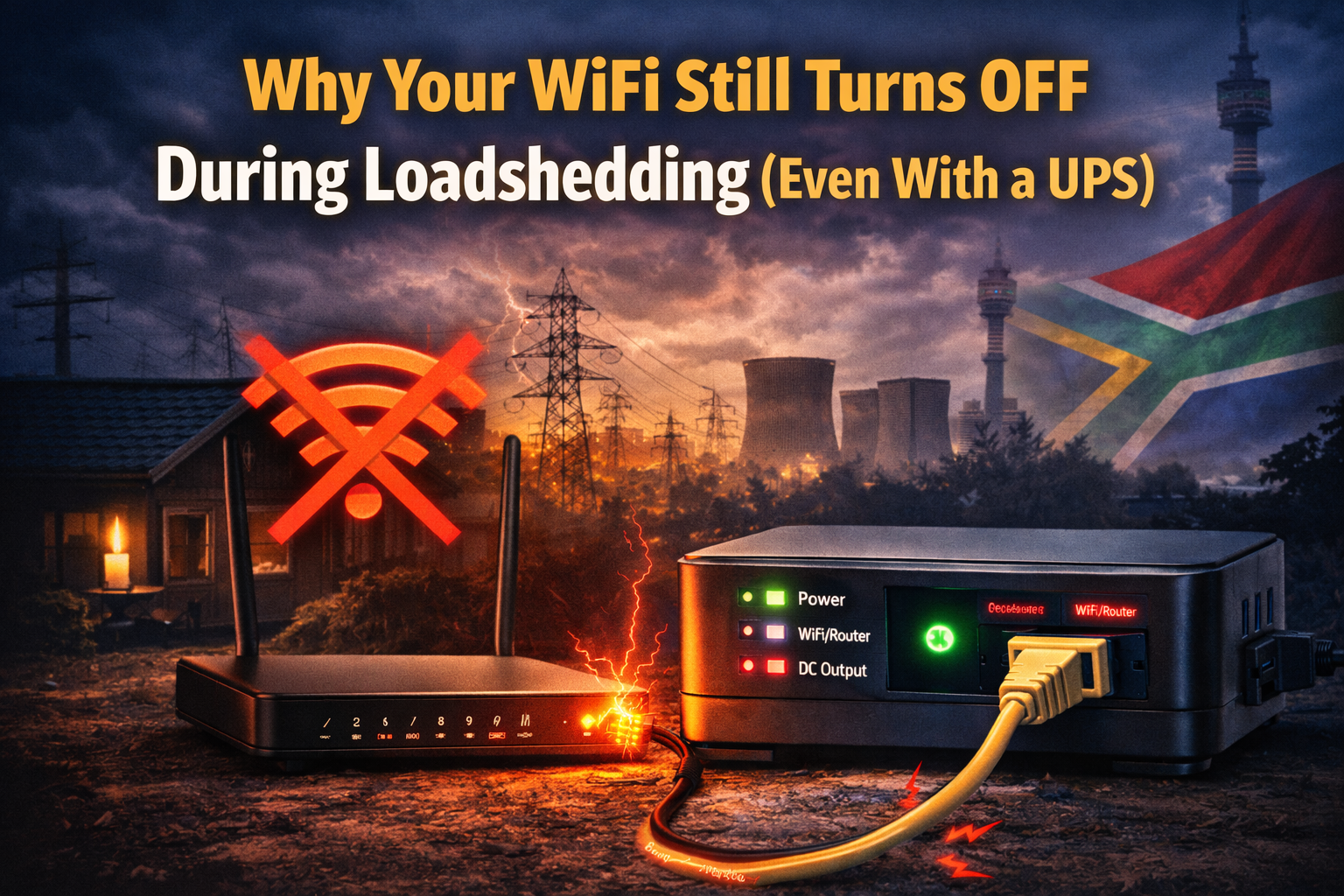
    Why Your WiFi Still Turns Off During Loadshedding (Even With a UPS)

    Many South Africans install a mini UPS during loadshedding expecting their internet to stay online—but sometimes the WiFi still turns off.

    This is frustrating, especially if you bought the UPS specifically to avoid downtime.

    The issue is usually not the fiber provider. It is almost always caused by incorrect setup, voltage mismatch, or incomplete power coverage inside the home.

    In this guide, we explain why your WiFi may still go down during loadshedding and how to fix it.

    You Are Not Powering the Fibre ONT

    The most common mistake is powering only the router.

    If the fiber ONT (the small wall-mounted box) is off, your internet connection will drop even if the router lights are still on.

    Both devices must be connected to the mini UPS.

    Wrong Voltage Output

    If your router requires 12V and your UPS is set to 9V, it may switch on briefly and then shut down.

    Always check the power adapter label:

    Output: 12V — 1A
    or
    Output: 9V — 1A

    Voltage must match exactly.

    Your UPS Battery Is Too Small

    If your UPS only lasts 45–60 minutes, it may not have enough battery capacity for your router and ONT combined.

    Higher-performance routers use more power and drain small UPS units quickly.

    The UPS Was Not Fully Charged

    Mini UPS devices need time to recharge between outages.

    If loadshedding happens twice in one day, the battery may not have recharged fully.

    You Are Powering Too Many Devices

    Some people connect:

    • Router
    • ONT
    • TV box
    • CCTV system

    This dramatically reduces runtime.

    Mini UPS units are designed only for networking equipment.

    How to Fix the Problem

    1. Check router voltage
    2. Confirm ONT is connected
    3. Ensure correct output cable
    4. Upgrade to larger capacity if needed

    If your UPS is correctly installed and properly sized, your WiFi should remain stable during normal Stage 4 loadshedding.

    Recommended Mini UPS Options

    If your current UPS is underpowered or incompatible, see our full comparison guide here:
    👉 Best Mini UPS for WiFi Routers in South Africa (2026)

  • What to look out for in a UPS for WiFi Router South Africa

    What to look out for in a UPS for WiFi Router South Africa

    South Africa’s loadshedding makes one problem immediately obvious—when the power goes off, your internet goes off too.

    For many households, losing WiFi is actually worse than losing lights. Work stops, meetings disconnect, TV streaming ends, and even security cameras stop recording. The good news is you do NOT need a generator or expensive inverter system just to keep your router online.

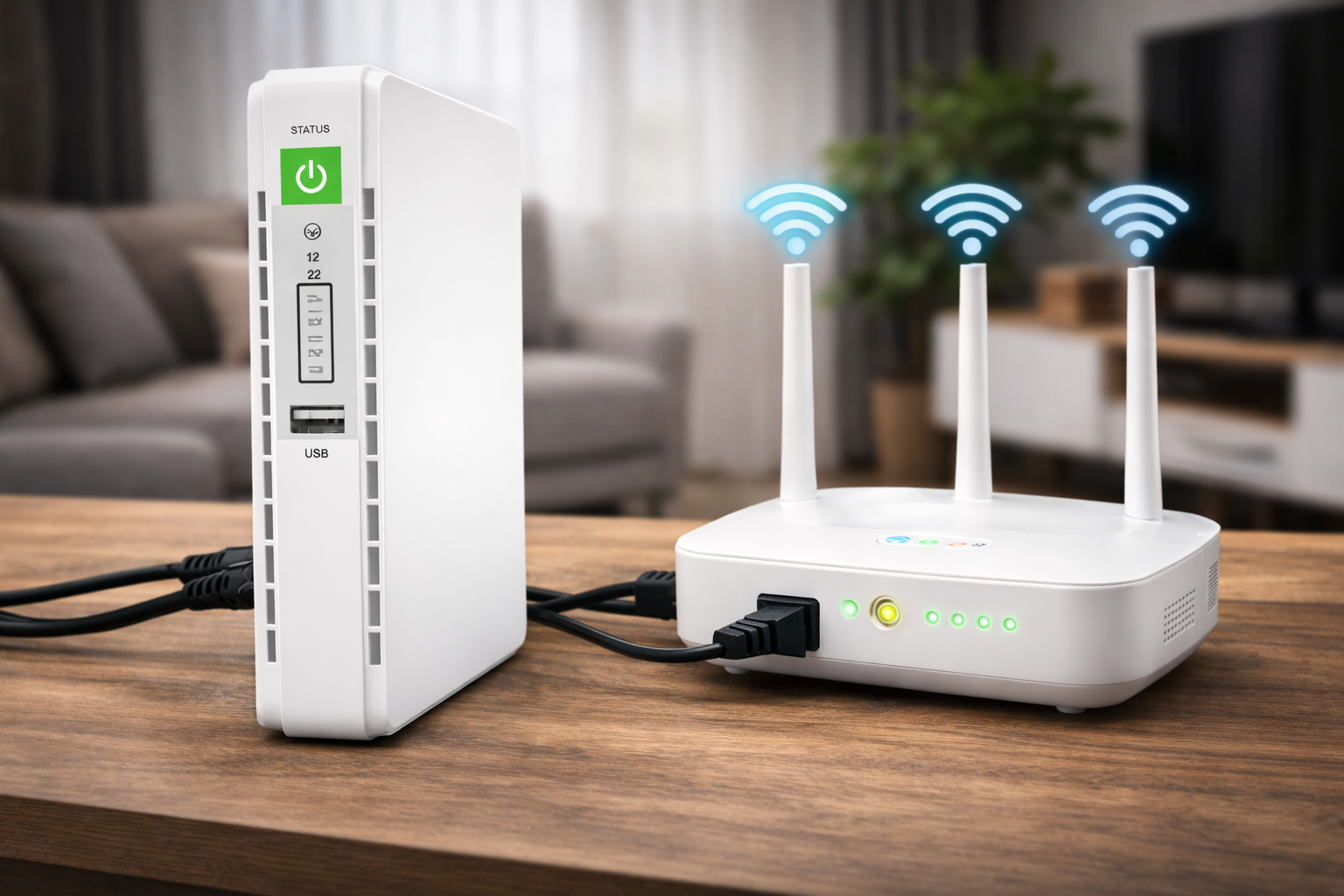
    A mini UPS (uninterruptible power supply) is a small battery backup designed specifically for routers and fiber ONTs. It automatically switches on when electricity cuts and keeps your internet running without you doing anything.

    In this guide, we explain which UPS units actually work in South Africa, how long they last during loadshedding, and which one is worth buying.

    What is a mini UPS, and how does it work?

    A mini UPS is essentially a rechargeable battery pack that sits between your wall plug and your internet equipment. Under normal conditions, it charges itself while powering your router.

    The moment Eskom power fails, the device instantly switches to battery power—usually within milliseconds—so your router does not reboot and your fiber connection stays active.

    Most homes actually have two devices that need backup power:

    • The WiFi router
    • The fibre ONT box (the small box installed by your fibre provider)

    If the ONT switches off, your internet dies even if your router stays on. A proper mini UPS powers both devices at the same time.

    This is why normal power banks do not work properly—they cannot supply stable continuous power like a UPS can.

    How long can a UPS keep your internet on during loadshedding?

    This depends on three things:

    • Battery capacity (measured in mAh or Wh)
    • Router power usage
    • Whether it powers the ONT as well

    Most fiber routers in South Africa use only 8W to 12W of electricity, which is very low. Because of this, even a small UPS can keep your internet online for 3 to 6 hours.

    Typical real-world backup times:

    • Small mini UPS (10,000 mAh) → 2–3 hours
    • Medium UPS (15,000–20,000 mAh) → 4–6 hours
    • Large mini UPS (25,000 mAh+) → 6–10 hours

    This is enough to survive most Stage 2–4 loadshedding cycles.

    What to check before buying a Mini UPS in South Africa

    Many people buy the wrong UPS and then think UPS devices don’t work.
    The problem is not the idea—it’s compatibility.

    Before you buy a UPS, you must check these 4 things.

    1) Voltage (MOST IMPORTANT)

    Routers and ONT boxes usually run on 12V or 9V.

    If the UPS output voltage does not match your router, it will not power on—or worse, it can damage the device.

    Always look at the sticker underneath your router or ONT.
    You will see something like

    Output: 12V—1A

    Your UPS must match that voltage.

    Good mini UPS units in South Africa normally support:

    • 9V
    • 12V
    • sometimes 5V USB

    Avoid units that only have USB ports—those are power banks, not UPS systems.

    2) Number of ports

    You need at least 2 DC output ports because loadshedding affects:

    • The router
    • The fibre ONT

    Many cheap UPS devices only power the router—then your internet still goes off because the ONT has no power.

    This is the number one mistake buyers make.

    3) Battery capacity

    Capacity determines how long your internet stays on.

    Rough guide:

    • 8,000–10,000 mAh → short outages only
    • 15,000–20,000 mAh → ideal for most homes
    • 20,000 mAh+ → best for heavy loadshedding

    In South Africa, a 20,000 mAh unit is usually the sweet spot.

    4) Automatic switching

    A real UPS switches automatically when power cuts.

    You should not have to press a button during loadshedding.

    If the product description says:

    “Manual power on”

    Avoid it—it defeats the purpose of a UPS.

    Mini UPS vs Generator vs Inverter for WiFi During Loadshedding

    FeatureMini UPSPower Inverter + BatteryPetrol Generator
    Internet stays on instantlyYesYesNo (must start it)
    NoiseSilentSilentVery loud
    Setup difficultyPlug & playMedium installationHigh
    CostLowMedium/HighMedium
    Running costNoneVery lowFuel required
    Works at nightYesYesNot practical
    Powers TV/PCNoYesYes
    Best useRouter + Fibre ONTWhole room backupWhole-house emergency

    For most South African households, a mini UPS is the easiest and most affordable solution to keep internet working during loadshedding. Inverters and generators can power more appliances, but they are significantly more expensive and require installation or fuel. A UPS is designed specifically for networking equipment and works automatically when the power cuts.

    How long will a mini UPS power your router?

    Runtime depends on two things: the router power usage and the UPS battery size.

    Typical fiber setup:

    • Fibre ONT: ±8–12W
    • WiFi Router: ±6–10W

    Total load ≈ 15–20 watts.

    Estimated runtime:

    UPS CapacityExpected Runtime
    8,800 mAh2–3 hours
    10,400 mAh3–4 hours
    20,000 mAh5–8 hours

    This means a properly sized mini UPS can easily cover Stage 2 and Stage 4 loadshedding in South Africa.

    Frequently Asked Questions (FAQ)

    Can a mini UPS run both my router and fiber box (ONT)?

    Yes. Most fiber installations in South Africa have two devices: the fiber ONT and the WiFi router. A properly sized mini UPS is designed specifically for this setup and can power both at the same time. You simply connect both devices to the UPS using the provided DC cables.

    How many hours will a mini UPS last during loadshedding?

    On average, a standard 10,000 mAh mini UPS will run a router and fiber ONT for around 3–4 hours. Larger models can last up to 6–8 hours depending on the power usage of your router.

    Does a UPS damage a router?

    No. A mini UPS actually protects your router. It supplies stable voltage and prevents damage caused by sudden power cuts and surges when electricity returns after loadshedding.

    Can I use a computer UPS instead?

    You can, but it is not ideal. Traditional computer UPS units are designed for PCs and alarms. They are bulky, noisy, and inefficient for routers. A mini DC UPS is quieter, uses less power, and lasts longer during outages.

    Do I need an electrician to install a mini UPS?

    No. A mini UPS is plug-and-play. You unplug your router power cable, connect it to the UPS, and then plug the UPS into the wall. Setup takes less than 5 minutes.

    Will a mini UPS recharge between loadshedding stages?

    Yes. Most units recharge within 2–3 hours. This is fast enough to recharge between normal South African loadshedding cycles.

    Final Verdict—Is a Mini UPS Worth It?

    For most South African households, a mini UPS is one of the simplest and most affordable ways to deal with loadshedding. Instead of installing an expensive inverter or running a noisy generator, a small backup battery can keep your internet connection active automatically whenever the power cuts.

    Because routers and fiber ONTs use very little electricity, a properly sized UPS can keep you online for several hours, making it ideal for remote work, online classes, streaming, and security cameras. The one-off cost is low, there is no fuel required, and installation takes only a few minutes.

    If staying connected during loadshedding is important to you, a mini UPS is not just a convenience—it is one of the most practical backup solutions you can buy.

  • Best Mini UPS for WiFi Routers in South Africa (2026 Buyer’s Guide)

    Best Mini UPS for WiFi Routers in South Africa (2026 Buyer’s Guide)

    Loadshedding has made reliable internet in South Africa a daily challenge. The moment the power goes off, fiber routers and ONT boxes shut down immediately, cutting off work calls, online classes, streaming, and even security cameras.

    Fortunately, you don’t need an expensive inverter or generator just to keep your internet online. A mini UPS (Uninterruptible Power Supply) is a small backup battery designed specifically to power routers and fiber equipment automatically during outages.

    The problem is that many UPS units sold online are incompatible with South African fiber setups or do not last long enough to survive loadshedding stages. In this guide, we compare the best mini UPS devices available and explain which ones are actually worth buying.

    Quick Comparison of the Best Mini UPS Units

    UPS ModelWhat It PowersTypical RuntimeBiggest AdvantageWho Should Buy It
    Gizzu Mini DC UPS (36W)Router + Fiber ONT4–6 hoursReliable all-round compatibilityMost households
    UltraLAN Micro UPSRouter + Fiber ONT3–5 hoursVery stable fiber reconnectionFiber installations & offices
    Volkano Mini UPS – Best Long RuntimeRouter + Fiber ONT6–8 hoursLongest backup timeWork-from-home users
    Generic DC Mini UPS (Entry-Level)Router + Fiber ONT2–3 hoursLowest priceBasic internet backup

    Entry-level mini UPS units are often sold under different brand names in South Africa, but many share similar internal hardware. They are affordable and suitable for short outages, although runtime and build quality can vary.

    Gizzu Mini DC UPS (36W) – Best Overall Choice

    The Gizzu Mini DC UPS is one of the most commonly used router backup devices in South Africa and is widely compatible with fiber installations. It supports both 9V and 12V outputs, allowing it to power the fiber ONT and the WiFi router at the same time.

    The device automatically switches to battery power when electricity fails, so your internet connection usually stays active without rebooting. For most households, it provides enough backup time to cover a normal loadshedding block depending on the power usage of the router.

    Key Features

    • Powers router and fiber ONT simultaneously
    • Automatic switchover during outages
    • Compatible with most ISPs
    • Compact and easy to install

    Pros

    • Reliable and widely available
    • Good balance between runtime and price
    • Suitable for most homes

    Cons

    • Not the longest runtime during extended Stage 6 loadshedding

    UltraLAN Micro UPS – Best for Fiber Stability

    The UltraLAN Micro UPS is often recommended by fiber installers because of its stable voltage output. A stable power supply helps prevent the ONT from restarting when power returns, which can shorten reconnection time.

    It is designed specifically for networking equipment and works well in homes where the fiber connection normally takes long to reconnect after loadshedding. While the runtime is moderate, its reliability makes it a good choice for users who depend on a stable connection for work or online meetings.

    Key Features

    • Stable output designed for fiber equipment
    • Supports router and ONT
    • Fast automatic switching

    Pros

    • Reliable connection stability
    • Good for work-from-home setups
    • Prevents repeated router restarts

    Cons

    • Runtime slightly shorter than high-capacity units

    Volkano Mini UPS (Router & Fiber Backup) – Best Long Runtime

    The Volkano Mini UPS is intended for users who need longer backup time than basic entry-level router UPS devices. While mini UPS units all operate on similar principles, models with larger internal batteries generally provide extended runtime when powering a fiber ONT and WiFi router.

    In practical home use, runtime depends heavily on the router’s power consumption. Low-power fiber routers can remain online for several hours, while high-performance routers will reduce the backup time. Because of this, a higher-capacity mini UPS can be helpful during repeated loadshedding periods, especially for work-from-home users.

    Key Features

    • Powers router and fiber ONT simultaneously
    • Automatic switchover during outages
    • Designed for continuous internet connectivity

    Pros

    • Typically longer runtime than basic units
    • Suitable for repeated outages
    • Good for remote work and online meetings

    Cons

    • Still limited compared to a full inverter system
    • Recharge time required between outages

    Generic DC Mini UPS – Best Budget Option

    Entry-level mini UPS units are sold under various brand names in South Africa but generally use similar internal hardware. They are designed to power a router and fiber ONT for short outages at a lower cost.

    They are suitable for light users who mainly want to keep messaging and basic browsing active during loadshedding. However, runtime and build quality may vary between brands, so expectations should remain modest.

    Key Features

    • Low-cost backup solution
    • Plug-and-play setup
    • Works with most routers

    Pros

    • Affordable
    • Simple installation
    • Good for short outages

    Cons

    • Shorter runtime
    • Build quality varies by brand

    How to Choose the Right Mini UPS

    Choosing the correct UPS is more important than choosing the cheapest one. The wrong model may switch on but still leave your internet offline.

    Before buying, check the following:

    Voltage compatibility
    Your router label will show 9V or 12V. The UPS must match it.

    Number of ports
    You need two outputs—one for the router and one for the fiber ONT.

    Battery capacity
    Larger batteries last longer during loadshedding. Homes with frequent outages should consider at least 15,000 mAh.

    Automatic switching
    The UPS must automatically switch to battery when power fails. Manual units defeat the purpose.

    Will a Mini UPS Protect Your Router?

    Yes. A mini UPS does more than just keep your internet online. It also protects your router and ONT from sudden power loss and power spikes when electricity returns.

    Repeated hard shutdowns can shorten the lifespan of networking equipment. Because a UPS provides stable voltage and controlled shutdown behavior, it reduces the risk of damage and improves reliability over time.

    How long does a mini UPS last during loadshedding?

    This is the most important question before buying a mini UPS. Runtime does not depend only on the UPS itself—it depends on how much electricity your router and fiber ONT use together.

    Most fiber setups in South Africa use two devices:

    • Fibre ONT (the wall box) → about 6W–10W
    • WiFi Router → about 8W–15W

    That means the average total power usage is around 15W–25W combined.

    Because of this low power draw, a mini UPS battery can last much longer than people expect.

    Here is a realistic estimate:

    • Small mini UPS (8 000–10 000 mAh): ± 1 to 2 hours
    • Medium mini UPS (12 000–15 000 mAh): ± 3 to 4 hours
    • Large mini UPS (18 000–20 000 mAh): ± 5 to 7 hours

    Stage 4 loadshedding is usually 2 hours, while Stage 6 can be 2.5 to 4 hours depending on the schedule. A properly sized mini UPS should therefore be able to keep your internet online for an entire loadshedding block.

    Which Mini UPS Should You Choose?

    If you are unsure which model fits your situation, the decision mostly depends on how you use your internet during loadshedding.

    • For most households, the Gizzu Mini DC UPS is the safest choice because it works with the widest range of routers and fiber ONTs.
    • For work-from-home or online meetings, a higher-capacity unit like the Volkano Mini UPS is useful if outages are frequent.
    • For stability problems after power returns, the UltraLAN Micro UPS can help prevent connection resets.
    • For occasional outages only, an entry-level mini UPS is usually enough for messaging and basic browsing.

    Choosing the correct UPS is more important than choosing the cheapest one, because compatibility determines whether your internet stays online.

    Frequently Asked Questions

    Can I install a mini UPS myself?
    Yes. Setup is simple: unplug the router power cable, connect it to the UPS, then connect the UPS to the wall outlet.

    Will fiber reconnect faster with a UPS?
    Yes. Because the ONT never switches off, the fiber connection does not need to re-establish itself when power returns.

    Do mini UPS units use a lot of electricity?
    No. They use very little electricity because they only charge a small battery and power low-wattage devices.

    Is a mini UPS better than an inverter for internet only?
    Yes. Inverters are designed for many appliances. A mini UPS is cheaper and more efficient if you only want internet backup.

    Final Verdict

    A mini UPS is one of the most practical solutions for staying connected during loadshedding in South Africa. It requires no installation, no fuel, and works automatically when the power cuts. For most households, a mid-capacity unit around 15,000 mAh offers the best balance between runtime and affordability.

    If your main goal is uninterrupted internet for work, school, or security devices, a dedicated router UPS is usually far more convenient than a generator or full inverter system.