Microwaves are one of the most common kitchen appliances in South African homes. They are widely used for reheating food, cooking quick meals, and defrosting frozen items.
With rising electricity prices, many households want to understand how much power a microwave uses and how it affects their electricity bill.
In this guide we explain microwave electricity usage, typical power consumption, and how much it costs to run a microwave in South Africa.
Typical Microwave Power Usage
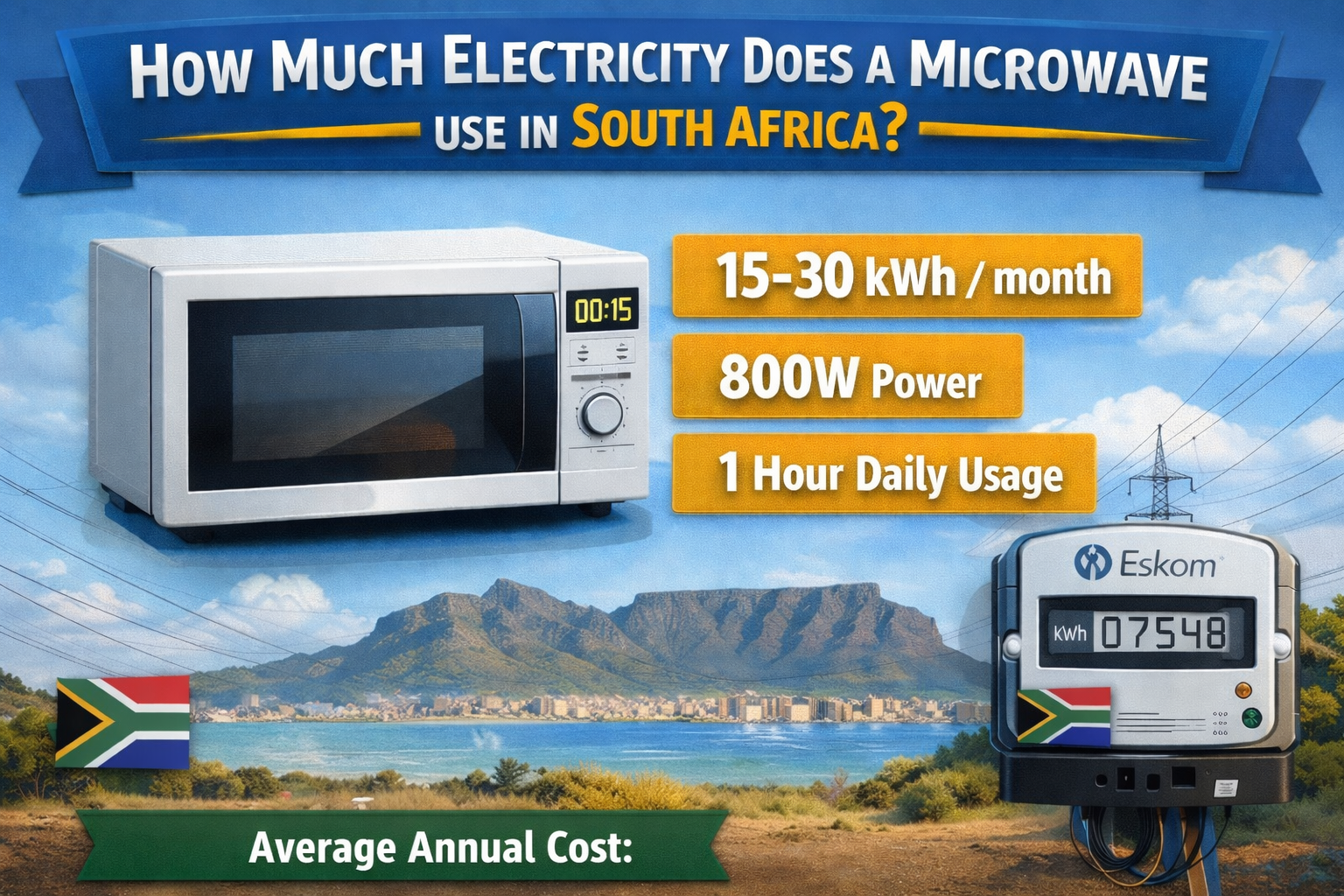
Most microwaves use between 800 W and 1200 W depending on the model and cooking settings.
Typical examples:
Microwave Type
Power Usage
Compact microwave
700W – 800W
Standard microwave
900W – 1000W
Large microwave
1100W – 1200W
Higher wattage microwaves generally cook food faster but also consume more electricity while operating.
Electricity Cost Per Use
Microwaves usually run for a short period of time when heating food.
Example:
Microwave power:
1000W
Heating time:
5 minutes
Energy used:
≈ 0.08 kWh
If electricity costs around R3.00 per kWh, the cost per use is approximately:
≈ R0.24
This means heating food in a microwave typically costs around 20–30 cents per use.
Monthly Microwave Electricity Cost
If a microwave is used four times per day:
Daily cost:
R0.24 × 4 ≈ R0.96
Monthly cost:
R0.96 × 30 ≈ R29
For most households, the electricity cost of using a microwave is relatively low compared to many other kitchen appliances.
Microwave vs Other Kitchen Appliances
Appliance
Typical Power Usage
Microwave
800W – 1200W
Air Fryer
1500W – 2000W
Kettle
1800W – 2200W
Electric Oven
2000W – 3000W
Microwaves generally use less power than many other cooking appliances, which can make them an energy-efficient option for heating food.
Tips to Reduce Microwave Electricity Usage
You can reduce electricity consumption by:
heating only the food you need
avoiding unnecessarily long heating times
using appropriate microwave power settings
These simple habits can help reduce electricity usage over time.
Final Verdict
Microwaves typically use between 800W and 1200W of power, depending on the model and cooking settings. Because they operate for relatively short periods, the electricity cost of using a microwave is usually low.
For most households in South Africa, regular microwave use will typically cost around R20 to R40 per month depending on how frequently the appliance is used.
Understanding appliance electricity usage can help households manage energy consumption and reduce electricity costs.
Explore More Appliance Electricity Guides
If you’re comparing kitchen appliance electricity usage, you may also find these guides helpful:
Electricity costs have increased significantly in South Africa over the past decade, which has made many households more aware of how much power their appliances consume. Everyday devices such as kettles, microwaves, air fryers, and ovens all use electricity, but the amount of power they require can vary significantly.
Understanding appliance electricity usage can help households manage energy consumption more effectively and reduce monthly electricity costs. Some appliances use high wattage but operate for short periods, while others consume smaller amounts of power but run continuously throughout the day.
In this guide we compare the electricity usage of common household appliances and explain how they contribute to overall energy consumption.
What Does Appliance Wattage Mean?
Electric appliances are usually rated in watts (W). This number shows how much electrical power the appliance uses while operating.
For example:
Appliance
Typical Wattage
WiFi Router
10–20W
Laptop
50–100W
Microwave
800–1200W
Air Fryer
1500–2000W
Kettle
1800–2200W
Higher wattage appliances generally consume more electricity, but the total cost depends on how long the appliance runs.
Electricity Usage of Common Appliances
Below are typical power ranges for some common household appliances.
Appliance
Typical Power Usage
Kettle
1800W – 2200W
Microwave
800W – 1200W
Air Fryer
1500W – 2000W
Electric Oven
2000W – 3000W
Fridge
100W – 400W
WiFi Router
10W – 20W
Appliances such as kettles and air fryers draw high power but usually operate for short periods, while appliances like refrigerators run continuously but use less power.
Kettle Electricity Usage
Electric kettles are one of the highest-wattage appliances in most kitchens, usually ranging between 1800W and 2200W. However, they only operate for a few minutes when boiling water.
Because of this short usage time, the overall electricity cost of using a kettle is often lower than many people expect.
You can see the full breakdown in our guide on how much electricity a kettle uses in South Africa.
Microwave Electricity Usage
Microwaves generally use between 800W and 1200W, depending on the model and power settings. They are designed to heat food quickly, which means they often run for only a few minutes at a time.
This relatively short cooking time helps keep their electricity consumption fairly low compared to appliances such as ovens.
For a detailed breakdown, see our article on microwave electricity usage in South Africa.
Air Fryer Electricity Usage
Air fryers have become increasingly popular in South African kitchens. Most models use between 1500W and 2000W.
Although this is similar to the wattage of a kettle, air fryers typically run longer because they cook food rather than simply boiling water.
You can learn more in our guide on how much electricity an air fryer uses in South Africa.
Appliances That Use the Most Electricity
Some household appliances consume significantly more electricity than others.
Examples include:
electric ovens
heaters
tumble dryers
kettles
air fryers
These appliances draw high wattage and can increase electricity usage if used frequently.
Tips to Reduce Appliance Electricity Usage
Households can reduce electricity consumption by:
boiling only the amount of water needed
avoiding unnecessary appliance use
choosing energy-efficient appliances
switching appliances off when not in use
Even small changes in daily habits can help reduce electricity costs over time.
Final Verdict
Household appliances vary widely in their electricity consumption. Devices such as kettles and air fryers use high wattage but usually operate for short periods, while appliances like refrigerators use lower wattage but run continuously.
Understanding how much electricity common appliances use can help households make better decisions about energy consumption and reduce monthly electricity costs.
Explore More Appliance Electricity Guides
If you’re comparing appliance electricity usage, you may also find these guides helpful:
Electric kettles are one of the most common kitchen appliances in South African homes. They are used daily for boiling water for tea, coffee, and quick meals.
Most modern electric kettles have a 1.7-liter capacity and power between 1800W and 2200W, allowing water to boil in just a few minutes.
In this guide we compare some of the best electric kettles available in South Africa, focusing on reliable brands, strong customer reviews, and products widely available online.
The Philips Daily Collection HD9350 is one of the most popular stainless-steel kettles available in South Africa. It combines a durable metal design with fast boiling performance, making it a reliable choice for everyday use.
The kettle features a 1.7-litre capacity, which is large enough to prepare multiple cups of tea or coffee at once. With a 2200W heating element, it heats water quickly, reducing waiting time in the kitchen. Philips has also included several safety features such as boil-dry protection and automatic shut-off, which help prevent damage if the kettle is switched on without water. The stainless steel body also gives the kettle a modern appearance that fits well in most kitchens.
Overall, the Philips HD9350 is a practical and reliable kettle designed for households that want a simple, durable, and fast-boiling appliance.
The Russell Hobbs Luna kettle is designed to combine modern styling with reliable performance. Its stainless-steel finish gives it a sleek and contemporary look that fits well in most kitchens. The kettle offers a 1.7-litre capacity, which is large enough to prepare multiple hot drinks at once, making it suitable for households that regularly use a kettle throughout the day.
The powerful heating element allows water to boil quickly, which can save time when preparing tea, coffee, or instant meals. Russell Hobbs appliances are widely known for their reliability, and the Luna kettle includes practical features such as a removable filter, water level indicator, and automatic shut-off for added safety. This model is a great choice for buyers who want a kettle that balances performance, durability, and stylish design.
Key Features
1.7L capacity
fast boil heating element
stainless steel body
water level indicator
Pros
✔ Attractive design ✔ Reliable brand reputation ✔ Fast boiling
Cons
✘ Higher price than basic kettles
Best For
Stylish kitchens.
Kenwood Stainless Steel Cordless Kettle (1.7L)
The Kenwood stainless-steel cordless kettle is a practical and reliable appliance designed for everyday use in busy kitchens. Kenwood is a well-established brand in the small appliance market, and its kettles are known for simple designs that focus on durability and performance. This kettle features a 1.7-litre capacity, which provides enough hot water for several cups at once. Its 2200W heating element helps water boil quickly, making it convenient for preparing hot drinks or cooking meals.
The kettle sits on a 360-degree cordless base, allowing it to be easily lifted and replaced from any angle. Safety features such as automatic shut-off and boil-dry protection help prevent overheating. Overall, this Kenwood kettle is a dependable choice for households looking for a straightforward and durable appliance.
Key Features
1.7L capacity
2200W power
cordless base
automatic shut-off
Pros
✔ Durable build quality ✔ Reliable brand ✔ Good value
Cons
✘ Basic design
Best For
Long-lasting everyday kettle.
Russell Hobbs Glass Illuminating Kettle
The Russell Hobbs illuminating glass kettle is designed for buyers who want a combination of modern design and practical functionality. The kettle features a transparent glass body, allowing users to easily see the water level while the kettle is boiling. When switched on, the kettle lights up with LED illumination, creating a visually appealing effect that many users enjoy. With a 1.7-litre capacity, it provides enough hot water for several cups at once, making it suitable for families or frequent use throughout the day.
The powerful heating element ensures fast boiling performance, while safety features such as automatic shut-off and boil-dry protection help prevent overheating. This kettle is particularly popular among users who prefer appliances that combine performance with a stylish design.
Key Features
1.7L capacity
LED illumination
automatic shut-off
360° swivel base
Pros
✔ Stylish glass design ✔ Easy water level visibility ✔ Good boiling speed
Cons
✘ Glass requires careful handling
Best For
Modern kitchens.
Mellerware Azure 1.8L Glass Kettle
The Mellerware Azure glass kettle is a budget-friendly appliance that offers good performance while maintaining a modern appearance. The kettle features a 1.8-litre capacity, which is slightly larger than many standard kettles and allows you to boil enough water for several cups at once. Its 2200W heating element helps water boil quickly, making it suitable for everyday use in busy households.
The glass body allows users to easily see the water level, while the cordless base makes it convenient to lift and pour. Despite its affordable price, the kettle includes useful safety features such as automatic shut-off and boil-dry protection. For buyers looking for an affordable kettle with a modern design, the Mellerware Azure provides a good balance of functionality and value.
Key Features
1.8L capacity
2200W heating element
glass body
cordless base
Pros
✔ Affordable price ✔ Fast boiling ✔ Modern design
Cons
✘ Build quality not as premium
Best For
Budget buyers.
How to Choose a Good Electric Kettle
When buying an electric kettle, consider:
Capacity
Most kettles offer 1.7L capacity, which is enough for several cups of tea.
Power
Look for kettles with 2000W or more for faster boiling.
Safety
Important features include:
auto shut-off
boil-dry protection
Build Quality
Stainless steel and glass kettles generally last longer than plastic models.
Final Verdict
Electric kettles are one of the most useful appliances in any kitchen.
Top picks:
Best overall: Philips HD9350
Best design: Russell Hobbs Luna
Best durable kettle: Kenwood Stainless Steel
Best glass kettle: Russell Hobbs Illuminating
Best budget: Mellerware Azure
Choosing a kettle with around 1.7L capacity and 2000W+ power will ensure fast and efficient boiling for everyday use.
Explore More Kettle & Electricity Guides
If you’re comparing kitchen appliances and electricity usage, you may also find these guides helpful:
Boiling water is one of the most common kitchen tasks, whether you’re making tea, coffee, or preparing meals. Many people wonder whether it is cheaper to boil water using an electric kettle or a stove.
In this guide we compare the electricity usage of kettles and electric stoves.
How Much Electricity Does a Kettle Use?
Most kettles use 1800W to 2200W and boil water very quickly.
Example:
Appliance
Power
Time
Kettle
2000W
3 minutes
Energy used:
≈ 0.1 kWh
Cost:
≈ R0.30
How Much Electricity Does an Electric Stove Use?
Electric stove plates typically use 1500W to 2500W.
However, they often take longer to heat water.
Example:
Appliance
Power
Time
Electric stove
2000W
8 minutes
Energy used:
≈ 0.27 kWh
Cost:
≈ R0.80
Electricity Cost Comparison
Method
Cost per Use
Electric kettle
~R0.30
Electric stove
~R0.80
In most cases, boiling water with a kettle is cheaper and faster.
Why Kettles Are More Efficient
Electric kettles are designed specifically to boil water quickly and efficiently. Most kettles heat water directly, while stoves lose some heat to the surrounding air.
Because of this, kettles usually use less electricity overall.
Final Verdict
For boiling water, electric kettles are usually cheaper and faster than electric stoves.
Most households will save both time and electricity by using a kettle rather than heating water on a stove.
Electric kettles are one of the most commonly used appliances in South African homes. During loadshedding, many households rely on backup power systems such as inverters to keep essential appliances running.
However, kettles use a significant amount of electricity, which raises an important question: can a kettle run on an inverter during loadshedding?
In this guide we explain the power requirements of kettles and whether they can run on typical inverter systems.
How Much Power Does a Kettle Use?
Most electric kettles use between 1800W and 2200W of power.
Typical example:
Appliance
Power Usage
Electric kettle
1800W – 2200W
Because kettles heat water quickly, they draw a large amount of electricity over a short period.
You can learn more in our guide on how much electricity a kettle uses in South Africa.
Can a Kettle Run on a Small Inverter?
Small inverter systems are usually designed to power low-energy devices such as:
WiFi routers
laptops
lights
televisions
These systems typically provide between 300W and 1000W of power.
Since kettles require up to 2200W, most small inverters cannot run a kettle.
What Size Inverter Is Needed for a Kettle?
To run a kettle, an inverter generally needs to provide at least:
2000W – 3000W
However, running high-power appliances on battery systems can drain batteries quickly.
For this reason, many households avoid using kettles on inverter systems unless they have a large battery setup.
Why Kettles Drain Batteries Quickly
Even though kettles operate for only a few minutes, their high wattage can consume a large amount of battery power.
Example:
2000W kettle × 3 minutes ≈ 0.1 kWh
This can significantly reduce the available battery capacity for other devices.
Better Alternatives During Loadshedding
Instead of running a kettle on battery power, many households use alternative options during loadshedding such as
gas kettles
portable gas stoves
insulated flasks with pre-boiled water
These options reduce electricity usage and help preserve battery power.
Final Verdict
Electric kettles use a large amount of electricity and usually require 2000W or more to operate. Because of this high power demand, most small inverter systems cannot run a kettle during loadshedding.
Households with large inverter systems may be able to power a kettle, but it can drain battery capacity quickly.
For most people, it is better to use alternative methods for boiling water while saving inverter power for essential devices such as routers, lights, and laptops.
Explore More Electricity & Loadshedding Guides
If you want to understand how other appliances perform during loadshedding, you may also find these guides helpful:
Electric kettles and microwaves are two of the most commonly used kitchen appliances in South African homes. Both are used to heat water or food quickly, but many people wonder which appliance uses less electricity.
With rising electricity prices and frequent loadshedding, understanding appliance energy usage has become increasingly important.
In this guide we compare the electricity usage of kettles and microwaves to see which appliance is cheaper to run.
How Much Electricity Does a Kettle Use?
Most electric kettles use between 1800 W and 2200 W of power.
Because kettles heat water very quickly, they usually run for only 2 to 4 minutes.
Example:
Appliance
Power
Average Time
Electric kettle
2000W
3 minutes
Energy used:
2000W × 3 minutes
≈ 0.1 kWh
If electricity costs about R3.00 per kWh, the cost per boil is roughly:
≈ R0.30
This means boiling a kettle once typically costs around 30 cents.
You can read more in our guide on how much electricity a kettle uses in South Africa.
How Much Electricity Does a Microwave Use?
Microwaves generally use 800 W to 1200 W depending on the model.
However, microwaves often run longer when heating water or food.
Example:
Appliance
Power
Average Time
Microwave
1000W
4 minutes
Energy used:
1000W × 4 minutes ≈ 0.07 kWh
Cost per use:
≈ R0.20
So microwaves usually cost around 20 cents per use.
Electricity Cost Comparison
Appliance
Power
Typical Cost per Use
Kettle
1800–2200W
~R0.30
Microwave
800–1200W
~R0.20
While kettles use more power, they also boil water very quickly.
In most cases, the difference in cost between the two appliances is very small.
Which Appliance Is More Efficient?
For boiling water specifically, kettles are usually more efficient because they are designed for that purpose.
Microwaves can heat water, but they often take longer and may heat unevenly.
For reheating food, however, microwaves are usually the better option.
Kettle vs Microwave: Which Should You Use?
Use a kettle when you want to:
boil water for tea or coffee
cook instant meals
heat water quickly
Use a microwave when you want to:
reheat food
defrost meals
cook quick microwave dishes
Both appliances are relatively inexpensive to run compared to larger kitchen appliances.
Final Verdict
Both kettles and microwaves use relatively small amounts of electricity in everyday use.
Kettles typically cost around 30 cents per boil, while microwaves cost around 20 cents per use depending on cooking time and wattage.
Because both appliances operate for short periods, the difference in electricity cost is usually minimal.
Choosing the right appliance mainly depends on what you want to heat rather than electricity cost.
Explore More Appliance Electricity Guides
If you’re interested in understanding how other appliances affect your electricity bill, you may also find these guides helpful:
Electric kettles are one of the most commonly used appliances in South African homes. Whether you’re making tea, coffee, or preparing food, kettles are used multiple times a day in many households.
With electricity prices continuing to rise, many people are wondering how much power a kettle actually uses and how much it costs to boil water.
In this guide we explain kettle electricity usage, typical power consumption, and how much it costs to run a kettle in South Africa.
How Much Power Does a Kettle Use?
Most electric kettles use between 1800W and 2200W of power.
This means they consume electricity quickly, but they also boil water very fast.
Typical kettle wattage:
Kettle Type
Power Usage
Small kettle
1500W
Standard kettle
2000W
Large kettle
2200W
Because kettles only run for a few minutes, the total electricity cost is usually lower than people expect.
Electricity Cost to Boil Water
To estimate the cost, we can use an example.
Example:
Kettle power: 2000W
Boiling time: 3 minutes
Energy used:
2000W × 3 minutes ≈ 0.1 kWh
If electricity costs around R3.00 per kWh, the cost per boil is approximately:
R0.30
So boiling a kettle once usually costs around 30 cents.
Monthly Electricity Cost of a Kettle
If you boil your kettle 5 times per day:
Daily cost:
R0.30 × 5 = R1.50
Monthly cost:
R1.50 × 30 ≈ R45
This means a kettle typically costs between R30 and R60 per month, depending on usage.
Kettle vs Other Kitchen Appliances
Appliance
Power Usage
Kettle
1800–2200W
Air fryer
1500–2000W
Microwave
800–1200W
Electric oven
2000–3000W
Even though kettles use high wattage, they run for a very short time.
Tips to Reduce Kettle Electricity Usage
You can reduce electricity costs by:
boiling only the amount of water you need
avoiding repeated boiling
using efficient modern kettles
These small habits can reduce electricity consumption over time.
Final Verdict
Electric kettles use a relatively high amount of power, but because they operate for only a few minutes at a time, the overall electricity cost is usually low.
For most households in South Africa, using a kettle several times a day will typically cost between R30 and R60 per month.
Understanding appliance electricity usage can help households manage energy consumption and reduce electricity costs.
Learn More About Appliance Electricity Usage
If you’re interested in understanding how other appliances affect your electricity bill, you may also find these guides helpful:
Loadshedding often causes internet interruptions because routers and fiber ONT devices require electricity to operate. When the power goes off, both devices usually shut down immediately, cutting off your WiFi connection.
Fortunately, there are several ways to keep your internet running during loadshedding.
In this guide we explain the most common backup solutions used in South Africa and how they work.
Why WiFi Turns Off During Loadshedding
Most home internet setups rely on two devices:
Fiber ONT (optical network terminal)
WiFi router
Both require electricity to operate. When loadshedding begins, these devices stop working unless they are connected to a backup power source.
You can learn more in our guide explaining why WiFi turns off during loadshedding even when using a UPS.
Option 1: Mini UPS for Router
The most popular solution is a mini UPS designed for routers and fiber equipment.
These small battery backup units automatically supply power when loadshedding begins.
Advantages:
automatic power switching
simple installation
reliable runtime
Many mini UPS devices can keep your internet running for 4 to 6 hours depending on the battery size.
You can see recommended models in our guide to the Best Mini UPS for WiFi Routers in South Africa.
Option 2: Power Banks
Some people use large power banks with adapter cables to power routers.
This method can work in some cases, but it usually requires additional cables and manual setup.
Power banks also tend to provide shorter runtime compared to dedicated mini UPS devices.
Option 3: Inverter Systems
Households with larger backup power systems may use an inverter and battery setup.
These systems can power:
routers
fiber equipment
lights
laptops
However, inverter systems are typically more expensive and are designed for powering multiple appliances.
Option 4: Portable Power Stations
Portable power stations are larger battery devices that can power several appliances at once.
They can easily keep routers and internet equipment running during loadshedding but are usually more expensive than mini UPS devices.
Which Option Is Best?
For most households in South Africa, the simplest solution is a mini UPS designed for routers.
These devices are affordable, easy to install, and can provide several hours of backup power during loadshedding.
Larger backup systems such as inverters or portable power stations are better suited for powering multiple appliances.
Final Verdict
Keeping your WiFi running during loadshedding is possible with the right backup power solution.
Mini UPS devices remain the most practical option for powering routers and fiber equipment because they are simple to install and designed specifically for networking devices.
For households that require longer backup power or want to run additional appliances, inverter systems or portable power stations may be worth considering.
Explore More Mini UPS Guides
If you’re looking for the best router backup power solutions, you may also find these guides helpful:
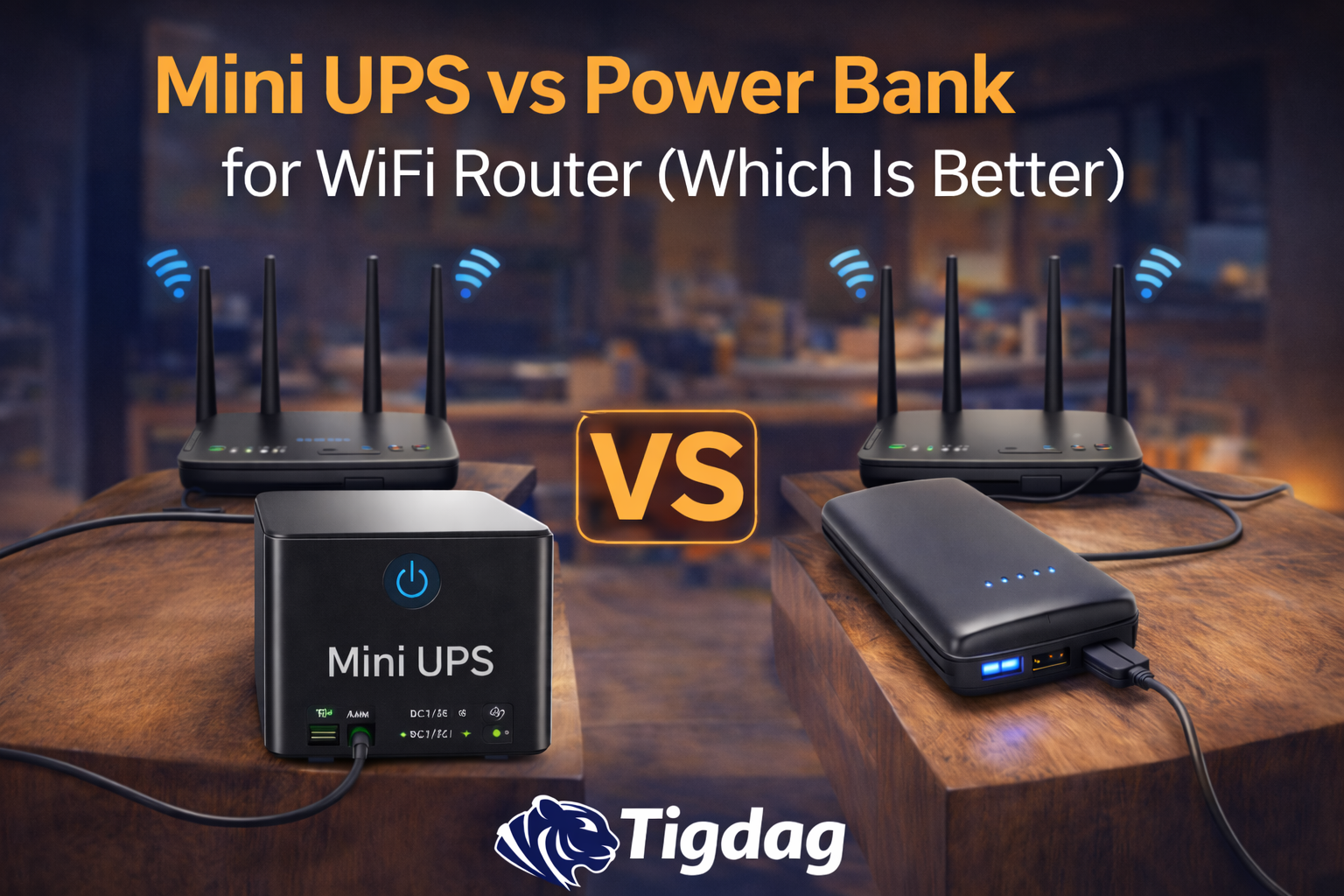
Loadshedding can interrupt your internet connection if your router and fiber ONT lose power. Many South African households are now using backup power solutions such as mini UPS devices or power banks to keep their WiFi running during outages.
However, these two options work very differently.
In this guide we compare mini UPS devices and power banks to help you understand:
Which option works best for a WiFi router
How long each solution can power your internet
Which one is more reliable during loadshedding
What Is a Mini UPS?
A mini UPS (Uninterruptible Power Supply) is a small battery backup device designed specifically for networking equipment such as
WiFi routers
fibre ONT boxes
small security cameras
Mini UPS devices stay connected to your router all the time. When the electricity goes off, the battery automatically starts powering your equipment without interruption.
Most mini UPS units can power a router and fiber ONT for 4–6 hours depending on the battery capacity.
You can see some examples in our guide to the Best Mini UPS for WiFi Routers in South Africa.
What Is a Power Bank?
A power bank is a portable battery usually designed for charging phones and small electronics through USB.
Some people try to use power banks to power WiFi routers using the following:
USB to DC cables
voltage converters
While this can sometimes work, power banks are not designed specifically for routers, which can make them less reliable.
Key Differences Between Mini UPS and Power Bank
Feature
Mini UPS
Power Bank
Designed for routers
Yes
No
Automatic power switching
Yes
No
Continuous connection
Yes
No
Typical runtime
4–6 hours
1–3 hours
Ease of use
Very easy
Requires cables
Mini UPS devices are usually the simplest and most reliable solution for keeping WiFi online during loadshedding.
Which One Keeps WiFi Running Longer?
Mini UPS units generally provide longer runtime because they are built specifically to power networking equipment.
Power banks can sometimes run routers, but they often provide shorter runtime and may require additional cables or adapters.
If you’re wondering how long a UPS can power your router, see our guide on How Long a Mini UPS Lasts During Loadshedding.
Which Option Is Easier to Use?
Mini UPS devices are typically easier to set up.
Installation usually involves the following:
Connecting the UPS to a power outlet
Plugging your router and fibre ONT into the UPS
Once connected, the system works automatically.
Power banks usually require extra cables or manual connection, which makes them less convenient during sudden power outages.
When a Power Bank Might Work
A power bank may still be useful if:
you already own a large power bank
your router supports USB power input
you have the correct adapter cables
However, most households find that a mini UPS is the more reliable solution.
Final Verdict
Both mini-UPS devices and power banks can provide backup power for networking equipment during loadshedding.
However, mini UPS units are specifically designed for routers and fiber ONT devices, making them the simplest and most reliable solution for keeping WiFi online.
Power banks can sometimes work as an alternative, but they usually require extra cables and may not provide the same runtime or convenience.
For most South African households, a mini UPS is the better choice for uninterrupted internet during loadshedding.
Explore More Mini UPS Guides
If you’re planning to buy a backup power solution for your router, you may also find these guides helpful:
Deep frying has been a popular cooking method for decades, but air fryers have quickly become one of the most popular kitchen appliances in South African homes. Many people are now wondering whether an air fryer can truly replace a traditional deep fryer.
Both appliances cook crispy foods such as chips, chicken, and snacks, but they work in very different ways.
In this guide we compare:
How air fryers and deep fryers work
Health differences
Electricity usage and cost
Which appliance is better for everyday cooking
Quick Comparison
Feature
Air Fryer
Deep Fryer
Cooking method
Hot air circulation
Oil immersion
Oil required
Very little
Large amounts
Health factor
Lower fat
Higher fat
Electricity use
Moderate
Moderate
Cooking results
Crispy outside
Very crispy
Both appliances can cook similar foods, but the cooking method and health impact differ significantly.
How an Air Fryer Works
An air fryer cooks food by circulating very hot air around the food at high speed. This process creates a crispy outer layer similar to frying, but with far less oil.
Most air fryers use between 1500 W and 2000 W of power and cook food at temperatures up to 200°C.
Because of this technology, air fryers can cook foods such as the following:
Deep fryers generally produce the crispiest results, especially for battered foods.
However, modern air fryers can achieve very similar results for many foods, including:
chips
chicken wings
frozen snacks
Air fryers may not always match the exact texture of deep frying, but they come very close while using much less oil.
Which One Is Easier to Use?
Air fryers are usually easier to use and clean.
Advantages of air fryers:
little oil required
easier cleaning
less smell in the kitchen
Deep fryers require more maintenance because:
oil must be replaced regularly
cleaning can be messy
used oil must be disposed of properly
Which Appliance Is Better?
The better appliance depends on your cooking preferences.
Choose an air fryer if you want:
healthier cooking
less oil usage
easy cleaning
versatile cooking functions
Choose a deep fryer if you want:
traditional fried food texture
very crispy battered foods
For most households, an air fryer offers a better balance between health, convenience, and versatility.
Final Verdict
Air fryers and deep fryers can both produce crispy food, but they serve slightly different purposes.
Deep fryers still produce the traditional fried texture many people enjoy, but they require large amounts of oil and can be more difficult to clean.
Air fryers provide a healthier alternative that uses far less oil while still producing crispy food. They are also more versatile and easier to maintain.
For many modern kitchens, an air fryer has become a more practical everyday appliance.
Explore More Air Fryer Guides
If you’re considering buying an air fryer or comparing different models, you may also find our other guides helpful. We have researched and compared many air fryers available in South Africa to help you choose the best option for your kitchen.
You can start with our complete guide to theBest Air Fryer in South Africa, where we compare the top models currently available.
If you’re looking for specific types of air fryers, you can also explore these guides:
For more comparisons, electricity usage guides, and buying advice, visit our Air Fryer Buying Guides Hub, where you’ll find all our air fryer articles in one place.
These guides will help you compare different air fryer sizes, features, and prices so you can choose the right appliance for your needs.